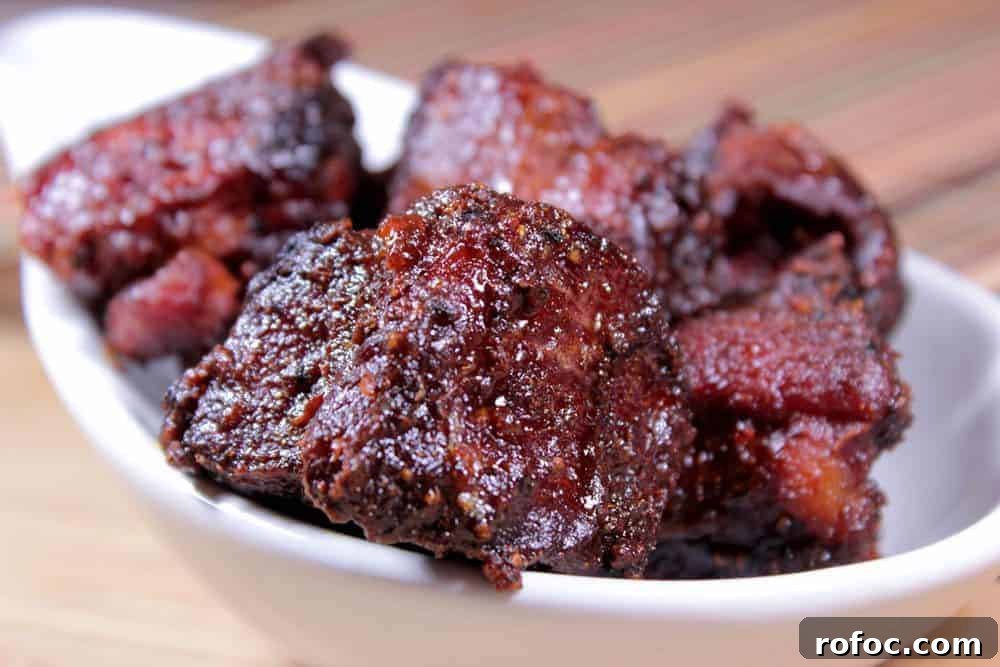
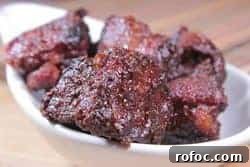
Burnt ends are those irresistible morsels that are perfectly browned on the outside and tender and juicy on the inside. While they’re traditionally made from the fatty point of a brisket, I discovered some time ago that you can make excellent burnt ends from pork using the same basic approach.
Previously I’ve smoked a whole pork butt to about 170°F and then cubed it for pork burnt ends. For this recipe I found pork country-style ribs on sale and decided to use them instead. They yield the same rich flavor but with a shorter overall cook time, so these are a definite win.
- Preparation time: 15 minutes
- Cook time: 5–6 hours
- Smoker temperature: 225–240°F
- Finished internal temperature for serving: 185°F
- Recommended wood: pecan
- 3–5 lbs pork country-style ribs* (ask your butcher to confirm they’re cut from the pork butt)
- Vegetable spray oil
- Your favorite pork rub
- Foil pans
- Barbecue sauce for finishing
*Some country-style ribs are cut from the pork loin and are leaner. For the best results with burnt ends, buy country-style ribs cut from the pork butt so there’s enough fat to render and keep the pieces moist.
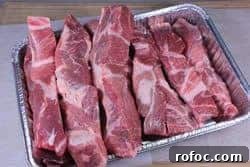
You don’t need perfect cubes — pieces about 1 inch across, whether square or a little oblong, work well. Try to get reasonably uniform sizes so they cook evenly.
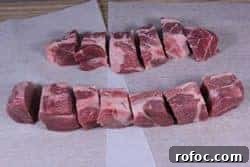
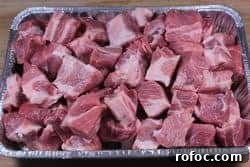
There are two simple approaches to seasoning the meat:
Bag Method — best if you want to season overnight
- Place the pieces in a resealable bag.
- Add 2–3 tablespoons vegetable oil and about 1/4 cup of rub.
- Seal the bag and shake, turn, or massage it until the meat is well coated.
- Refrigerate until ready to cook.
Fast Method — the method I used
Arrange the meat in a single layer on a cooling rack or similar so smoke and heat can circulate around each piece. Leave a little space between pieces.
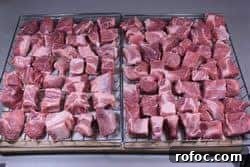
Lightly spray the top and sides with vegetable oil and then sprinkle the rub evenly over the pieces to coat.
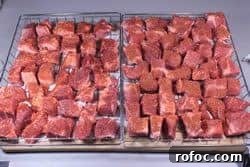
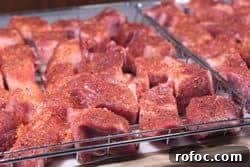
If you used the bag method, transfer the pieces to racks in a single layer before placing them in the smoker. Set your smoker to about 225°F and use pecan or another favorite smoking wood.
If your smoker has a water pan, use it to help maintain moisture. Maintain a steady, light smoke throughout this phase — the smoke flavor is important.
Place the racks in the smoker and cook until the internal temperature of the pieces reaches roughly 160°F. This stage usually takes about 3–4 hours, depending on how cold the meat was going in and how well your smoker holds temperature.
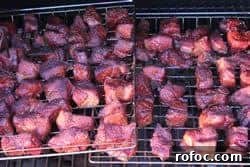
Once the meat reaches around 160°F it’s time to build the bark and finish the pieces.
Place the pork pieces into foil pans in a single layer — don’t pile them up. You may need multiple pans to keep a single layer.
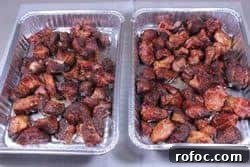
Add a generous amount of barbecue sauce over the meat and stir so the sauce coats each piece. The sauce helps form bark and helps the rub adhere during the final cooking phase.
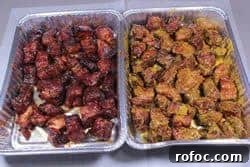
Sprinkle more rub on top, stir again to coat, and get ready for the final cook.
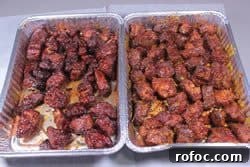
As an experiment I tried a mustard-based version of the finishing sauce on half the batch. It was created by replacing ketchup with yellow mustard in a basic barbecue sauce and adding about 1/4 cup honey to soften the tang. The mustard version was excellent and differs from a tomato-based sauce in character — I personally still prefer the tomato base for these pork burnt ends, but both work well. If you try the mustard approach, taste and adjust the sweetness to balance the tang.
Return the foil pans to the smoker and continue cooking with light smoke for another 1–2 hours. If your smoker or grill can run hotter, finishing at 275°F or higher can develop an even better bark — just stir the pans every 20–30 minutes (more frequently at higher temperatures) so the sauce reduces and the bark forms evenly.
The burnt ends are done when the internal temperature reaches about 185°F and the pieces have a nicely caramelized bark. At this point they should be tender and sticky with flavor.
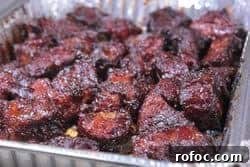
Burnt ends make fantastic appetizers served with toothpicks, or you can present a generous pile alongside mashed potatoes and baked beans for a hearty entrée that feeds a crowd.
Monitoring temperature remotely: If it’s cold outside or you’d rather not check the smoker constantly, a remote probe thermometer is very useful. Place the sending unit near the smoker with probes in the meat while you keep the receiver with you. This saves trips back and forth to the smoker and helps maintain steady cooking conditions.
Quick internal checks: A fast-read instant thermometer is handy for quick spot checks. It gives a reliable temperature reading in just a couple of seconds, which is useful when checking multiple pieces.
Cooking ribs whole vs. cutting first: You can cook the country-style ribs whole and cube them at 160–170°F, which works fine and was my earlier method. Cutting them before smoking increases the surface area exposed to smoke and usually speeds up cooking slightly. Both methods produce tasty results — choose the one that fits your schedule and equipment.
Printable Recipe
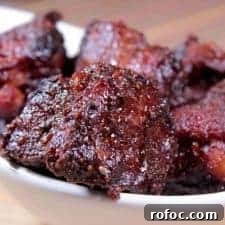
Pork Country Style Rib Burnt Ends
Servings: 6–8
Ingredients
- 3–5 lbs pork country-style ribs*
- Vegetable spray oil
- Pork rub
- Foil pans
- Barbecue sauce
Instructions
- Cut the pork into roughly 1-inch pieces.
- Season using the bag method (oil + rub, chill) or the fast method (spray and rub on racks).
- Smoke at 225°F with light pecan smoke until pieces reach about 160°F (3–4 hours).
- Place pieces in foil pans in a single layer, add sauce and extra rub, and stir to coat.
- Continue cooking 1–2 hours until internal temp reaches about 185°F and a good bark has formed, stirring periodically.
- Serve as an appetizer or main with your favorite sides.
*Confirm the ribs are cut from the pork butt for best results.