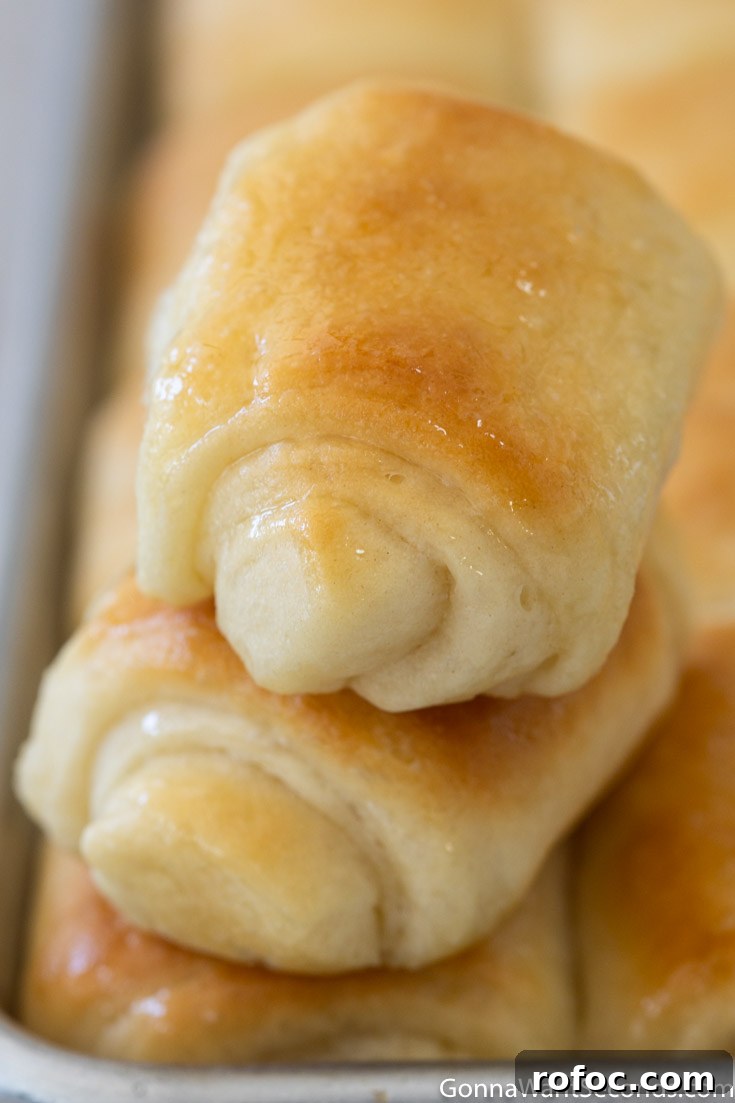
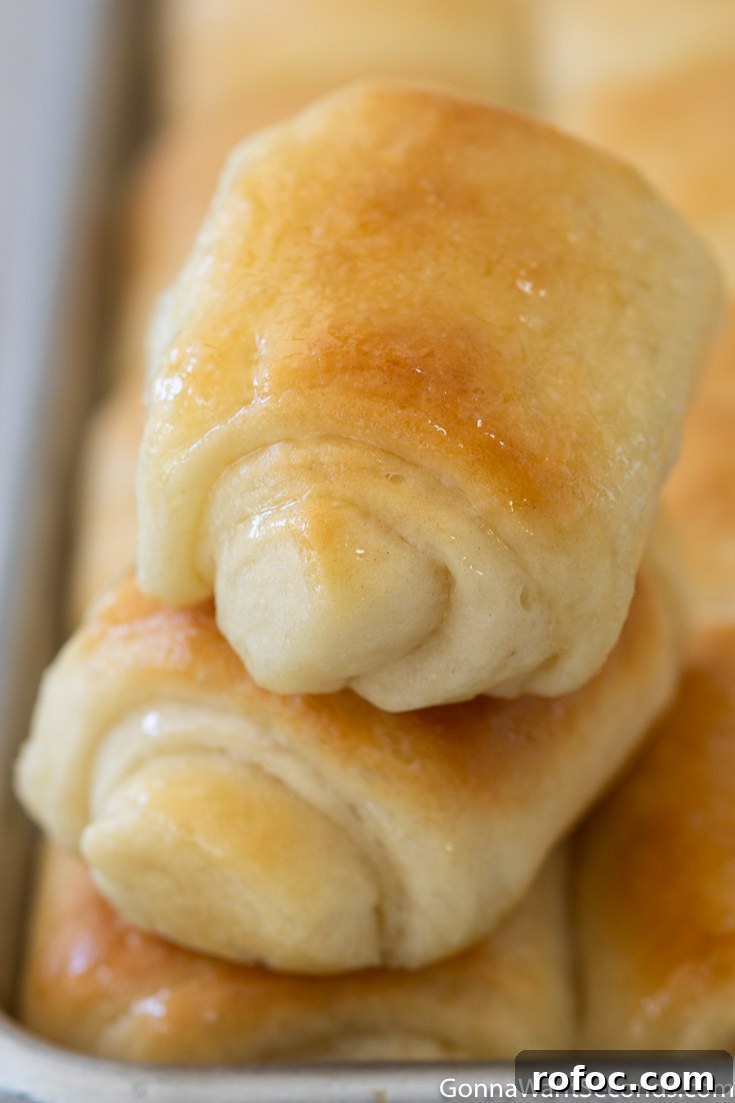
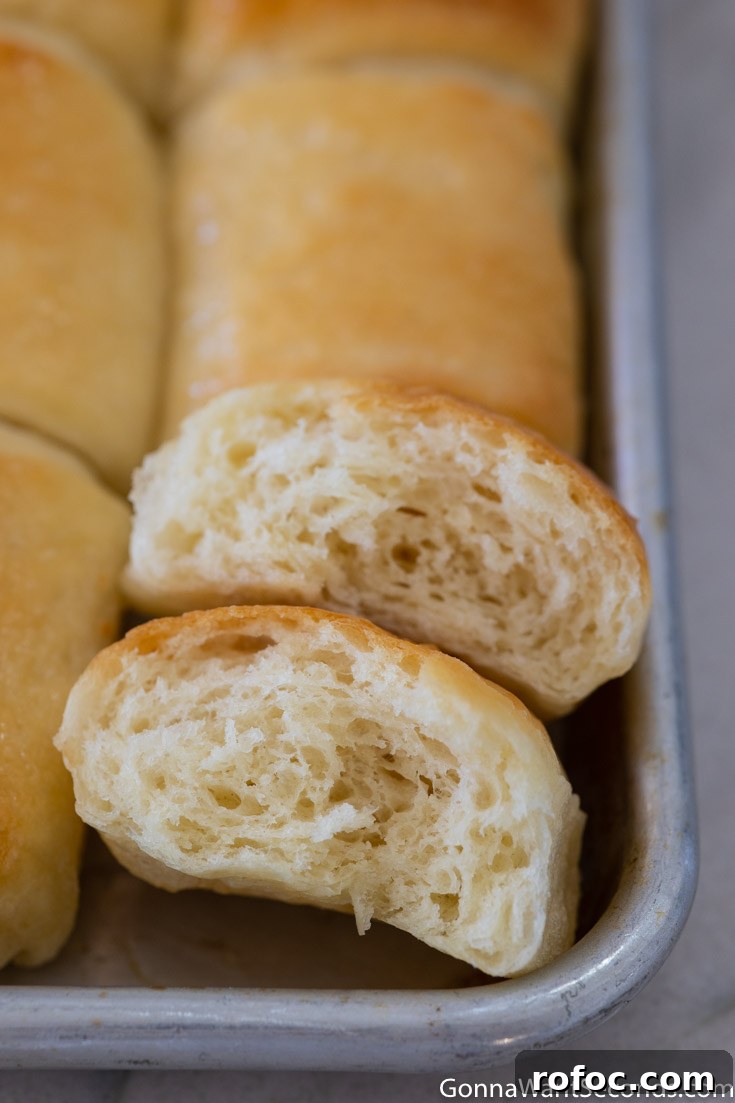
These lion house rolls are tender, soft, and lusciously buttery — possibly the best homemade dinner rolls and always a family favorite.
Lion House Rolls
Homemade dinner rolls that are soft, tender, and buttery are hard to beat. These Lion House–style rolls have that nostalgic, bakery-fresh texture and aroma — the kind that fills the house as they bake. They’re forgiving for beginners, don’t require kneading, and rely on a couple of reliable rises and generous layers of butter to get the classic flavor and tenderness.
Although the recipe asks for some patience for two rises, the steps are straightforward and result in warm, flaky rolls perfect for any meal.
Video Tutorial
If you prefer a quick visual guide, look for a web story or video demonstration to follow along on your phone.
Important Ingredient Notes, Tips & Tricks
- Instant nonfat dry milk: Adds the creaminess of milk without extra liquid. It’s a convenient way to enrich the dough.
- Yeast: This recipe uses regular active dry yeast, not instant yeast. If using instant, reduce the amount slightly (about 1 1/2 tablespoons) to avoid overproofing.
- Flour: Use all-purpose flour rather than bread flour. Bread flour’s higher protein content can change the texture of these rolls.
- Butter: Salted butter adds a nice flavor to these rolls because butter is used both in the dough and brushed on at multiple stages. When adding butter to the dough, use softened, room-temperature butter for the smoothest incorporation.
- Timing: Typical schedule:
- Mix and proof yeast (about 5–10 minutes).
- First rise: 1–1 1/2 hours depending on temperature.
- Shape and second rise: about 1–1 1/2 hours.
- Bake: 15–20 minutes.
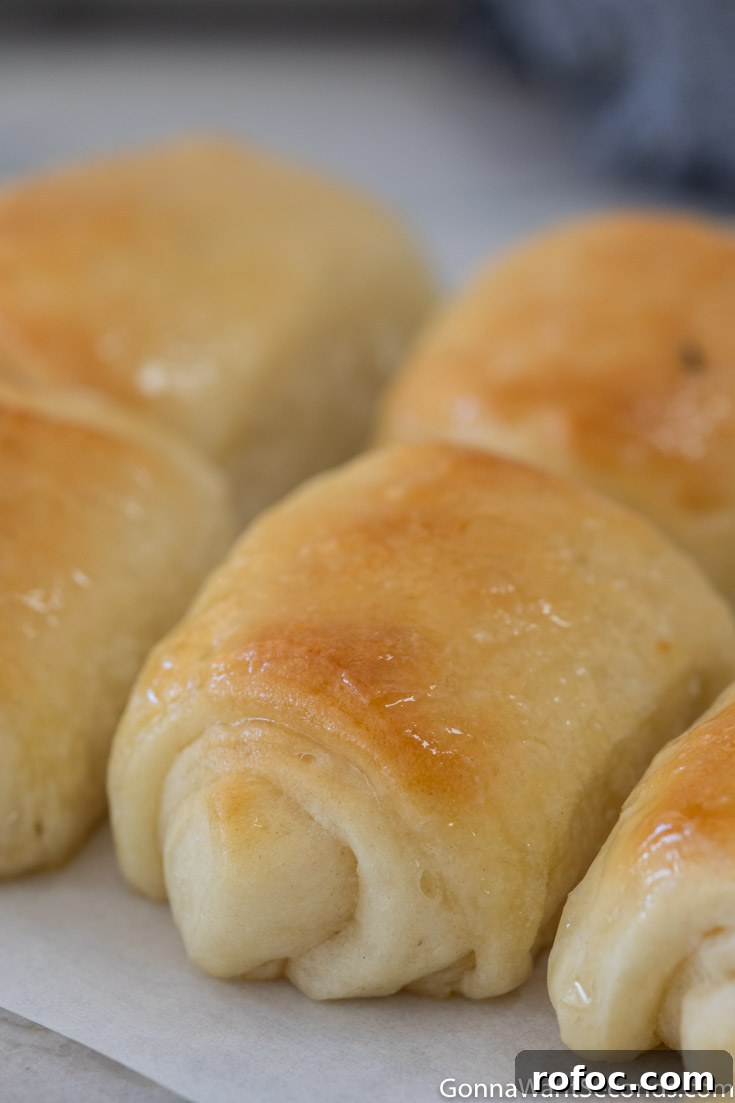
- Shaping: Classic Lion House rolls are rolled as generous rectangles; you can also shape them as crescents if you prefer (see instructions below for crescent method).
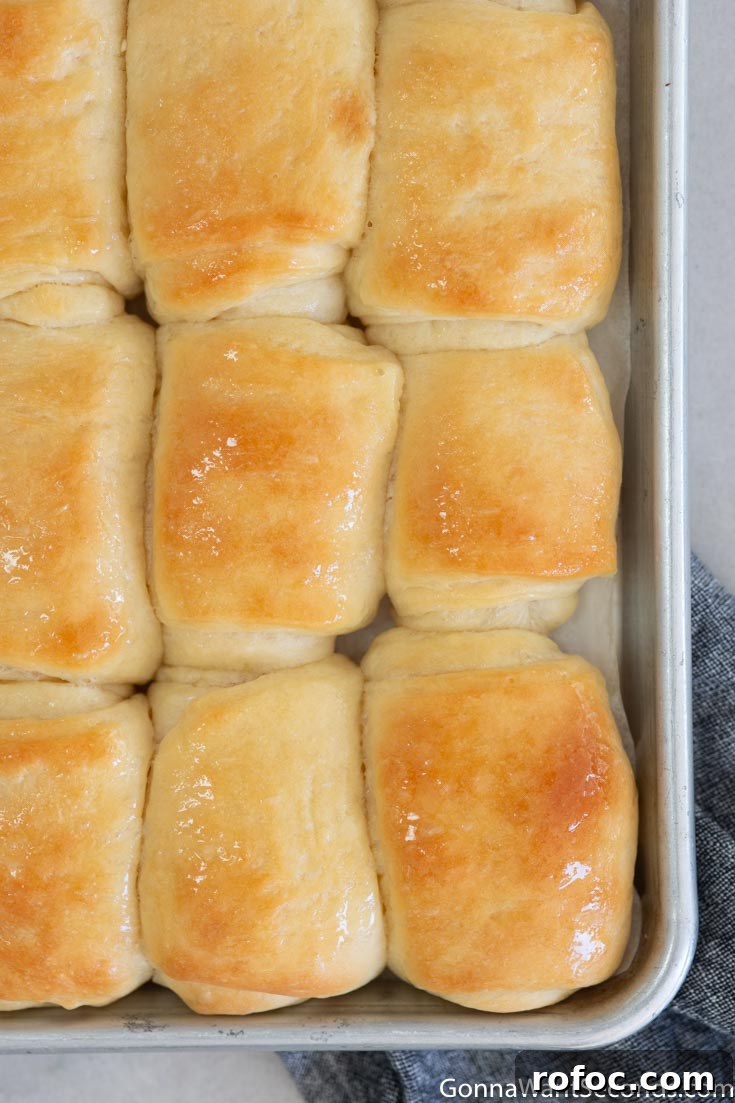
- Spacing: When arranging rolls on the baking sheet, leave about 1 inch between rows. As they rise and touch each other, they’ll gain a taller, slightly pillowy shape.
- Mixer: A stand mixer makes the job easier. A flat blade helps incorporate butter, and a dough hook handles the stiffer dough. You can use one attachment if preferred.
- How much flour: Flour needs vary by humidity and temperature. Add flour gradually in 1/4 cup increments until the dough is soft, elastic, and just slightly tacky. Too much flour will dry the rolls out.
Storing & Freezing
- Room temperature: Store cooled rolls in a resealable bag at room temperature for up to five days.
- Freezing: Rolls freeze well for up to three months. Cool completely before freezing to avoid sogginess. Thaw in the refrigerator overnight and reheat in the oven until warm.
- Make-ahead: Shape the rolls and place them on the baking sheet, but do not allow the second rise. Cover with wax paper and wrap tightly with plastic wrap, then freeze. Remove about four hours before baking, unwrap, cover loosely with a towel, and allow them to thaw and complete the second rise in a warm, draft-free place.
Serving Recommendations
These rolls are excellent with chili, stews, or any hearty soup. They’re especially good alongside a thick Texas-style chili or a robust cowboy stew for dunking.
Step-by-Step: How to Make Lion House Rolls
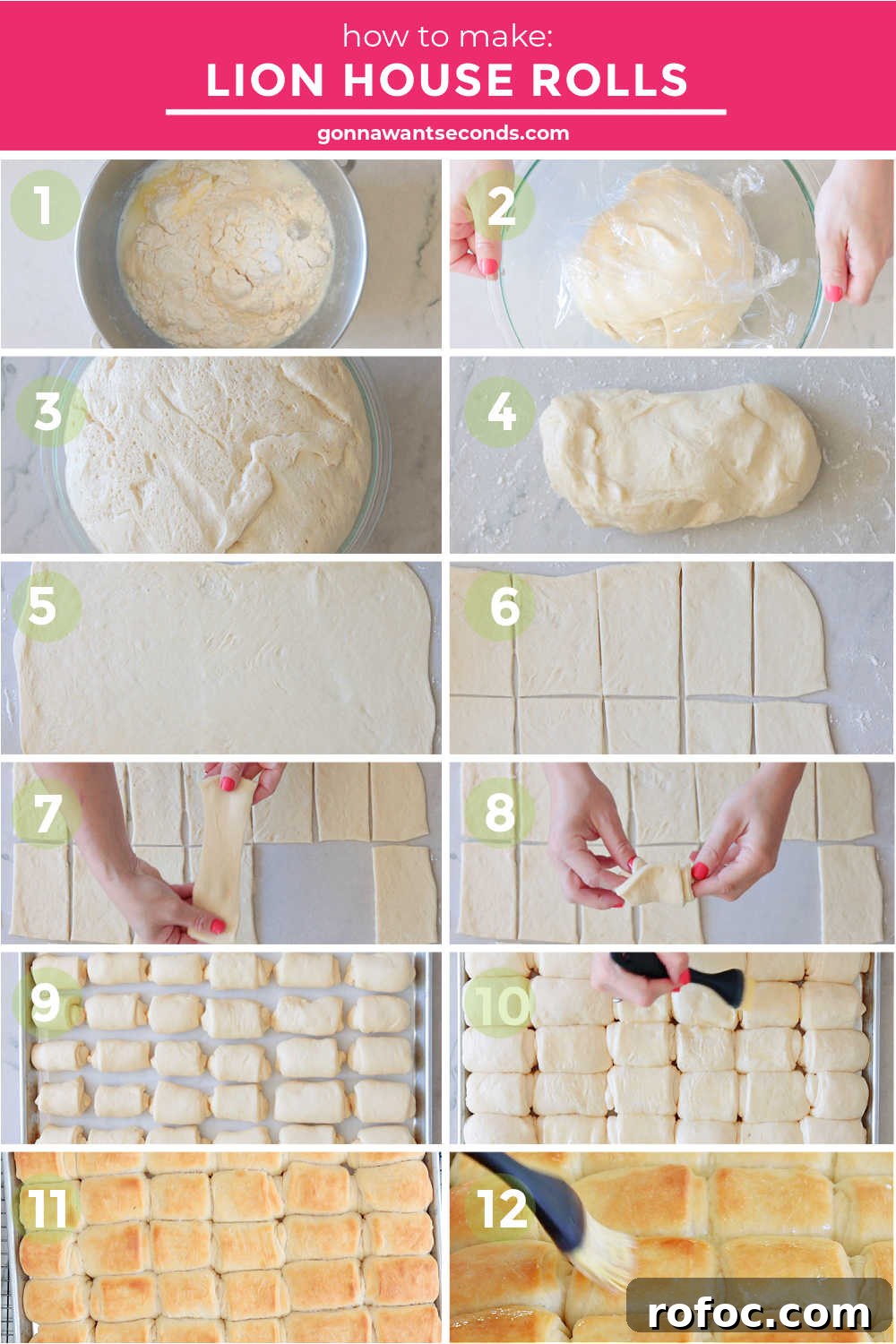
- Combine 2 cups warm water (105–110°F) with 2/3 cup dry milk powder in the mixer bowl. Whisk to dissolve, then stir in 2 tablespoons active dry yeast and 1 tablespoon sugar. Allow to proof 7–8 minutes.
- Add the remaining sugar, 1/3 cup softened butter, 1 large egg, 3 1/2 teaspoons salt, and 2 cups flour on low. Increase speed and mix 2 minutes. Add 3 more cups flour, mix again until the dough begins to come together.
- Add additional flour 1/4 cup at a time until the dough pulls away from the bowl and climbs the dough hook. Dough should be soft, elastic, and slightly tacky, not sticky.
- Coat a large bowl with 1 tablespoon vegetable oil, place the dough in it, turn to coat, and loosely cover. Let rise in a warm, draft-free spot until doubled (about 1 hour).
- On a floured surface, divide dough in half. Roll one half into an 11×14-inch rectangle about 1/4-inch thick. Brush with melted butter (about 1/4 cup).
- Cut the rectangle lengthwise and then into 2×4-inch rectangles. Gently tug each rectangle to stretch slightly, then fold or roll the dough onto itself to form each roll. Repeat with remaining dough.
- Place rolls on parchment-lined baking sheets with about 1 inch between rows. Cover and let rise again until doubled (about 1–1 1/2 hours).
- Preheat oven to 375°F. Brush risen rolls with melted butter and bake 18–20 minutes until golden and cooked through. Brush again with butter after baking and serve warm.
More Homemade Bread Recipes
- Southern Cornbread
- Jalapeno Cornbread
- Sopes
- Beer Bread
- Moist Banana Bread
- Butter Swim Biscuits
- Bo Berry Biscuit
- Cat Head Biscuits
- 7-Up Biscuits
Lion House Rolls
Ingredients
- 2 cups warm water (105–110°F)
- 2/3 cup instant nonfat dry milk
- 2 tablespoons dry yeast
- 1/4 cup sugar
- 3 1/2 teaspoons salt
- 1/3 cup butter, softened (plus more for brushing)
- 1 large egg
- 5–6 cups all-purpose flour
Instructions
- In a stand mixer bowl, whisk warm water and dry milk powder until dissolved. When the mixture is 105–110°F, stir in the yeast and 1 tablespoon sugar. Let proof 7–8 minutes.
- Add the rest of the sugar, 1/3 cup butter, egg, salt, and 2 cups flour. Mix on low until moistened, then medium for 2 minutes. Add 3 more cups flour and repeat. The dough will begin to stiffen.
- Add more flour 1/4 cup at a time until the dough pulls away from the bowl and wraps the dough hook. Dough should be soft, elastic, and slightly tacky.
- Coat a clean bowl with 1 tablespoon vegetable oil, shape dough into a ball, turn to coat, and loosely cover with plastic. Let rise in a warm, draft-free place until doubled (about 1 hour).
- On a floured surface, divide dough in half. Roll one half into an 11×14-inch rectangle about 1/4 inch thick. Brush with about 1/4 cup melted butter. Cut into 2×4-inch rectangles.
- Working one rectangle at a time, gently stretch, then fold or roll the dough onto itself to form each roll.
- Place rolls on parchment-lined baking sheets with about 1 inch between rows. Cover and let rise again until doubled (about 1–1 1/2 hours).
- Preheat oven to 375°F. Brush rolls with 1/4 cup melted butter and bake 18–20 minutes until golden. Brush again with butter when hot from the oven and serve warm.
Notes
- Instant nonfat dry milk: Adds creaminess without extra liquid and enhances flavor.
- Yeast: Use regular active dry yeast; if substituting instant yeast, reduce the amount to about 1 1/2 tablespoons.
- Flour: Use all-purpose to achieve the intended texture; bread flour can make rolls too chewy.
- Butter: Salted butter is preferred for flavor in this recipe. Use softened butter in the dough for even incorporation and melted butter for brushing between stages.
- Timing: Mix and proof (5–10 minutes), first rise (1–1 1/2 hours), shape and second rise (1–1 1/2 hours), bake (15–20 minutes).
- Shaping variations: For crescent rolls, divide dough into three balls after the first rise, roll each to 12-inch circles, cut into 12 wedges, and roll from the wide end to form crescents.
- Spacing & mixer tips: Leave about 1 inch between rows on the baking sheet. A stand mixer with a flat blade and dough hook is helpful for incorporating butter and handling stiff dough.
- Flour adjustments: Add flour gradually until the dough is soft, supple, elastic, and slightly tacky. Avoid adding too much to prevent dry rolls.
Nutrition
| Calories: 114 kcal
| Carbohydrates: 19 g
| Protein: 3 g
| Fat: 2 g
Source: Lion House Bakery