Updated May 2020 – It’s been eight years since this was first published, and my approach has only gotten simpler.
Everything I recommend for cleaning the house is gathered in this cabinet: the recipes, ingredients, tools and techniques I use daily. Rather than a stylized set-up, I’m showing my real cleaning cabinet—slightly tidier than usual so you can see what’s actually inside. There are no fancy matching bottles because that’s not how I clean. This is what I use to keep my home clean.
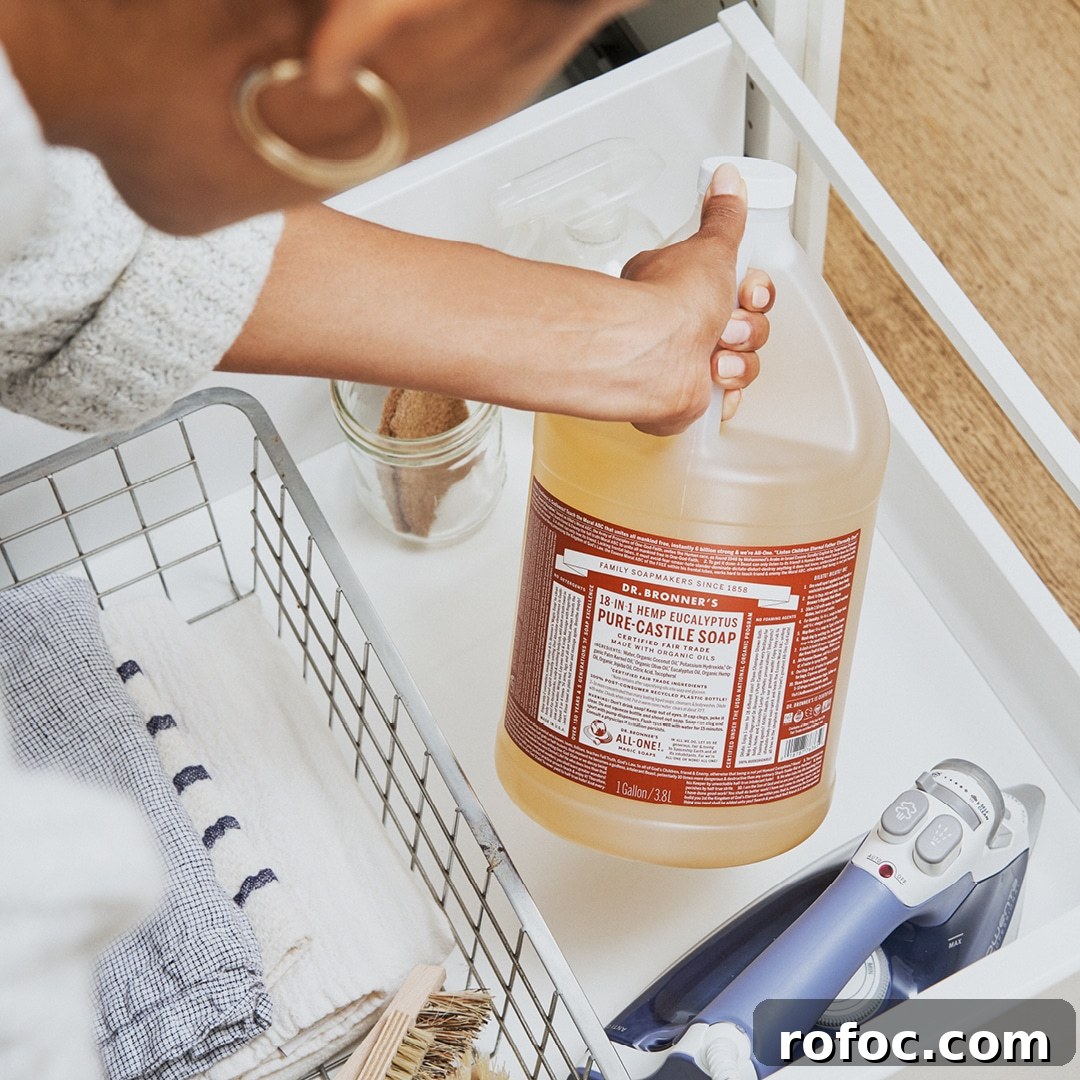
One trick I love: repurposed Dr. Bronner’s quart bottles as spray bottles. The necks fit standard spray triggers, so you can screw one on and label the bottle. Instant spray bottle, no waste.
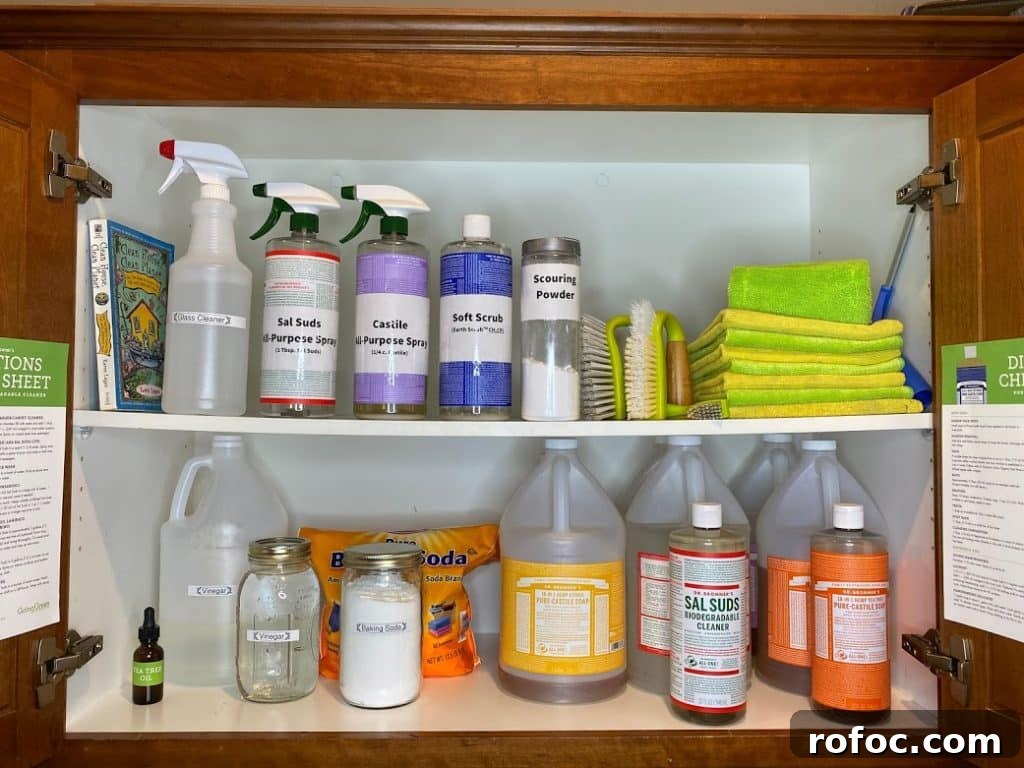
Bottom shelf (left to right) — ingredients:
- Tea tree essential oil — added to some dilutions for extra antimicrobial action.
- Vinegar — a natural acid useful as a degreaser and solvent. I use it for windows and mirrors, soap-scum removal, and hard-water rinsing. I buy it in bulk.
- Baking soda — a gentle abrasive for scouring surfaces, tackling soap scum, deodorizing, and whitening laundry. I keep a large bag on hand.
- Castile Magic Soap — I keep gallons and smaller bottles in several scents. Castile soap is my go-to for dilutable, multi-purpose cleaning: it removes grime and germs and can be used for many tasks around the house.
- Sal Suds Biodegradable Cleaner — a more concentrated, mildly detergent cleaner that performs well even in hard water. I use Sal Suds for laundry, mopping, counters, dishes and many heavy-duty cleaning tasks.
Top shelf (left to right):
- Clean House, Clean Planet by Karen Logan — a practical book that shaped how I clean.
- Glass cleaner — a simple half-vinegar, half-water solution for windows and mirrors.
- Sal Suds all-purpose spray — 1 tablespoon Sal Suds per quart of water; optional 10–20 drops tea tree oil. My heavy-duty household spray.
- Magic Soap all-purpose spray — 1/4 cup Magic Soap per quart of water; optional 10–20 drops tea tree oil. I often reach for this when ants are an issue.
- Earth Scrub / Soft Scrub — a soft scrub made from baking soda, Magic Soap, water and vinegar. It’s great for tougher scrubbing jobs and a fun, effective alternative to abrasive commercial products.
- Scouring powder — often just baking soda, sometimes with added essential oils. Stored in a repurposed spice jar, it’s excellent for stainless-steel sinks and removing soap scum.
- Variety of brushes — good tools matter: large and small brushes, stiff grout brushes and kid-friendly options. Don’t skimp on quality brushes.
- Microfiber cloths — grippy, lint-free, reusable cloths for polishing, dusting and general cleaning. For those concerned about microfibers, wash them in a dedicated bag designed to capture fibers.
- Washable microfiber floor mop pad — machine-washable and air-dryable after mopping. I also use a larger washable string mop that’s stored elsewhere.
- Squeegee — essential for windows and mirrors and for wiping down shower doors to reduce mineral buildup. Invest in a good squeegee for best results.
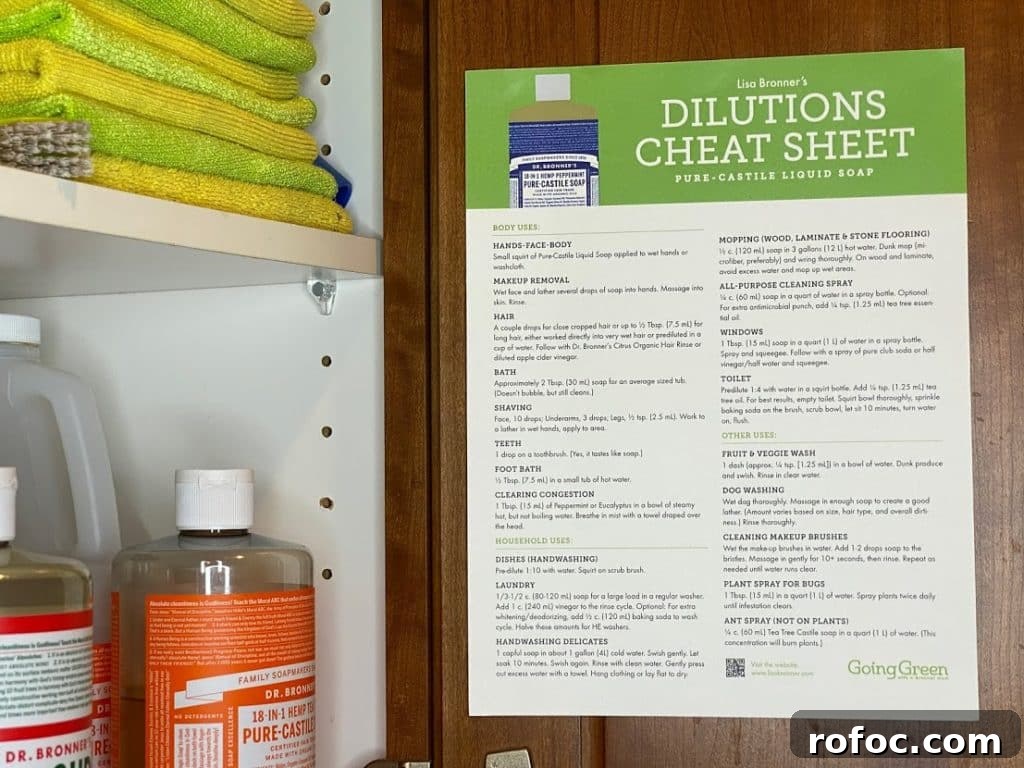
Cabinet doors:
- Dilution cheat sheets — I post simple dilution guides for Sal Suds and Castile soap inside the cabinet doors so I don’t have to look up recipes while cleaning.
That’s it: simple, affordable, and effective. This system keeps my home clean without harsh fumes or harmful residues. My kids can safely use these supplies, and the risk is low if a curious child or pet were to access the cabinet. Fewer hazards, less worry.
Further reading
- GIY All-Purpose Cleaning Spray
- The Low Cost of Green Cleaning
- My Bathroom Cabinet
- Moving-Out Kit for Dorms, Apartments & Homes
This topic and many more appear in my book, Soap & Soul: A Practical Guide to Minding Your Home, Your Body, and Your Spirit with Dr. Bronner’s Magic Soaps, available in hardback, eBook and audiobook editions.
Sal Suds cleaner shows >60% biodegradation after 28 days per ISO 14593.