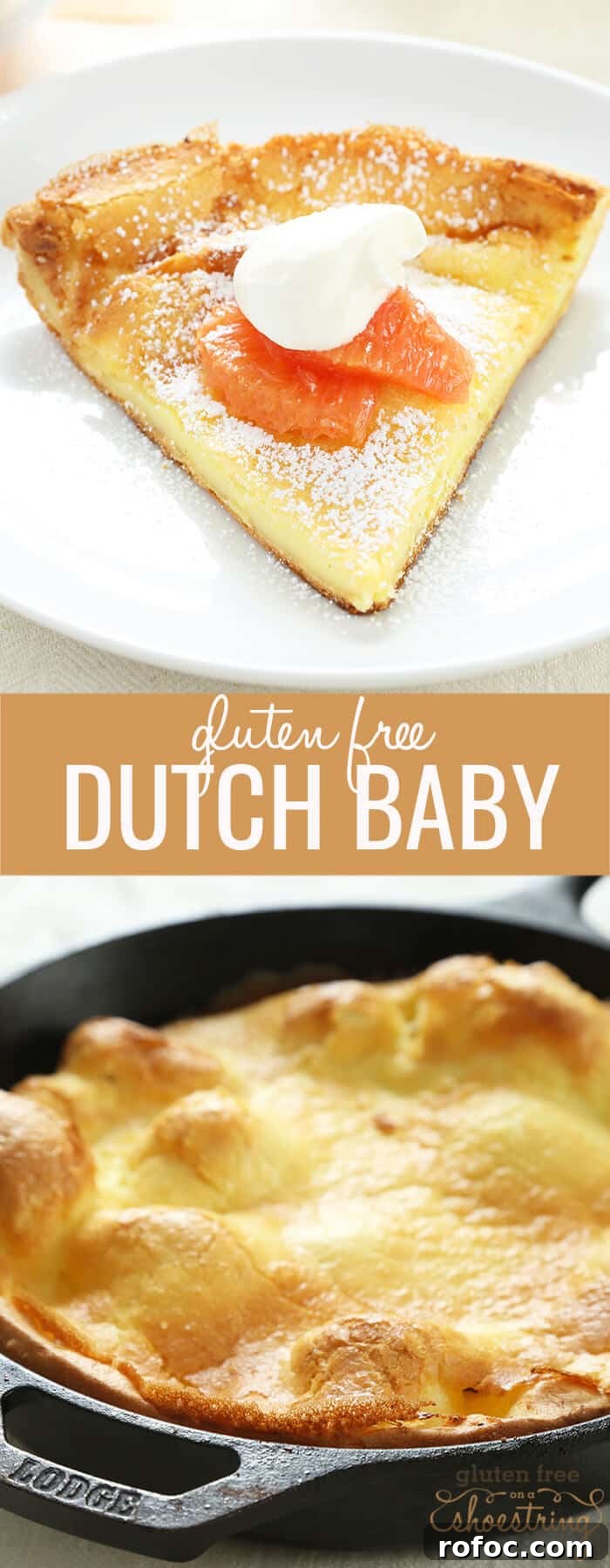
A gluten-free Dutch Baby pancake is a quick, comforting breakfast that comes together in about 20 minutes. Light yet satisfying, it looks impressive but is simple to make.
What makes this gluten-free Dutch baby recipe special
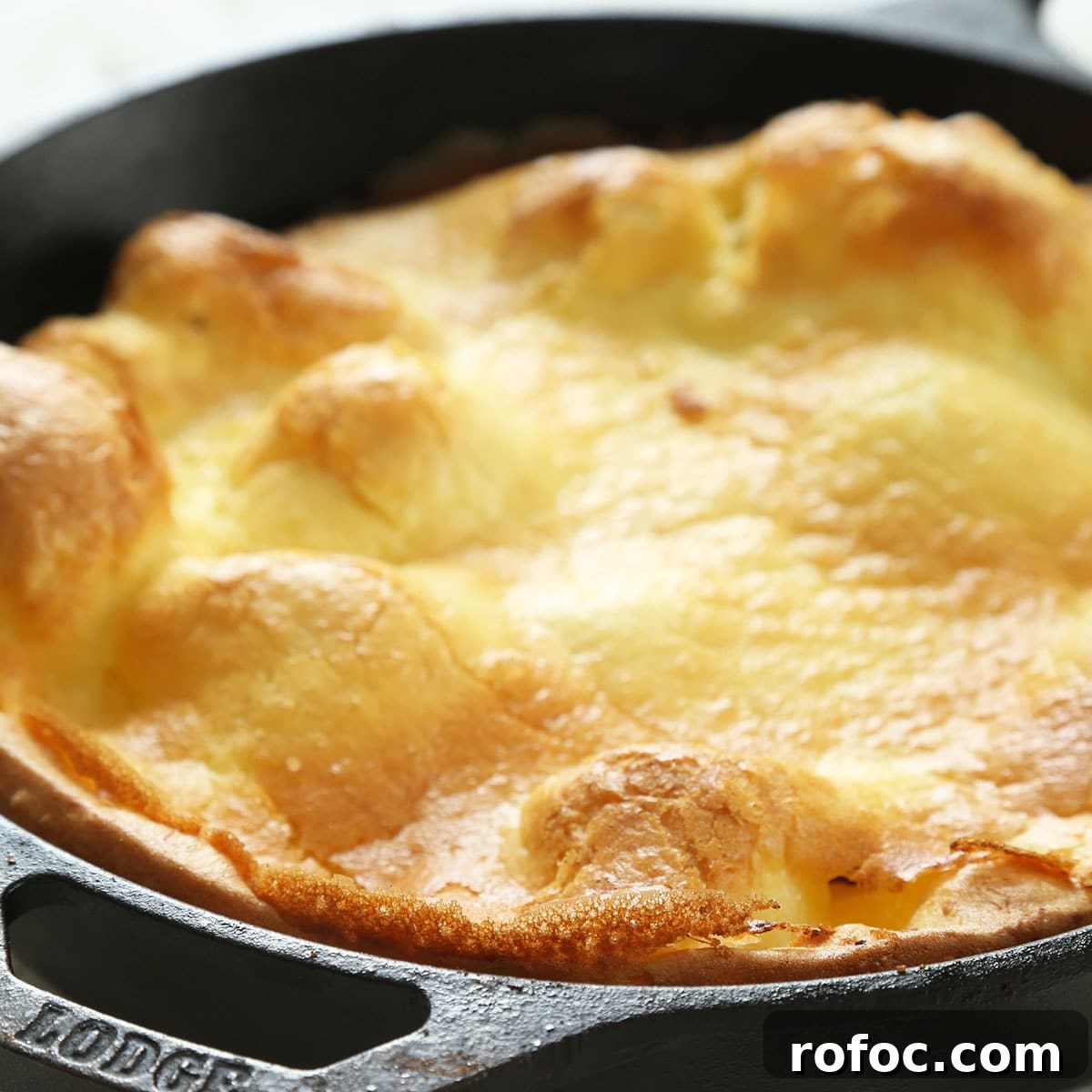
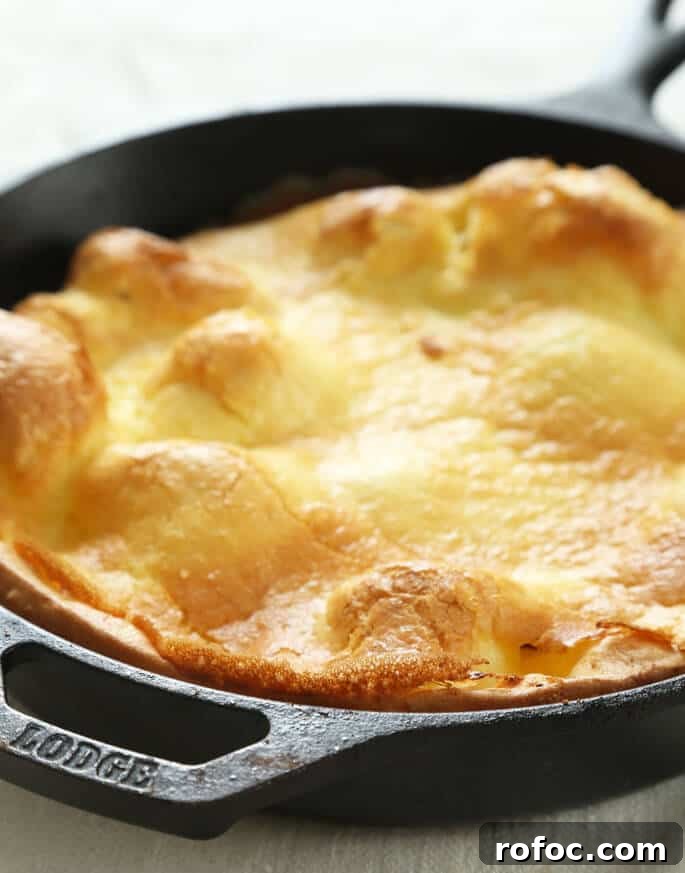
If you haven’t tried a Dutch baby (also called a German pancake), you’re in for a treat. It’s a dramatic cross between a pancake and a popover: puffed, golden edges with a tender, custard-like center.
The batter uses basic pantry staples—eggs, butter, milk, and a simple gluten-free flour blend—blended to a smooth, pourable consistency. This recipe intentionally avoids xanthan gum so the batter stays light and fluid. The batter is poured into a very hot, butter-coated 9-inch cast-iron skillet (or another oven-safe pan). As it bakes, the pancake puffs, browns at the edges, and develops a mix of textures as the center settles while cooling.
Tips for making the perfect gluten-free Dutch baby
With a simple recipe like this, a few specific steps make a big difference.
Select your gluten-free flour blend carefully
Not every gluten-free flour blend works here. A gum-free blend made with superfine white rice flour (no xanthan gum) produces a smooth, grit-free batter and the best texture for a Dutch baby. Blends that contain xanthan gum can produce a gummy, heavy batter that won’t puff properly.
Begin with room-temperature ingredients
Eggs and milk should be at room temperature so they blend smoothly. Cold milk can cause eggs to clump, which prevents a silky batter.
Make sure your pan is really hot
The pan must be preheated in the oven and hot when you pour in the batter. The sudden contact with a very hot, buttered pan creates the dramatic rise and even browning. A cast-iron skillet is ideal because it holds and distributes heat well, but a heavy 9-inch cake pan will also work. Avoid thin glass pans like Pyrex when possible, since glass can get hotter at the edges and increase the risk of burning.
Don’t use a pan that’s too big or too small
A too-small pan will overflow and not allow a proper puff; a too-large pan spreads the batter too thin and prevents the pancake from rising before it browns. A 9-inch pan is recommended for balanced rise and texture.
FAQs
Most often the pan wasn’t hot enough. Be sure to preheat the oven with the pan and butter inside so the pan is very hot when you pour the batter.
Cold ingredients cause clumping. Use room-temperature eggs and milk and blend briefly until smooth; the batter should be thin and pourable.
A flour blend that contains xanthan gum will make the batter too viscous and dense. Use a gum-free blend for this recipe to keep the texture light.
Yes. It’s best to divide the batter and bake in two pans so each will puff properly. Baking a double batch in one large shallow pan will produce good flavor but a different, flatter texture.
A Dutch baby is best fresh from the oven. Leftover wedges can sit at room temperature for about 4 hours or be wrapped and refrigerated for up to 1 day. Batter can be made ahead and refrigerated up to 3 days—bring it fully to room temperature and blend briefly before baking.
Gluten-free German pancake
The name “Dutch baby” likely comes from a mispronunciation of “Deutsche” by a German restaurateur’s daughter in Seattle—so the German pancake became known as a Dutch baby. Whether that anecdote is true or apocryphal, the important part is that this pancake is easy, reliable, and delicious.
Gluten-free Dutch baby pancake recipe
Gluten Free Dutch Baby Recipe
Equipment
- Blender
Ingredients
- 1 ½ tablespoons (21 g) unsalted butter
- ¾ cup (6 fl oz) milk, at room temperature
- 3 eggs (150 g weighed out of shell), at room temperature
- ¾ cup (105 g) basic gum-free gluten-free flour blend (69 g superfine white rice flour + 23 g potato starch + 13 g tapioca starch)
- ¼ teaspoon kosher salt
Instructions
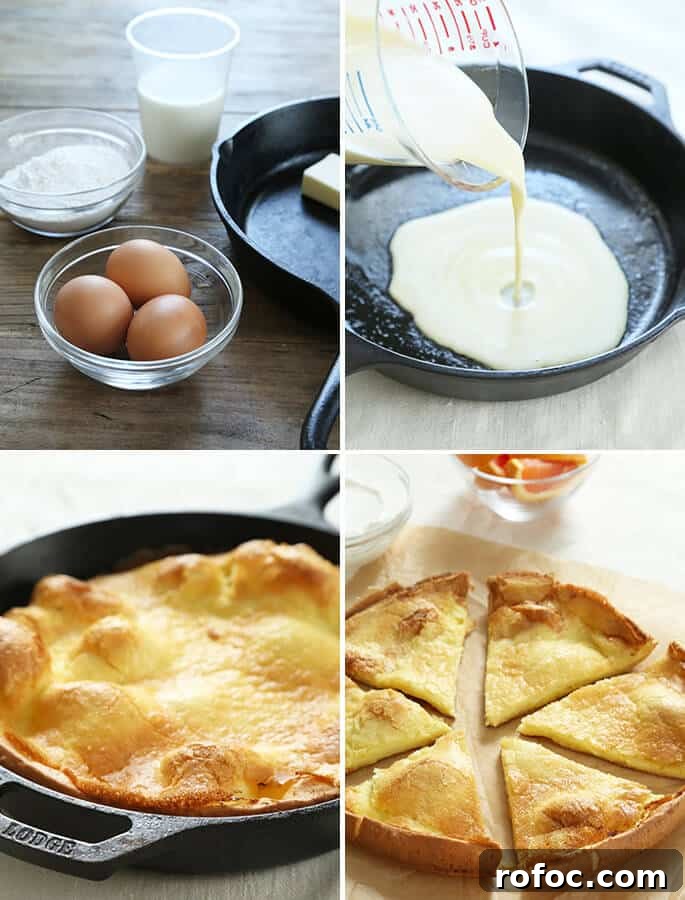
- Preheat your oven to 375°F. Place the butter in a 9-inch cast-iron skillet or heavy 9-inch cake pan.
- Place the pan with butter in the preheated oven until the butter melts while you make the batter.
- In a blender, combine the milk, eggs, flour blend, and salt; blend just until smooth. The batter will be thin.
- Remove the hot pan from the oven and pour off excess butter, leaving a thin coating.
- Working quickly, pour the batter into the hot pan and return it to the oven. Bake for 12 minutes.
- Rotate the pan 180° and bake until the pancake is puffed and golden all over, about 5 more minutes. Remove from the oven.
- If the pancake sticks slightly, loosen the edges with a knife and slide it onto a wire rack to keep the bottom from getting soggy.
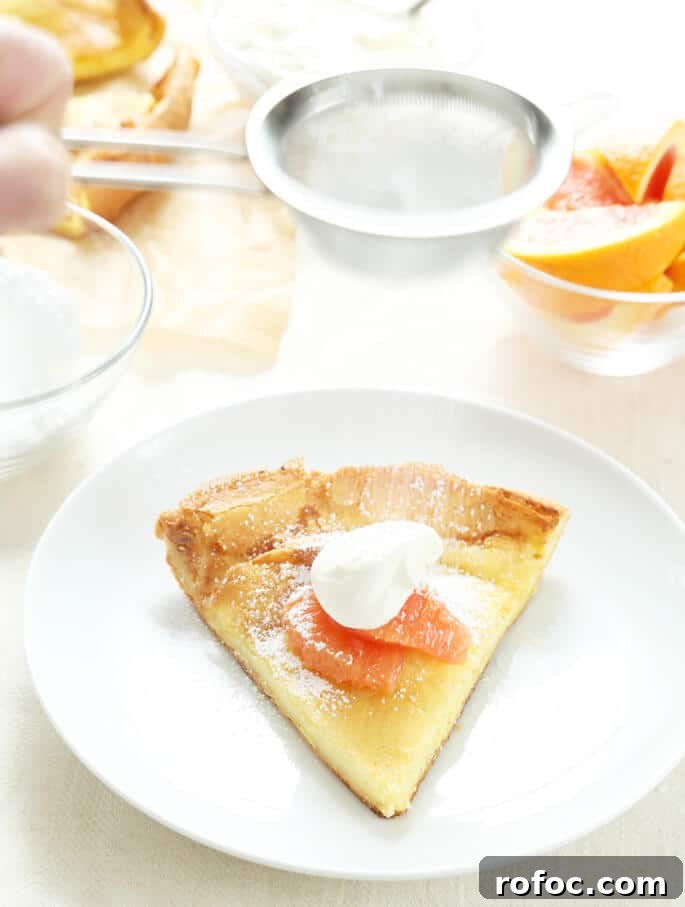
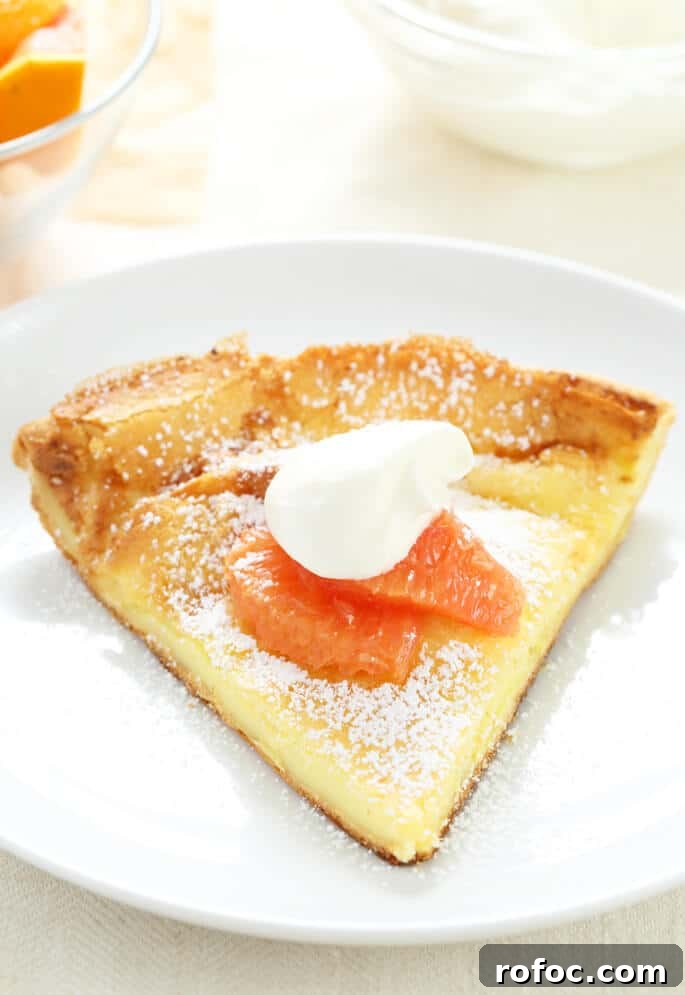
- Cool briefly, then slice into 6 wedges and serve warm with fruit, a dusting of confectioners’ sugar, and optional whipped cream.
- Leftovers can sit at room temperature for about 4 hours or be wrapped and refrigerated for up to 1 day. Reheat gently before serving. The recipe doubles easily; bake in two pans for best puff.
Nutrition
Nutrition information is an approximation.
Like this? Leave a comment below!