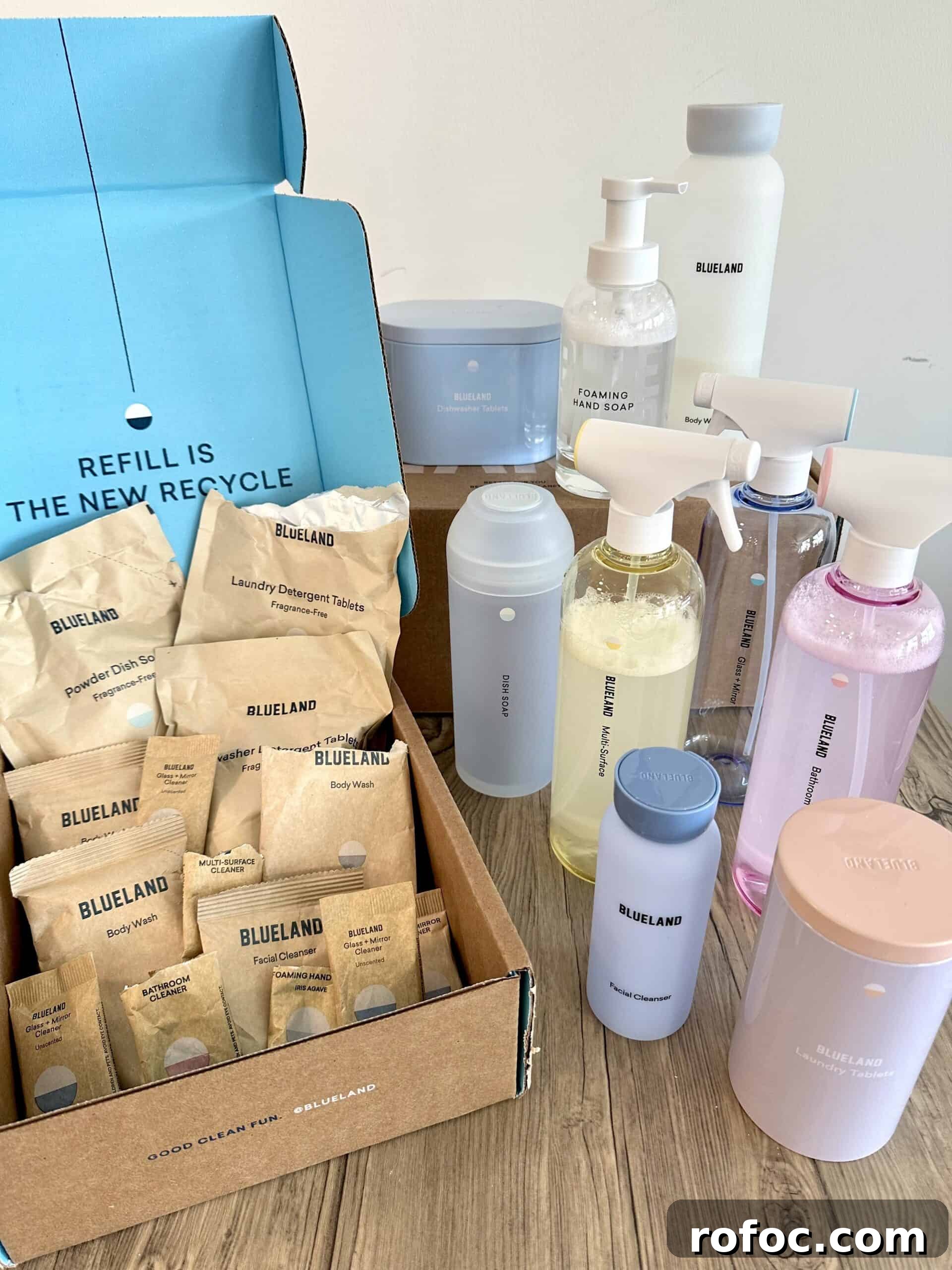
Blueland has built a strong reputation with memorable branding, high-profile investors, and a clear goal: reduce single-use plastic in household cleaning. While many applaud their approach, some critics accuse the company of greenwashing and question how eco-friendly and transparent their products really are.
I’ve been asked about Blueland frequently and have used their products for over a year. I’ve recommended a few items in past guides, and this article brings together my full, updated assessment of the brand—covering effectiveness, ingredient safety, sustainability, and practical pros and cons.
In a Nutshell:
My FAVORITE things about Blueland are:
- They’re one of the few brands offering laundry and dishwasher tablets that are PVA-free, avoiding the common plastic film used in many pods.
- Many Blueland formulations avoid known problematic ingredients and several products have third-party certifications.
- The refill tablet system effectively reduces single-use plastic and lowers shipping weight and volume compared with liquid bottles.
My LEAST favorite things about Blueland are:
- Several products use undisclosed “fragrance,” which prevents customers from knowing the exact ingredients. For safety and allergy reasons, I recommend fragrance-free options where available.
- Their tablet wrappers are industrially compostable rather than home-compostable. That distinction is not always clear to customers and limits the real-world compostability benefit.
Table of Contents: My Honest Review of Blueland Cleaning Products
- Is Blueland Non-Toxic?
- Potentially Problematic Ingredients in Blueland’s Products
- Is Blueland Actually Eco-Friendly?
- Blueland’s Third-Party Certifications
- Are Blueland’s Products All-Natural and/or Organic?
- My Review of Blueland’s Cleaning Products (Do They Actually Work?)
- 1. The Spray Cleaners
- 2. The Laundry Detergent
- 3. The Toilet Bowl Cleaner
- 4. The Dish Soap
- 5. The Dishwasher Tablets
- 6. The Foaming Hand Soap
- 7. The Body Wash
- 8. The Facial Cleanser
- So… Will I Be Buying Blueland’s Products Again?
This article is not sponsored, nor were the products gifted. This article contains affiliate links, which means a commission may be earned if you purchase through them.
Is Blueland Non-Toxic?
Blueland markets “Consciously Clean Ingredients,” and they do avoid several widely criticized chemicals. Their formulations are free from parabens, phthalates, ammonia, chlorine bleach, and VOCs in many products. That’s a meaningful baseline for safer household products.
However, there are ingredients and practices that raise concerns for certain users—especially people with sensitivities or those looking for full ingredient transparency.
Potentially Problematic Ingredients in Blueland’s Products
Undisclosed Fragrance
One major issue is undisclosed “fragrance” used in several Blueland products. U.S. regulations allow fragrance formulas to be listed simply as “fragrance,” which can hide hundreds or thousands of potential chemicals. Some of these chemicals can be irritants, allergens, or endocrine disruptors. Blueland states its formulas are phthalate-free and avoid Prop 65 listed chemicals and “many known allergens,” but that doesn’t replace full transparency. For this reason, I recommend the fragrance-free product lines.
Dyes
Some products include synthetic dyes, which are unnecessary for function and are petroleum-derived. Dyes don’t improve cleaning performance and can be avoided without affecting efficacy.
Sulfates
Certain Blueland products use sodium lauryl sulfate (SLS), a common surfactant that effectively removes dirt but can irritate sensitive skin. Notably, their hand, body, and facial cleansers currently do not include SLS.
Formulations can change, so checking current ingredient lists on product pages is always a good idea.
Is Blueland Actually Eco-Friendly?
Blueland’s core sustainability goal is to eliminate single-use plastic by selling reusable bottles and refill tablets. This model reduces plastic waste, shipping weight, and associated carbon emissions compared with traditional liquid cleaners.
No PVA in Pods
A standout sustainability advantage is that Blueland’s laundry and dishwasher tablets are PVA-free. PVA films used in many pods are a form of plastic that can release micro- and nanoplastics into waterways. Blueland’s solid tablets avoid that issue and are genuinely more plastic-free than most popular pods.
Compostable Wrappers — Industrial Only
Blueland labels tablet wrappers as “compostable,” but they are industrially compostable rather than home-compostable. That means the wrappers require high-temperature commercial composting to break down, which limits practical composting for many consumers. While it’s an improvement over conventional packaging, it’s not the fully circular solution some buyers expect.
Reusable “Forever” Bottles — Mixed Durability
The tins and glass components used for tablets and soaps feel high-quality, but some plastic spray bottles and personal-care bottles feel less durable than the “forever” label implies. Some customers report breakage over time, so durability could be improved, or alternative materials (glass with protective sleeves) offered.
Blueland’s Third-Party Certifications
Blueland holds several noteworthy certifications that support their ingredient and sustainability claims:
EWG Verified
Certain fragrance-free products—like hand soap, laundry detergent tablets, dishwasher tablets, and fragrance-free dish soap—are EWG Verified.
MADE SAFE®
The Facial Cleanser is MADE SAFE certified, and the body wash base formula has been reviewed, although fragrances are under review. MADE SAFE is a strict standard for ingredient safety.
Cradle to Cradle
Many Blueland products have a Platinum Material Health Certificate, examining material health and lifecycle impacts.
Leaping Bunny
Blueland is Leaping Bunny certified as cruelty-free and states its products are vegan (though not all items have separate vegan certification).
B Corp
Blueland is B Corp certified, which evaluates company-wide commitments to social and environmental performance, transparency, and accountability.
Are Blueland’s Products All-Natural and/or Organic?
No. Blueland products mix naturally derived and synthetic ingredients. Some items carry USDA BioPreferred status, indicating a portion of ingredients are bio-based, but none of the ingredients are certified organic. “Naturally derived” isn’t always inherently safer, and synthetics aren’t always harmful; ingredient-by-ingredient evaluation matters.
My Review of Blueland’s Cleaning Products (Do They Actually Work?)
Here’s how the products performed in my home over the past year.
1. The Spray Cleaners
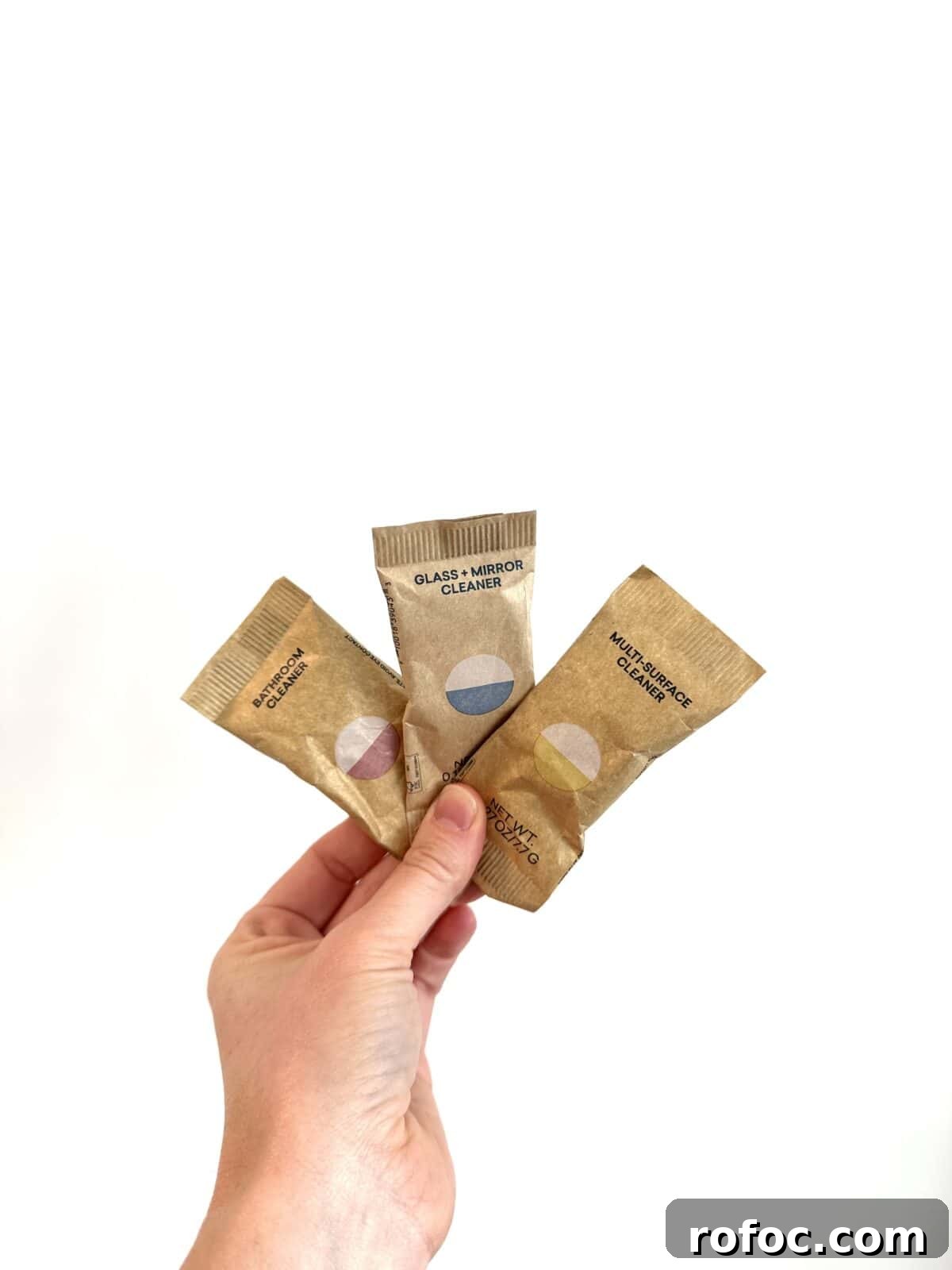
Available as Multi-Surface, Bathroom, and Glass + Mirror cleaners, these sprays are made by dissolving a tablet in water. They clean well and match the performance of many conventional and non-toxic cleaners. The Multi-Surface cleaner worked best for general use; the Glass Cleaner is useful but not essential. Note: the Multi-Surface and Bathroom cleaners are scented in current formulations, while Glass Cleaner is available fragrance-free.
These cleaners are not disinfectants, which is appropriate for everyday cleaning without over-sanitizing surfaces.
2. The Laundry Detergent
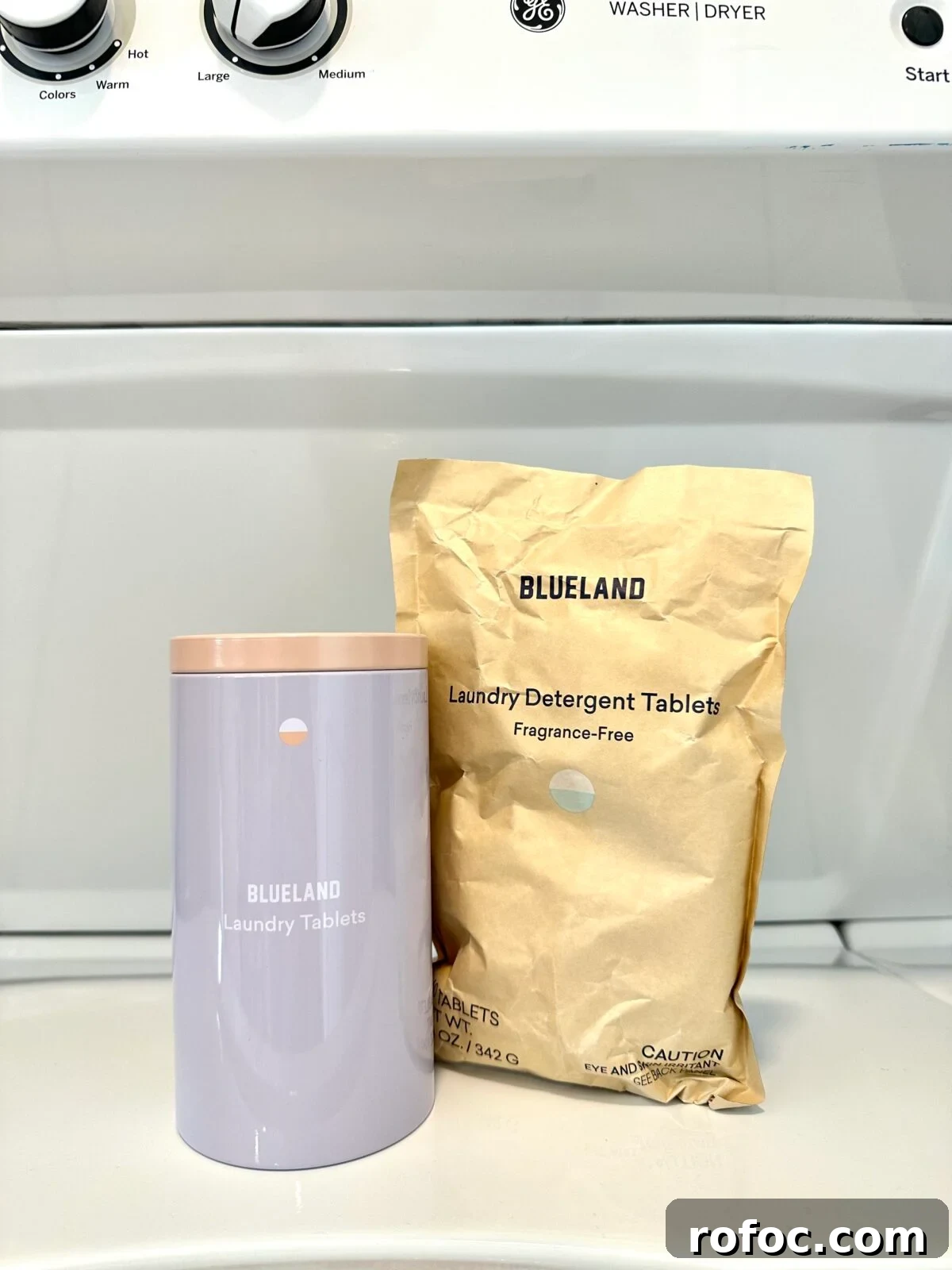
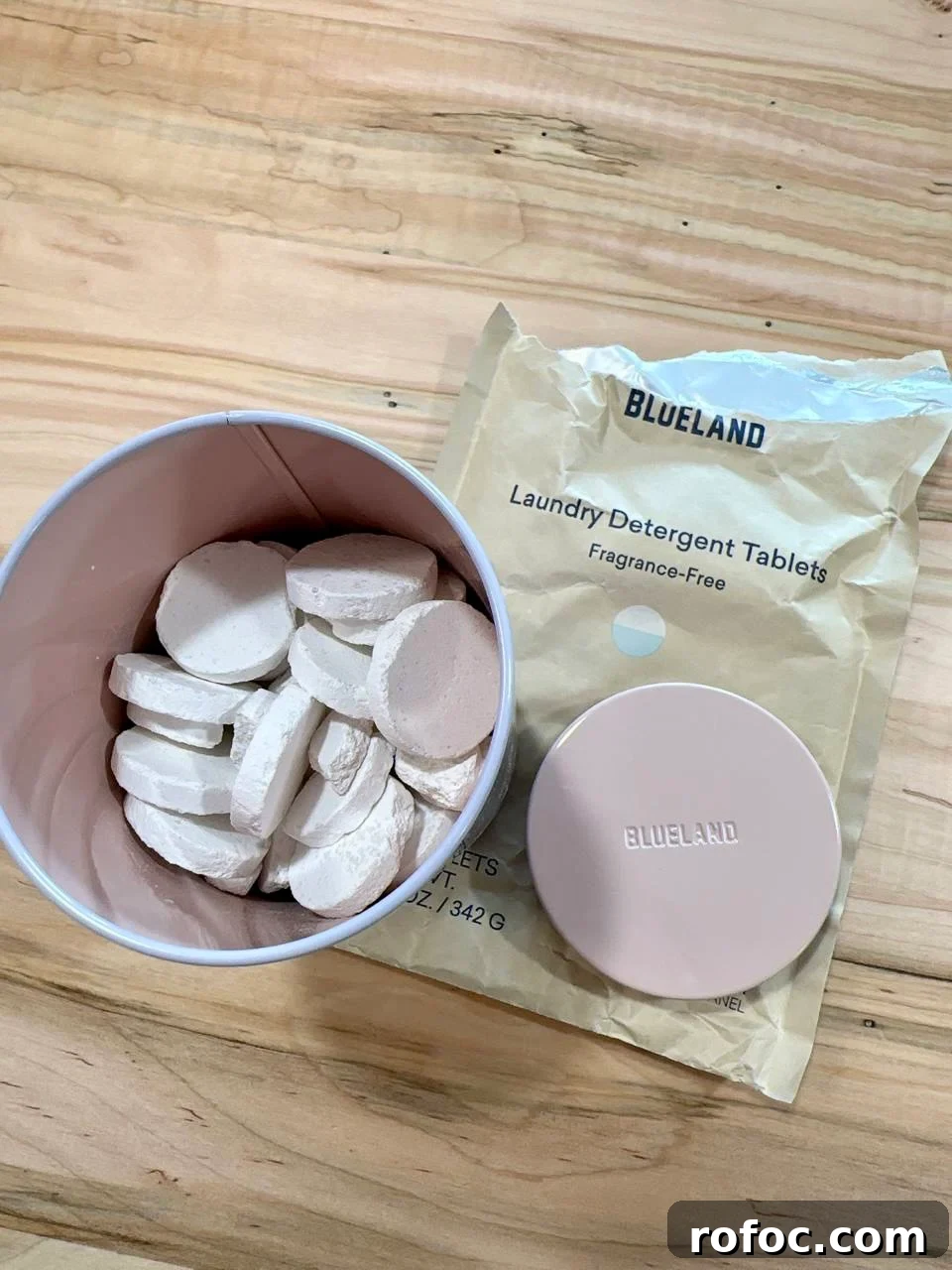
Blueland’s laundry tablets earned a top spot in my non-toxic laundry detergent recommendations. They are PVA-free, fragrance-free (for the verified versions), easy to use, and effective. Place the tablet in the drum before adding clothes for best dissolution. Occasionally tablets arrive partially broken, but that hasn’t affected performance for me. They’re also convenient for travel and the reusable tin makes refilling simple.
3. The Toilet Bowl Cleaner
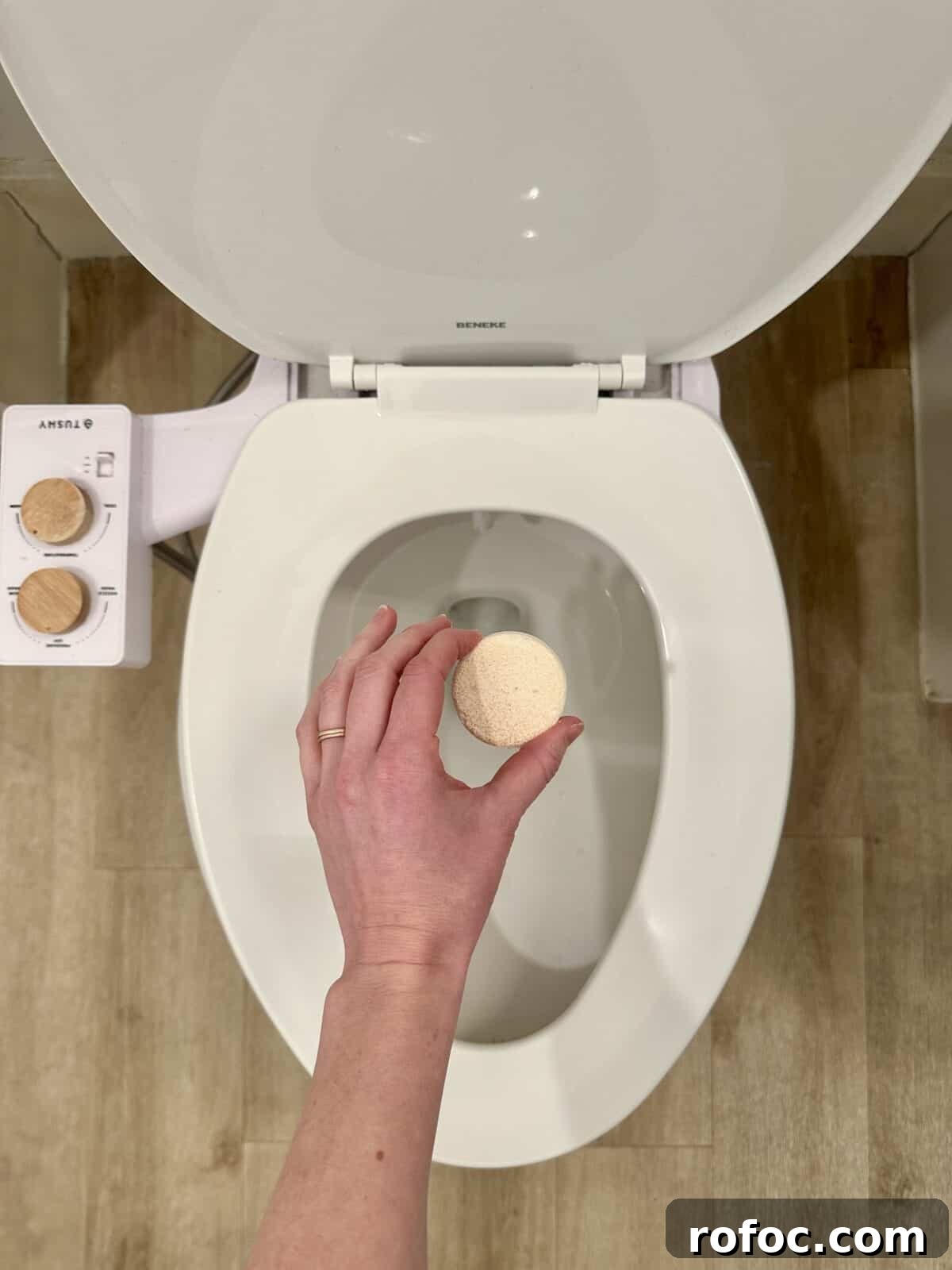
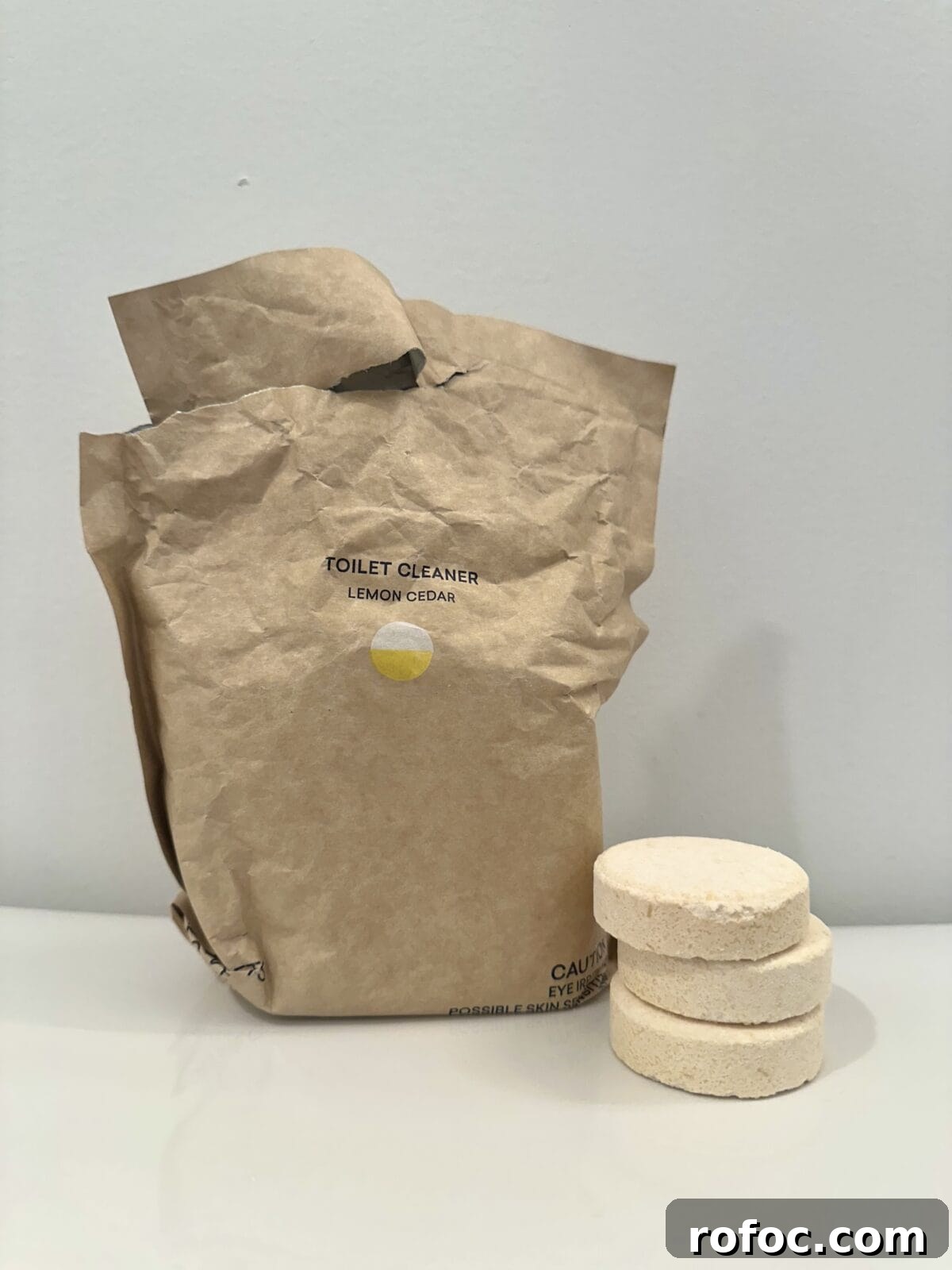
The tablet-style toilet cleaner is usable and effective, but I prefer a spray that can cling under the rim for a deeper sit-and-scrub. The toilet tablet comes in a single scent and there’s no fragrance-free option currently.
4. The Dish Soap
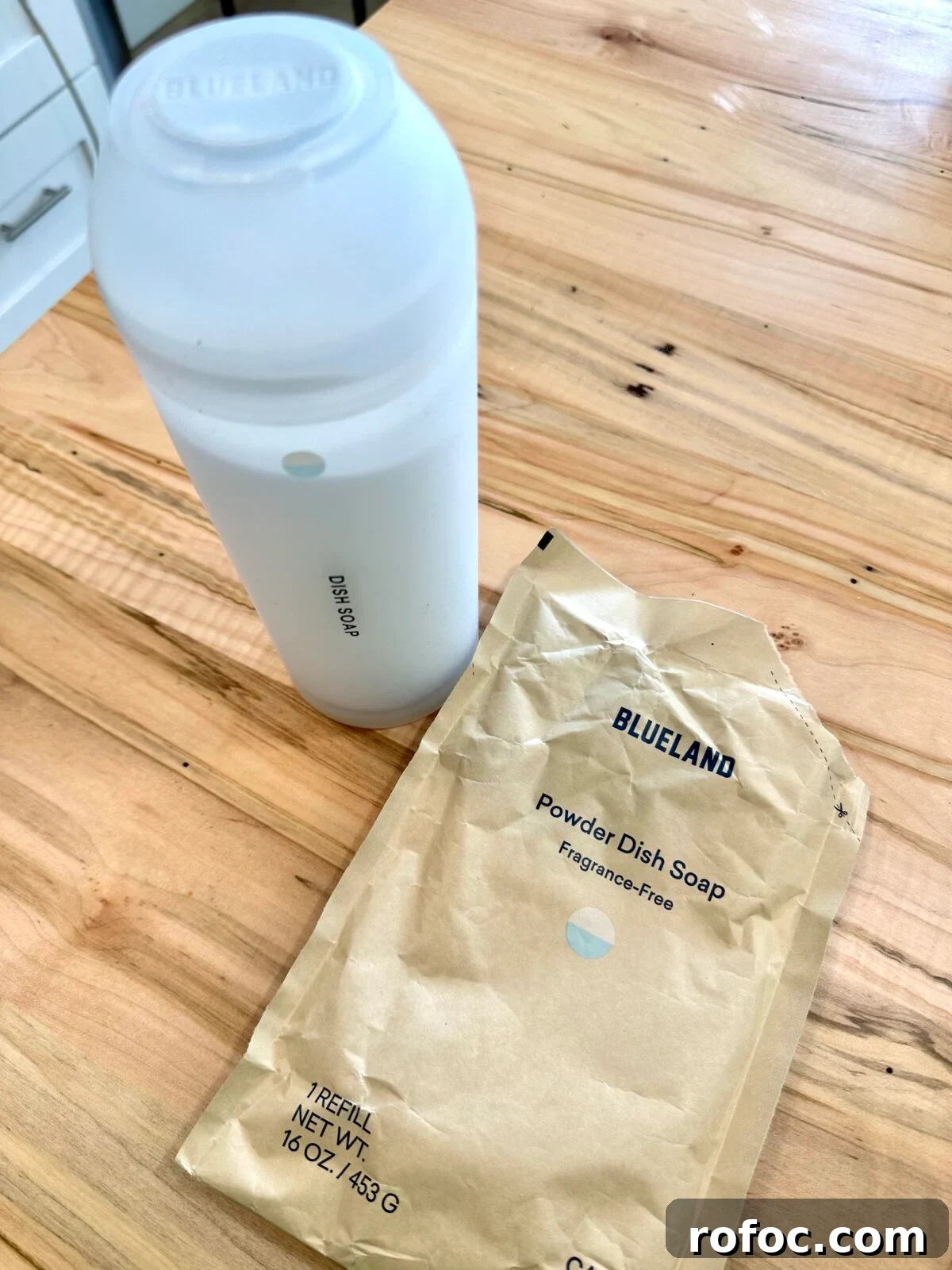
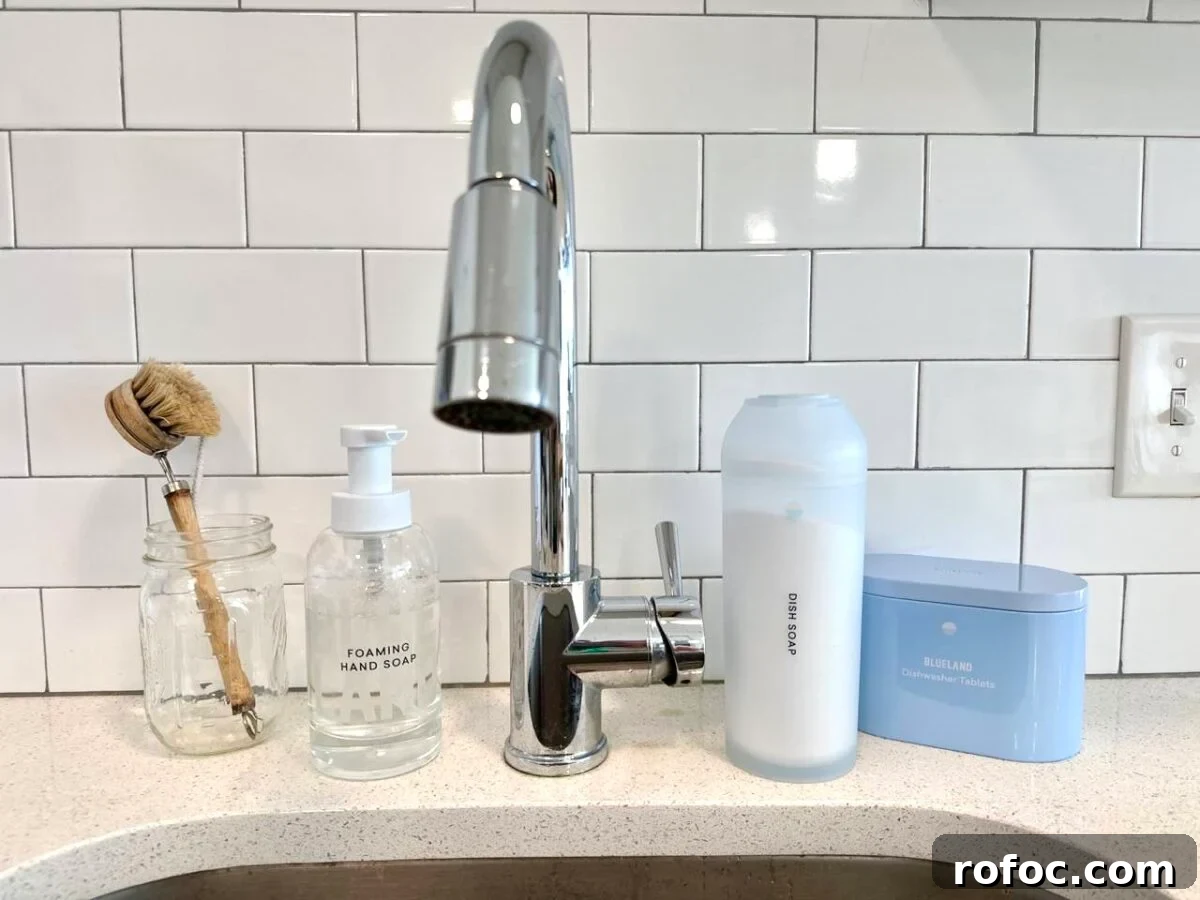
Blueland’s powdered dish soap is dispensed from a silicone shaker. It works well enough and is fragrance- and dye-free, but some users report it produces less suds than conventional liquid soaps. I occasionally noticed powder dusting while shaking the soap, which bothered me slightly. It cleans effectively, though, and the refill model reduces single-use plastic.
5. The Dishwasher Tablets
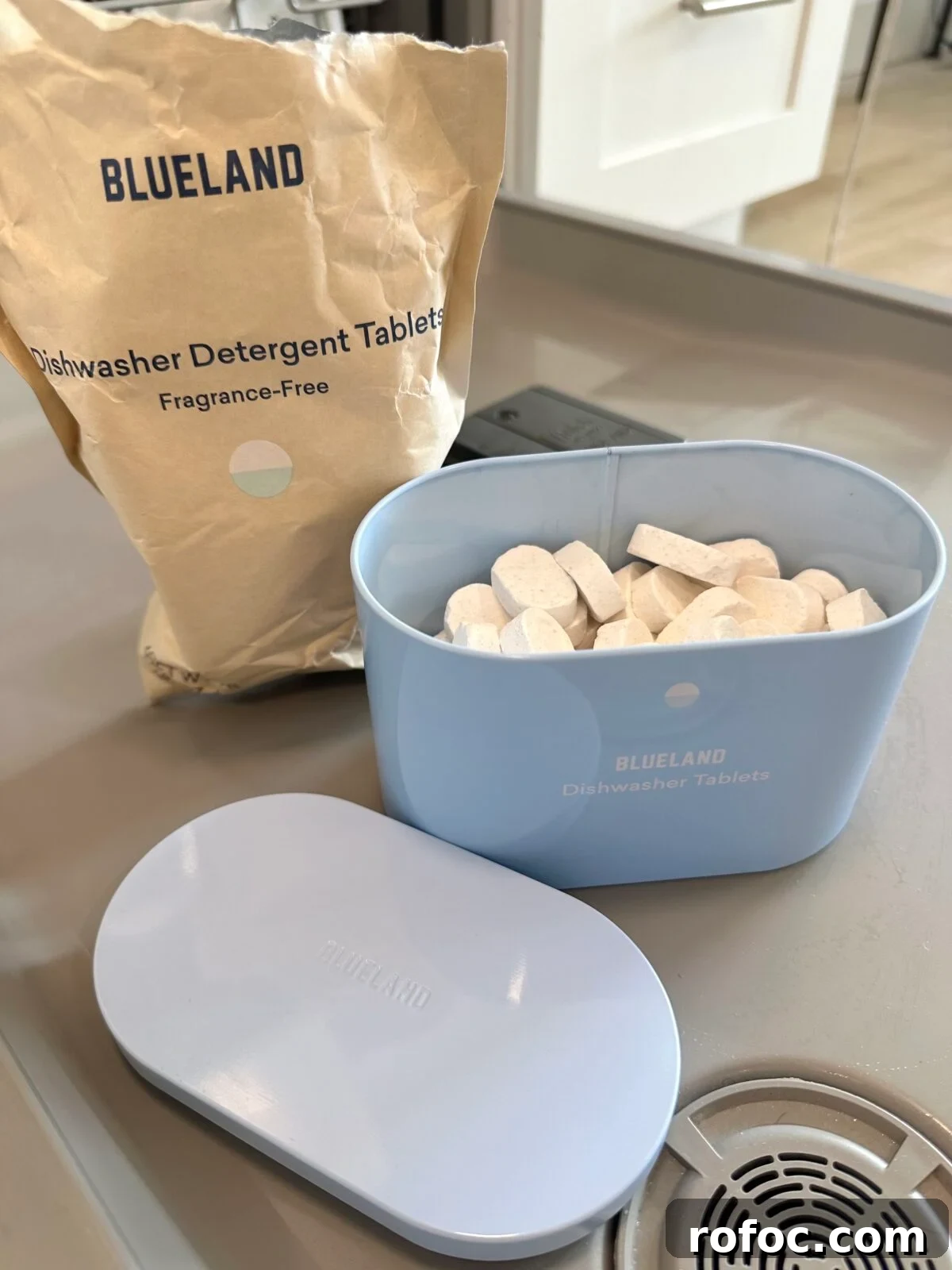
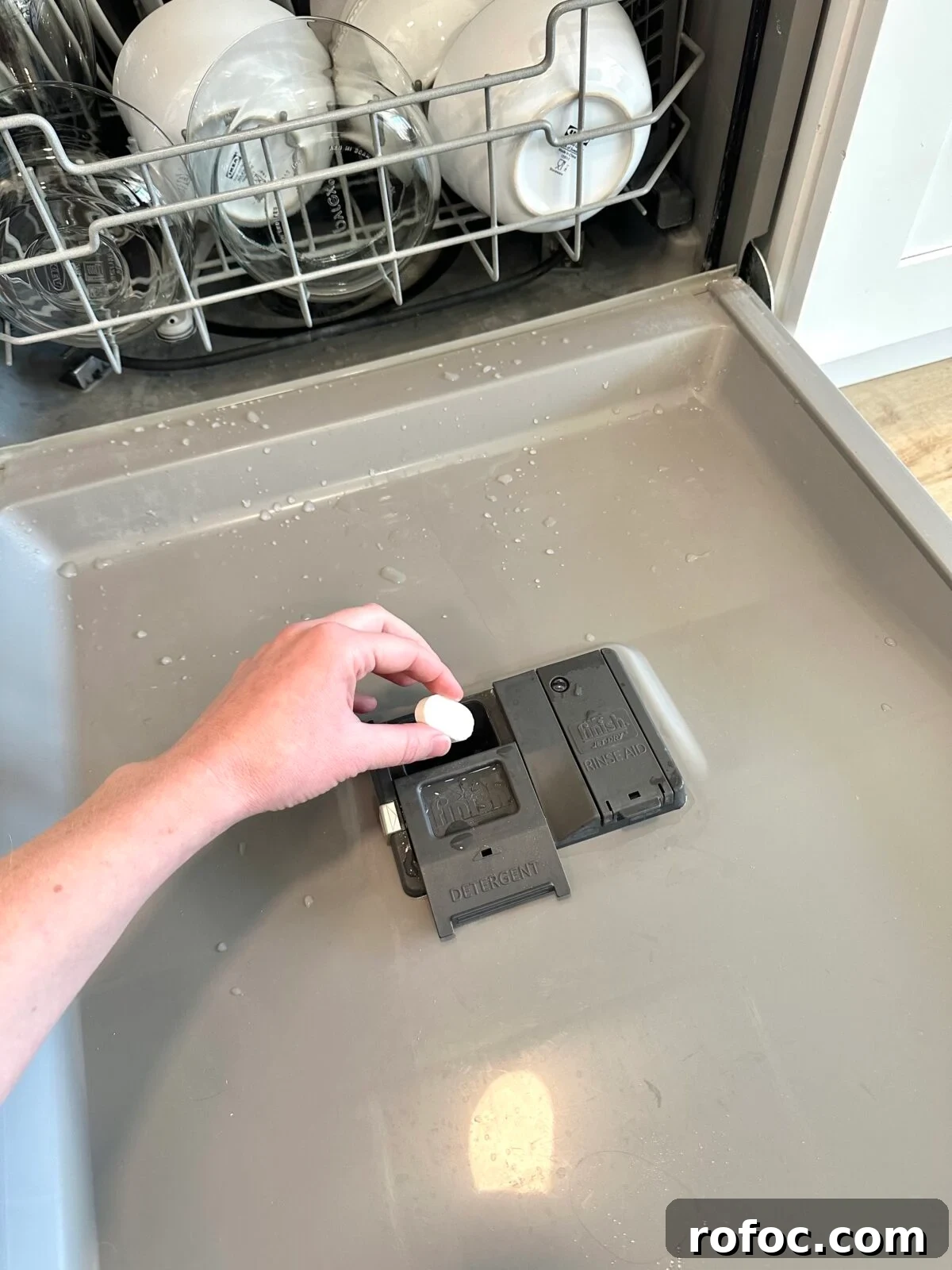
Like the laundry tablets, Blueland’s dishwasher tablets are PVA-free, compact, and effective. They don’t leave residues and are easy to store in the reusable tin. I plan to repurchase these.
6. The Foaming Hand Soap
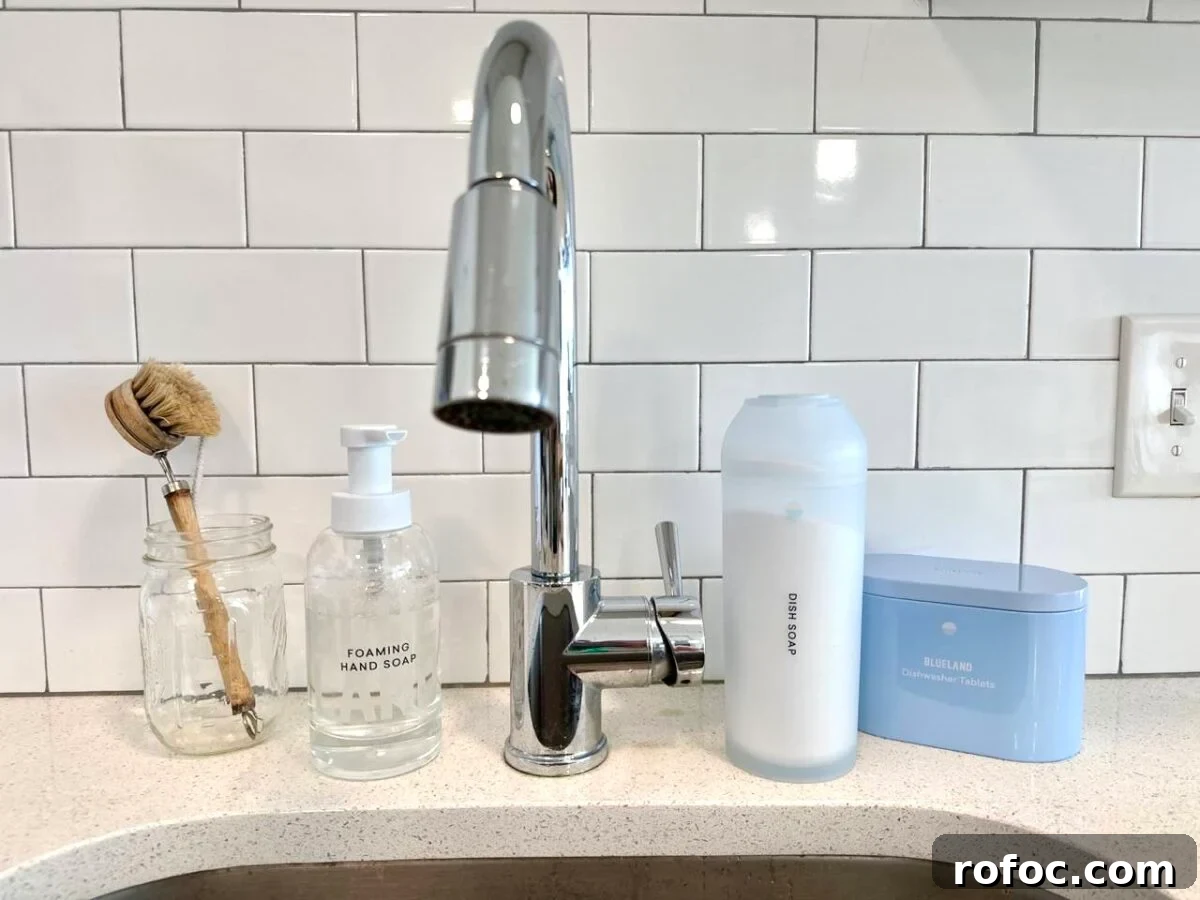
The foaming hand soap dispenses from a mostly glass dispenser and comes in many scents; a fragrance-free option is available and is my recommendation. The soap is effective, mildly sudsy, and did not dry out my hands. The dispenser feels sturdy and higher quality than the plastic spray bottles.
7. The Body Wash
Note: As of spring 2025, Blueland appears to have discontinued body wash.
The body wash was delivered as a powder that transforms to a creamy texture when mixed with water in the refill bottle. It smelled pleasant, but because it lacked a fragrance-free option, I could not recommend it for those seeking full transparency.
8. The Facial Cleanser
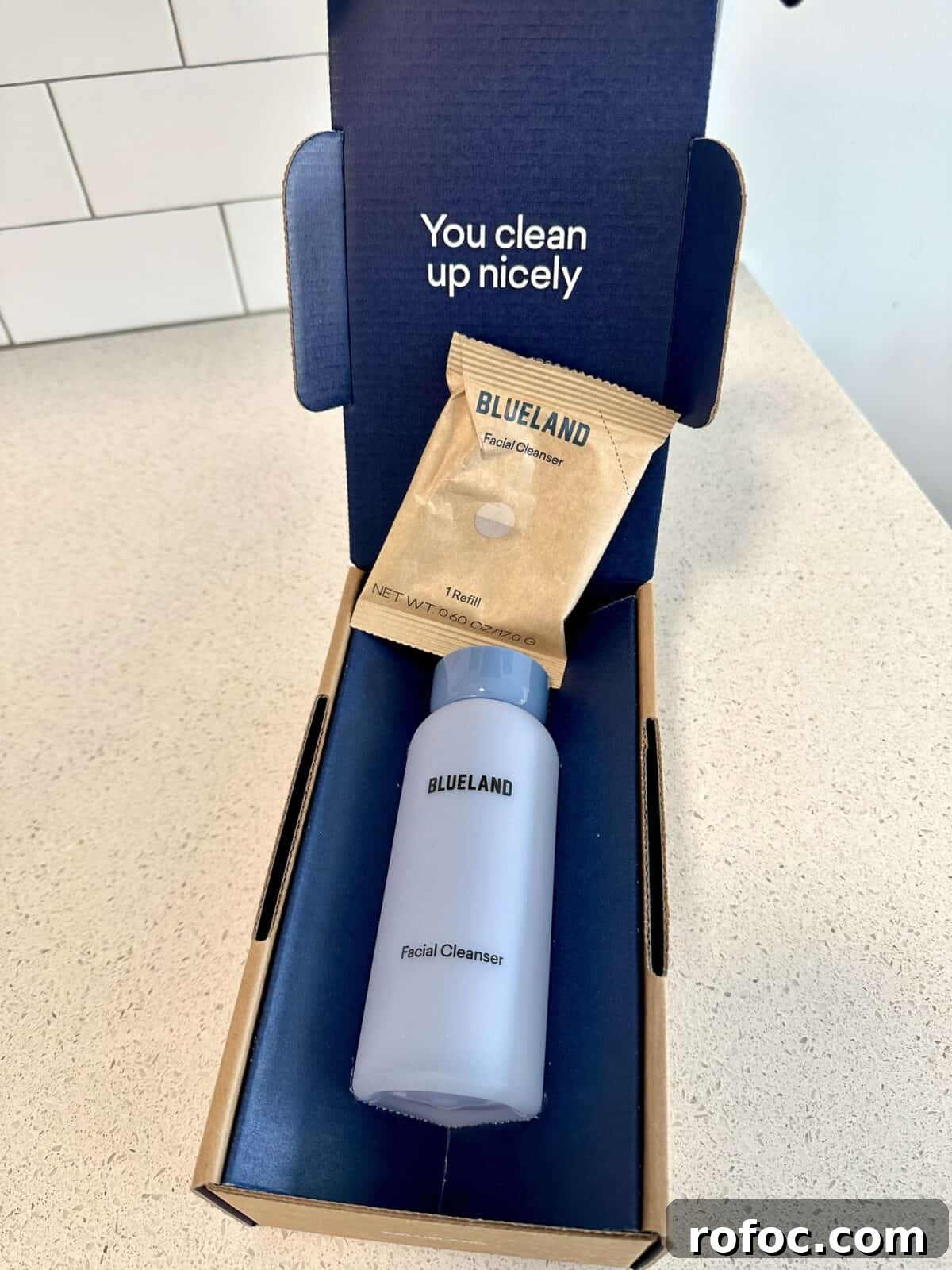
The fragrance-free Facial Cleanser is MADE SAFE certified and pleasant to use. It has a soft texture, is gentle, and didn’t leave my skin feeling stripped. It’s a good choice for people who prefer simple, basic skincare without aggressive actives.
So… Will I Be Buying Blueland’s Products Again?
After a year of testing, I’ll likely repurchase the dishwasher and laundry tablets because they’re PVA-free, compact, effective, and available fragrance-free. Those features address both environmental and health concerns well.
I’m less likely to repurchase many of the scented household and personal-care items until Blueland discloses fragrance ingredients more transparently. If the company improves fragrance transparency or offers more fragrance-free options, I would reconsider other products.
Overall, Blueland has pushed industry norms by popularizing refillable systems and reducing single-use plastic. Their products make sustainable options more accessible to mainstream consumers. While there’s room for improvement—particularly around full ingredient disclosure and some packaging durability—the brand is a meaningful step toward less wasteful cleaning solutions.
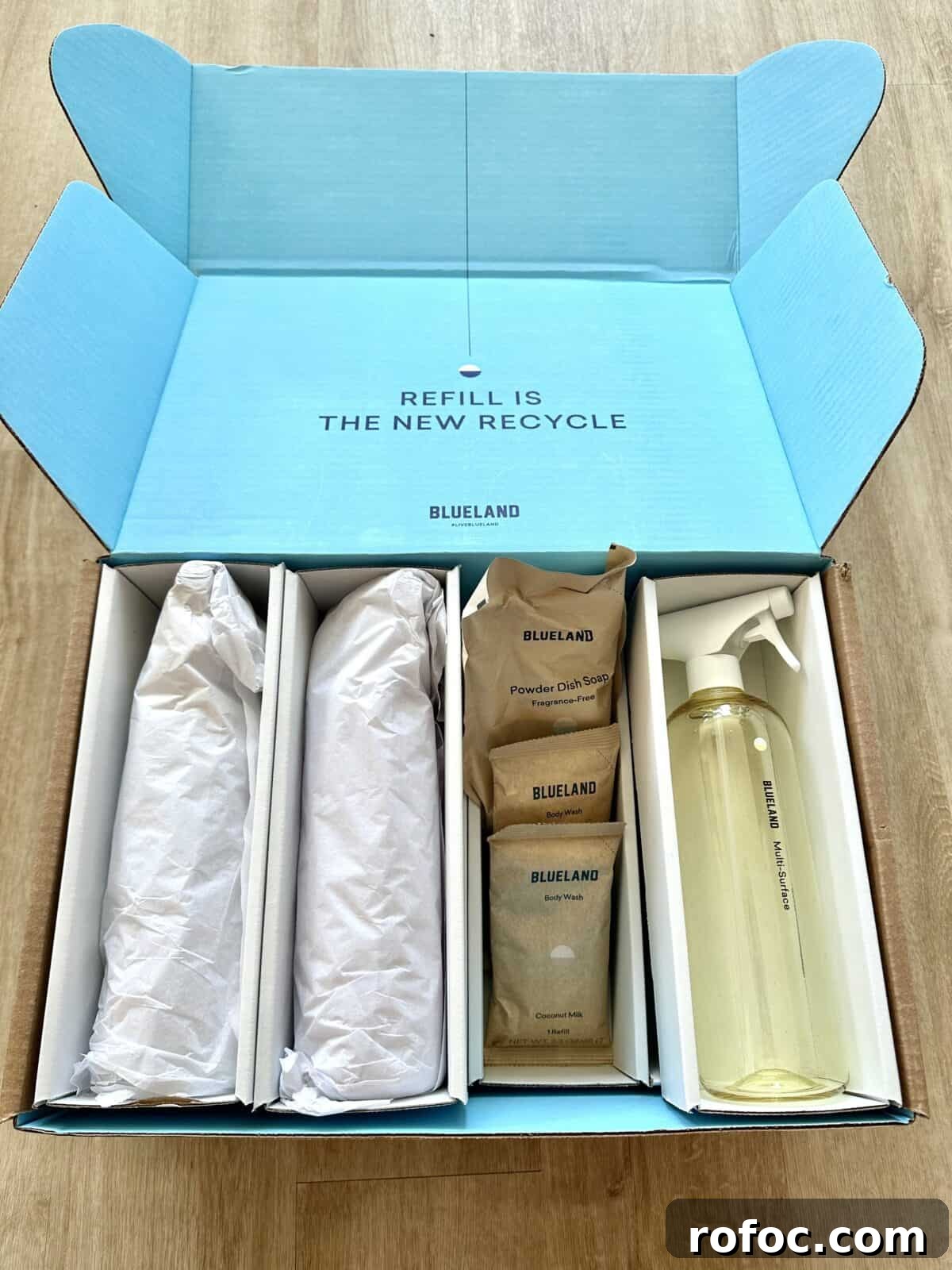
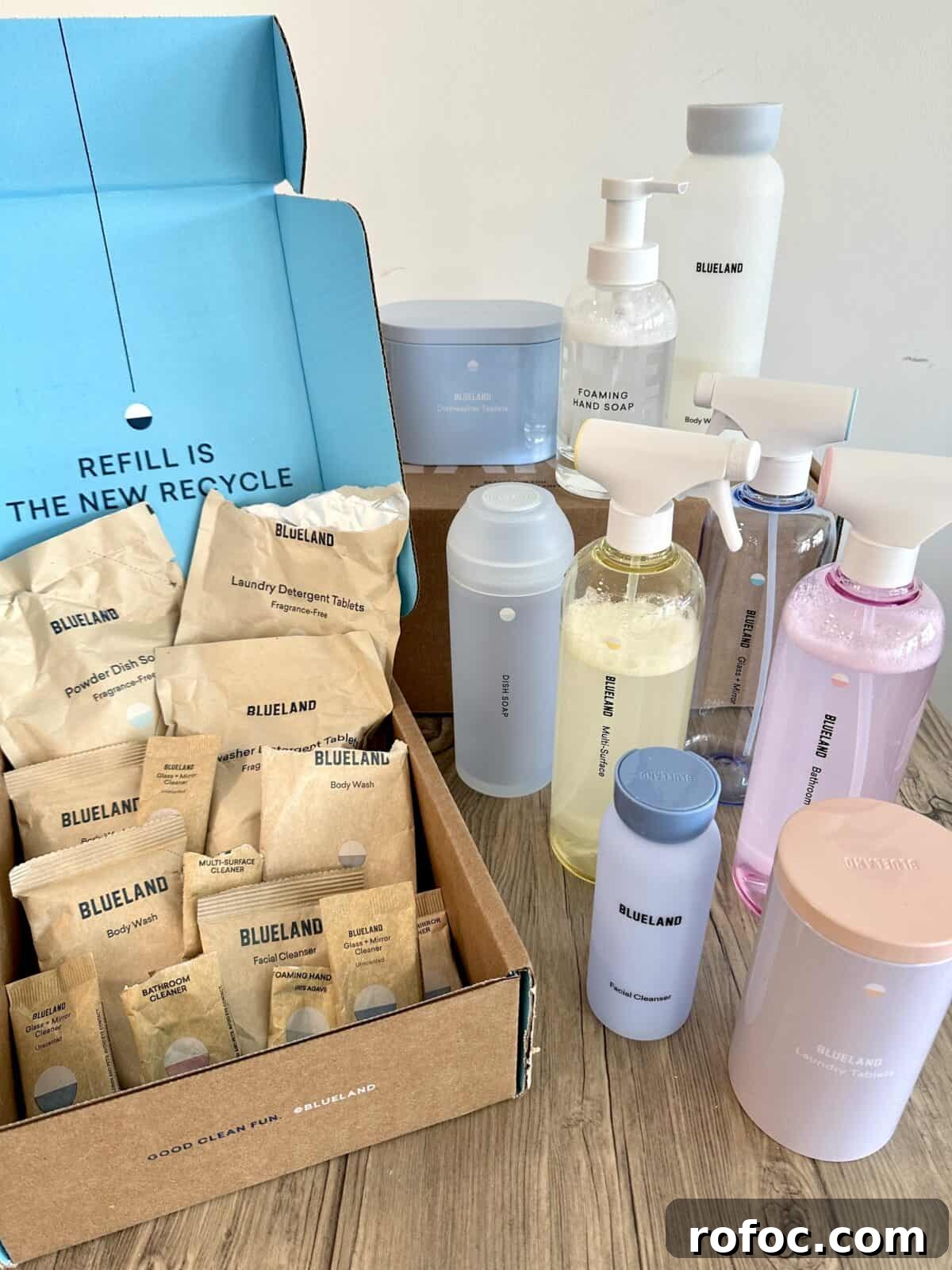
If you’re interested, the Clean Suite Starter Kit is a convenient way to try the system. Once you have bottles and tins, refills are inexpensive and available through subscription options.
I hope this review helps you decide whether Blueland fits your priorities for cleaning, safety, and sustainability.