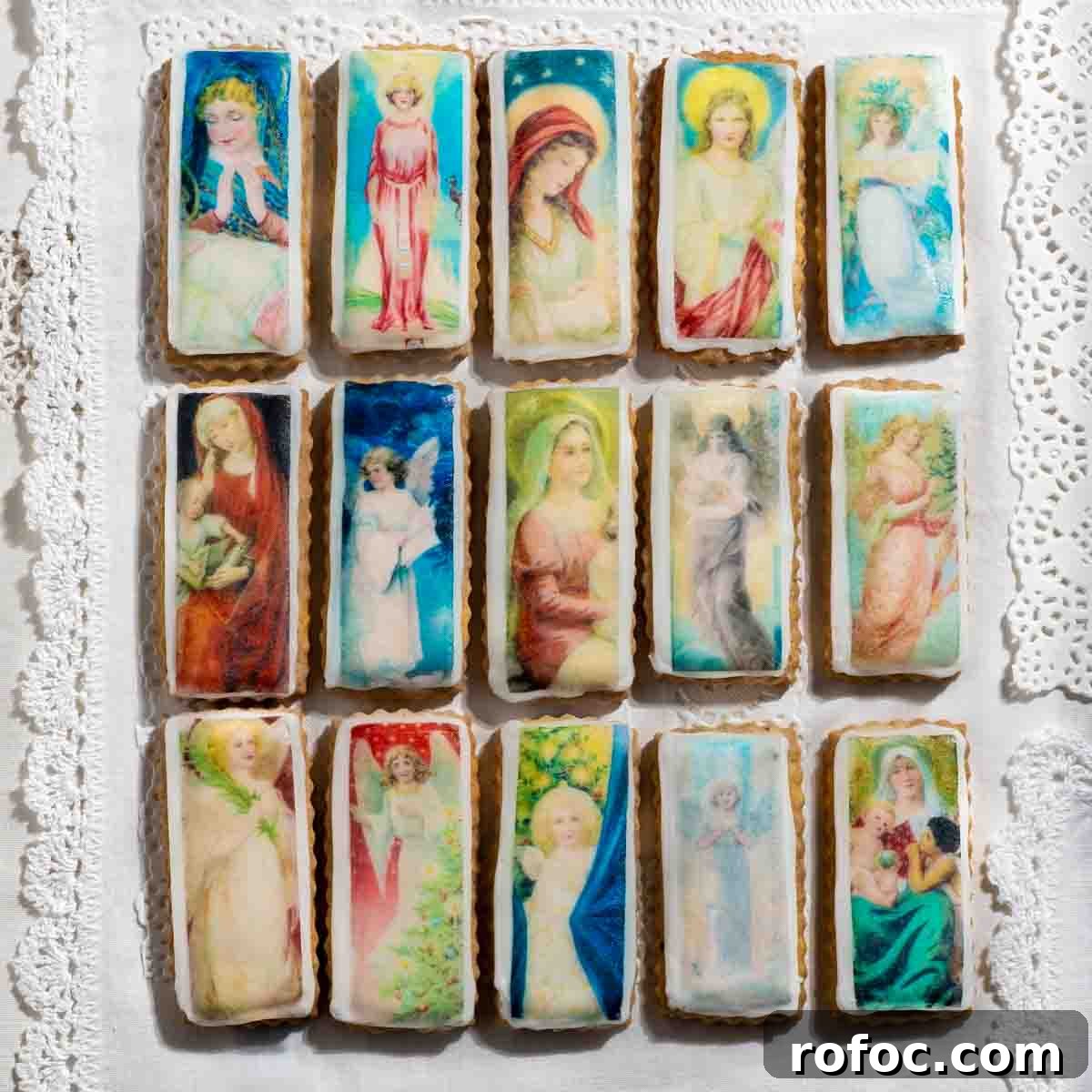
Tired of the same old reindeer and snowflake cookies? Try something fresh this season: Christmas picture cookies made with edible wafer paper. Whether you bake from scratch or start with store-bought biscuits, the transformation happens when you add a smooth layer of icing and press a printed wafer-paper image on top. The result is a beautiful, gift-ready cookie — or a charming ornament for your tree.
Don’t worry if you’re not an expert decorator. Once you’ve chosen your images and ordered printed wafer paper, the technique is simple: spread royal or fondant icing, attach the wafer, and let it dry. We’ll walk through ingredient notes, options, and step-by-step instructions so you can create professional-looking cookies with minimal fuss.

[feast_advanced_jump_to]
What’s to love about this recipe
- Customisable designs to suit any taste.
- Accessible for beginners and rewarding for experienced bakers.
- Works with homemade or shop-bought cookies.
- Edible wafer paper makes decorating quick and easy.
- Lovely as thoughtful edible gifts.
- Can double as hanging decorations for your Christmas tree.
Key ingredient notes and substitutions
See the recipe card below for the full ingredient list.
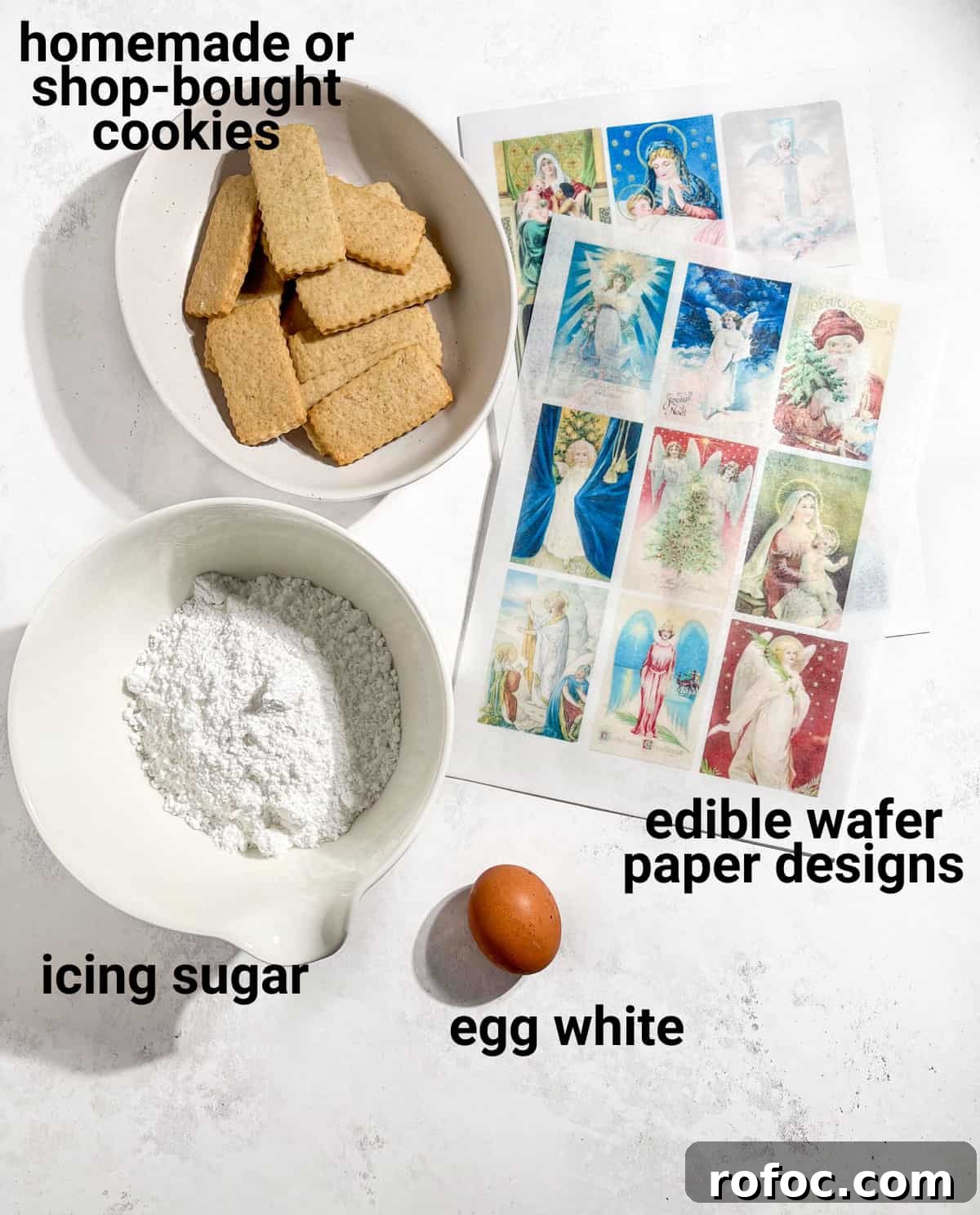
The cookies
Using homemade cookies:
- Pick a plain cut-out cookie recipe with no mix-ins so the surface is smooth for icing and wafer paper.
- Choose a recipe that won’t spread excessively. Chill cut-out dough thoroughly before baking to prevent spreading; the longer it chills, the better.
- If baked cookies have a slight dome, simply flip them and decorate the flat bottom.
- If you plan to hang cookies on the tree, pierce a small hole before baking using a thin straw.
Recommended types: plain sugar cookies, shortbread, or spiced cut-outs (chill dough before baking for best results).
Using shop-bought cookies:
- Choose plain biscuits without chips or heavy embossing. Digestive-style biscuits or graham crackers can be good bases.
- If embossing is shallow, you can fill it with royal icing. For deep embossing, consider cutting and applying a thin fondant disc as a smooth base, adhered with jam or corn syrup.
- Pre-made cookies usually can’t be used as tree ornaments because you can’t create a hanging hole post-bake.
The icing layer
Option 1: Royal icing
Royal icing creates a perfectly smooth, white canvas that helps wafer-paper prints sit flat and colours appear bright. It also provides a neat border that frames each design. Use royal icing for the cleanest, most professional finish.
Option 2: Fondant icing
Roll out ready-made fondant thinly, cut to shape, and attach to the cookie with a dab of jam, corn syrup, or water. Lightly brush the fondant with water before placing the wafer paper on top. This is a quick alternative when you prefer not to pipe royal icing.
Edible wafer paper
Wafer paper is made from potato starch, vegetable oil and water. It’s essentially tasteless, melts in the mouth, and is often vegetarian, vegan, dairy- and gluten-free. It cuts easily with scissors and sticks with just a little water.
You can have custom designs printed with edible ink. Many businesses worldwide will print your images on wafer paper — check local providers for pricing and turnaround.
Ideas and resources for graphics you can use
Choose images that match the occasion or recipient. Ideas include:
- Your own drawings or photos.
- A life-stages montage for milestone birthdays.
- Favourite sports teams, superheroes or pop-culture icons.
- Wedding or anniversary photos for personalised gifts.
- Vintage illustrations from old cards, stamps or adverts.
- Inspired music or poetry snippets, sheet music, florals, geometric patterns, or humorous quotes.
- Religious or spiritual symbols for meaningful designs.
Free graphics
If you use graphics commercially, check each site’s licensing terms. There are many sources of free or public-domain images suitable for edible printing; search locally and internationally for options that meet your needs.
A note on making the royal icing
Make one batch of royal icing and use it in two consistencies:
- Thicker icing to pipe outlines that hold the flood icing in place.
- Thin the remaining icing with small amounts of water until it reaches flooding consistency for filling the outlined areas.
You’ll need two piping bags and a small round piping tip. Allow the iced cookies to dry completely before applying the wafer paper — ideally 24 hours, minimum 12 hours.
How to make these cookies – Step-by-step guide
Making the royal icing – Piping the outlines
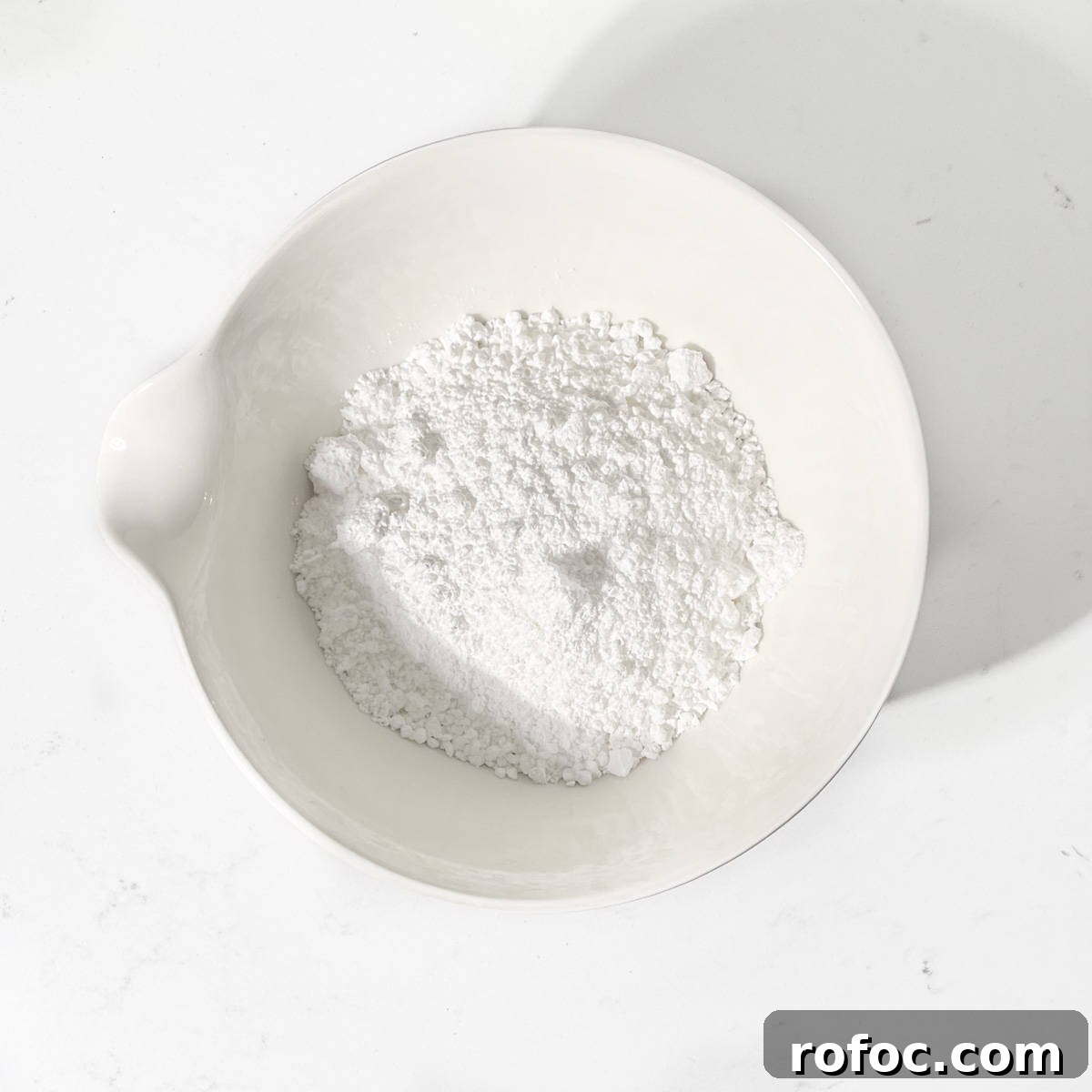
- Sift the icing sugar into a medium bowl.
- Add the egg white and stir with a fork to combine, which reduces dust when you start mixing.
- Beat with an electric hand mixer until smooth and lump-free.
- Check consistency: the outlining icing should be thick enough to hold its shape. Adjust with a little icing sugar or a tiny drop of water if necessary.
- Put roughly one-fifth of the icing into a piping bag fitted with a small round tip and pipe an outline around each cookie to form the “flood line.”
Making the royal icing – Flooding inside the lines
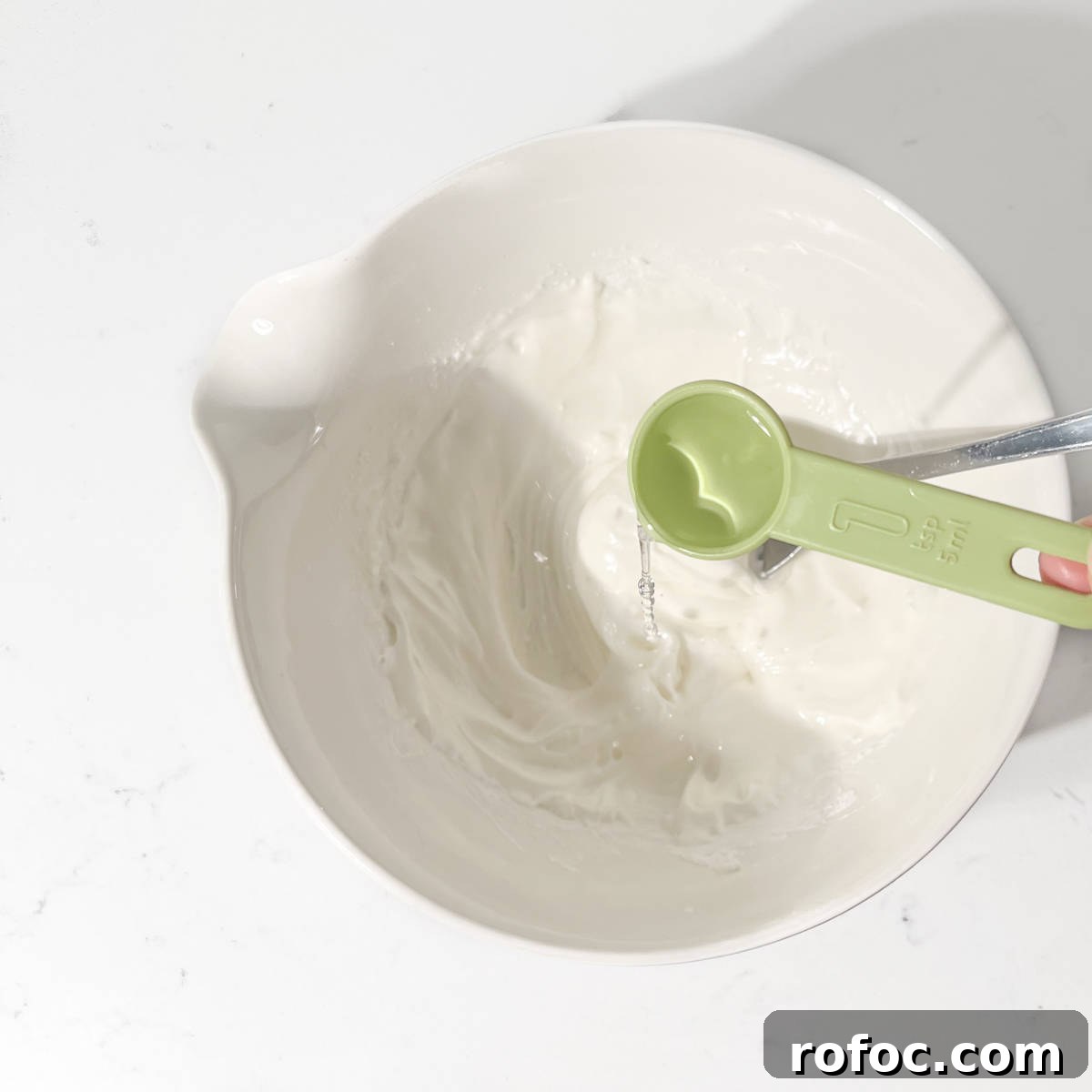
- Thin the remaining icing by adding up to one teaspoon of water, stir thoroughly, and test the consistency.
- Perform the ribbon test: drizzle icing from a spoon back into the bowl and count how long the ribbon takes to disappear. About 10 seconds indicates good flooding consistency. If it disappears faster, thicken slightly; if much slower, add a drop of water and retest.
- Load a new piping bag with the flood consistency icing. Pipe zig-zag lines inside the outline, leaving small gaps.
- Use the tip of the piping tip or a toothpick to coax the icing into gaps until the surface is even. Work quickly so the icing does not start to set before you finish.
- Repeat for all cookies and let them dry fully: at least 12 hours, preferably 24 hours, until the surface is firm and shiny.
Attaching the wafer paper to the cookies
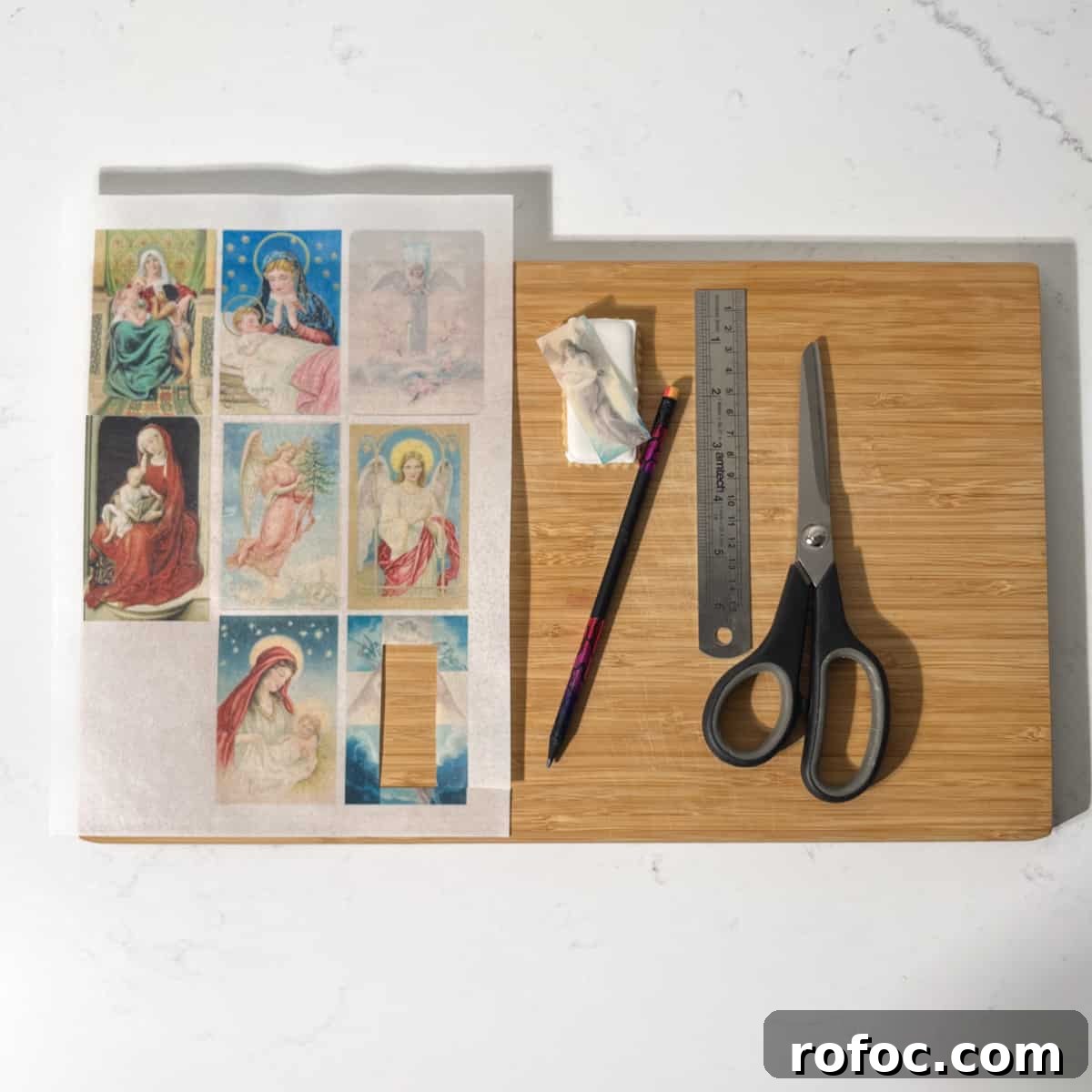
- Measure the area where you want the design and cut the wafer paper to fit.
- Lightly brush a thin layer of water onto the hardened icing with a small clean brush. Do not wet the wafer paper first — it will become too fragile.
- Gently place the wafer-paper design onto the moistened surface and press lightly. If edges lift, add a tiny amount of water beneath the edge and press again.
- Allow the cookies to dry completely before handling or packing.
Gifting
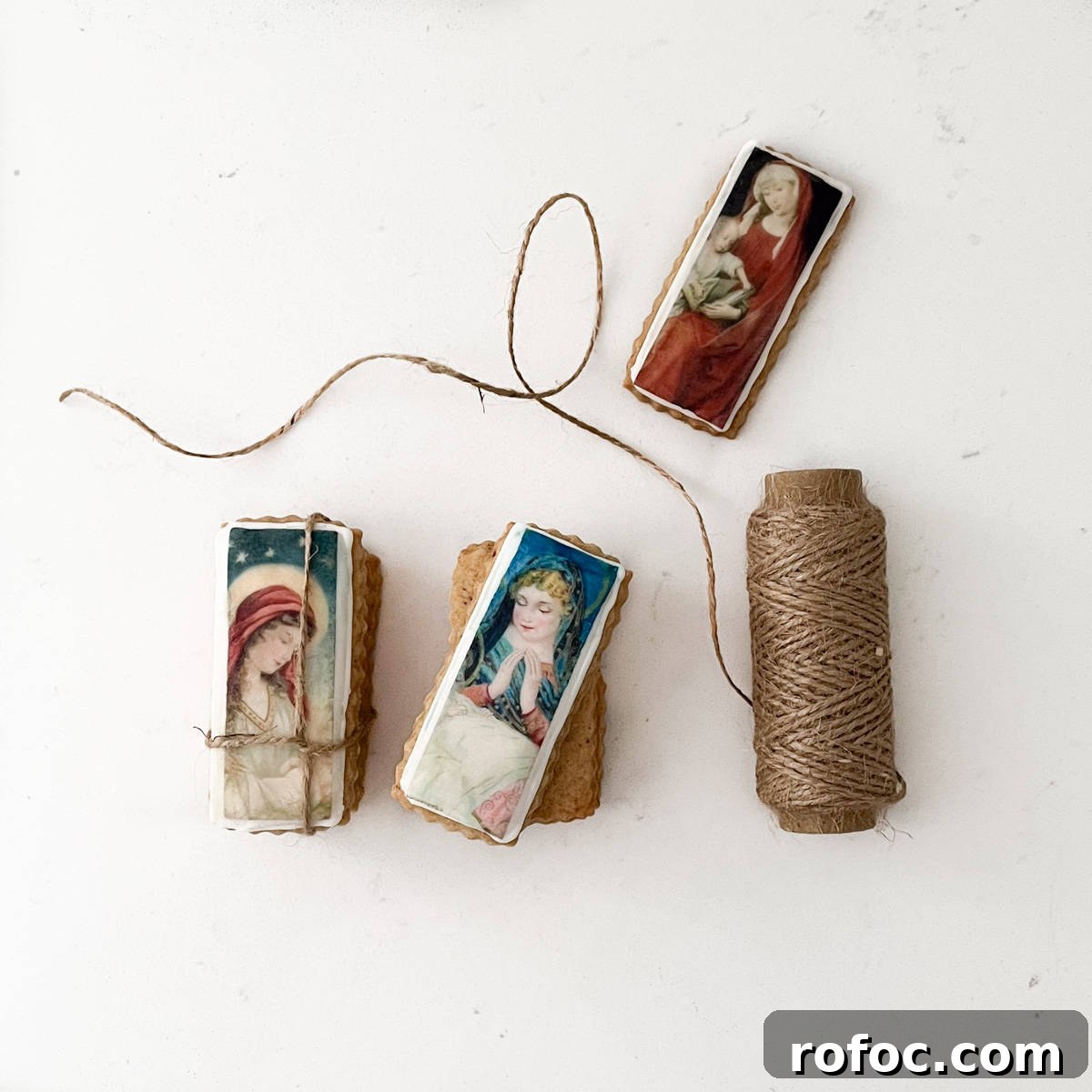
Picture cookies make delightful gifts. To save time, bundle several plain cookies and top the stack with one picture cookie, then tie with ribbon or string. They also work beautifully in homemade Advent calendars, with a different image each day.
Storage
Store cookies in an airtight container in a cool, dry place away from direct sunlight and heat. Place parchment or wax paper between layers to prevent sticking. Properly stored, wafer-paper cookies can keep up to three months.
In humid climates wafer paper can become sticky; consider a food-safe desiccant packet to absorb excess moisture. Do not freeze wafer-paper cookies — freezing can damage the wafer paper and the icing.
More Christmas recipes
The following are some seasonal favourites you might enjoy preparing alongside your cookies.
- The ultimate crispy roast potatoes
- Frangipane mince pies
- Easy Christmas cake
- Pigs in blankets with a whisky and honey glaze
- Mini Parmentier roast potatoes
- Roasted tenderstem broccoli with parmesan and pine nuts
- Carrot and swede mash
- Honey-roasted carrots and parsnips
- Quick cassata ice cream
- Rum and ginger truffles
- Swedish thumbprint cookies
Recipe
Christmas Cookies with Edible Wafer Paper (Photo Cookies)
Equipment
-
Small brush
-
Small bowl with water
-
Printed edible wafer paper sheets
Ingredients
- 12 cookies – homemade or shop-bought
- 225 grams icing sugar – aka powdered sugar
- 1 egg white
- 1-2 teaspoons water
Instructions
We recommend reading the blog post first for visuals that clarify the steps below.
Making the royal icing – Piping the outlines
-
Sift 225 g icing sugar into a medium bowl.
-
Add 1 egg white and stir with a fork to combine.
-
Beat with an electric mixer until smooth.
This step reduces airborne sugar dust when you use the mixer.
-
Adjust the consistency so the icing holds its shape; add a little icing sugar or a drop of water if needed.
-
Place about one-fifth of the icing into a piping bag with a small round tip and pipe an outline around each cookie to form the flood line.
Making the royal icing – Flooding inside the lines
-
Thin the remaining icing with up to 1–2 teaspoons water and stir well.
-
Perform the ribbon test: drizzle icing from a spoon back into the bowl; if the ribbon fades in about 10 seconds, the consistency is correct. Adjust with a drop of water or a little icing sugar as needed.
-
Load a piping bag and pipe zig-zag lines inside each outline, then nudge the icing to fill gaps with the tip or a toothpick.
-
Work quickly to prevent the icing from setting while you adjust. Repeat for all cookies and let dry for 12–24 hours until firm and shiny.
Attaching the wafer paper to the cookies
-
Cut the wafer paper to match the area you want to cover.
-
Brush a thin layer of water onto the hardened icing — do not wet the wafer paper first.
-
Gently position the wafer paper, press to adhere, and fix any lifting edges with a small amount of water beneath them.
-
Allow cookies to dry completely before packing or gifting.
Nutritional data disclaimer
Nutritional information is provided by a third party and may vary depending on brands and portion sizes. Use it as a guide only and consult a qualified professional for personalised dietary advice.
Nutrition
For food safety advice, including guidance on food allergies, consult your local food safety authority.