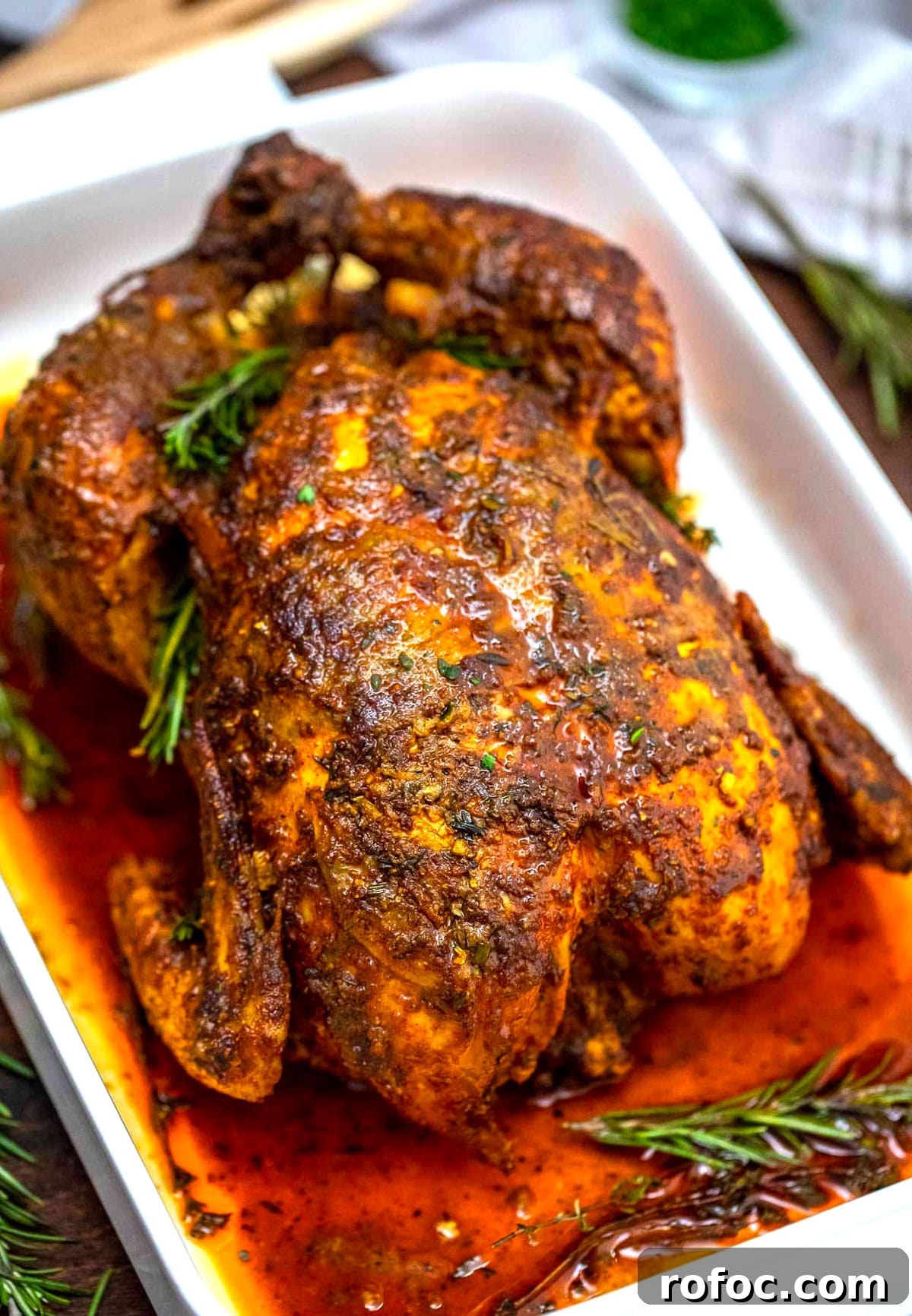
One of the first dishes I learned to roast was a whole chicken. Over the years I refined the method so that family dinners featuring chicken are never dull. This garlic-herb butter roasted chicken transforms a familiar bird into something everyone wants at the table: tender and juicy under crisp, golden skin, scented with fresh herbs, garlic and lemon, and simple enough to prepare in under 20 minutes.
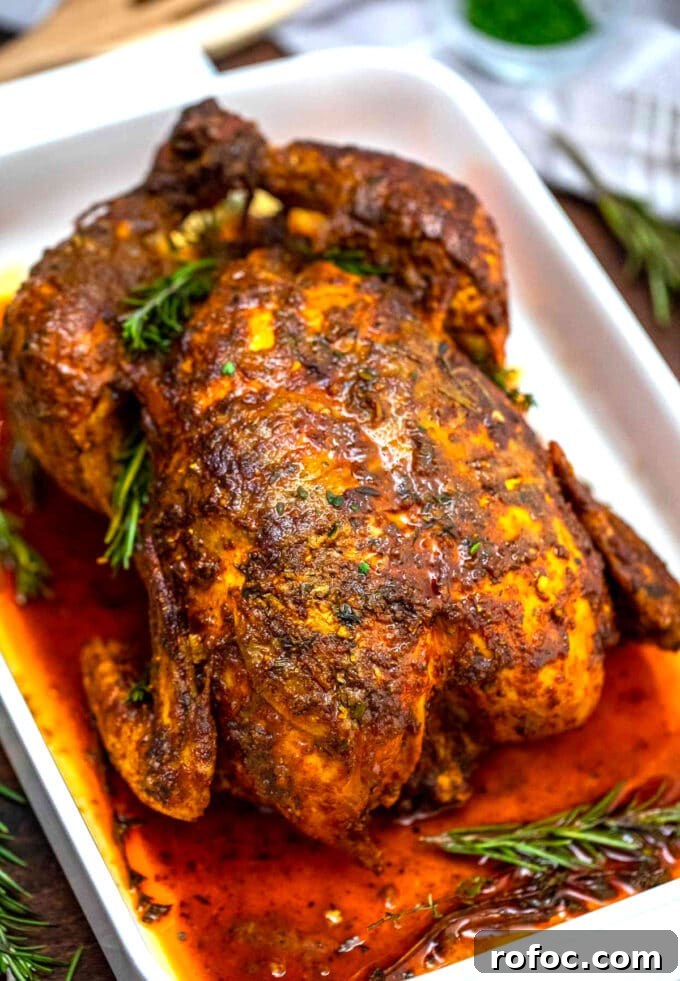
Everything that defines this recipe is in the name: garlic, herbs and butter. There’s one small twist — smoked paprika — that deepens the flavor and helps create a darker, more appetizing roast. Fresh butter keeps the meat moist while lemon, garlic and fragrant herbs build bright, savory layers. The result is equally suited to a dinner party or an easy weeknight meal, and leftovers adapt perfectly to soups, salads, sandwiches and casseroles. The cooked meat also freezes well for up to four months when wrapped and stored in a freezer-safe container.
Table of contents
- Why you will love this recipe
- What you will need
- How to prepare
- Expert tip
- Recipe variations and add-ins:
- Serving suggestions:
- How to store:
- Frequently asked questions
- More chicken dinners
This roast is a great alternative to store-bought rotisserie: it’s quick, more flavorful and much juicier. The crisp skin and rich pan juices make it a natural centerpiece for a family meal. If you cook for a crowd, roast multiple birds or serve the carved meat alongside a selection of sides so guests can help themselves. Leftovers can be shredded for tacos, added to salads, or frozen in portions for future meals.
Why you will love this recipe
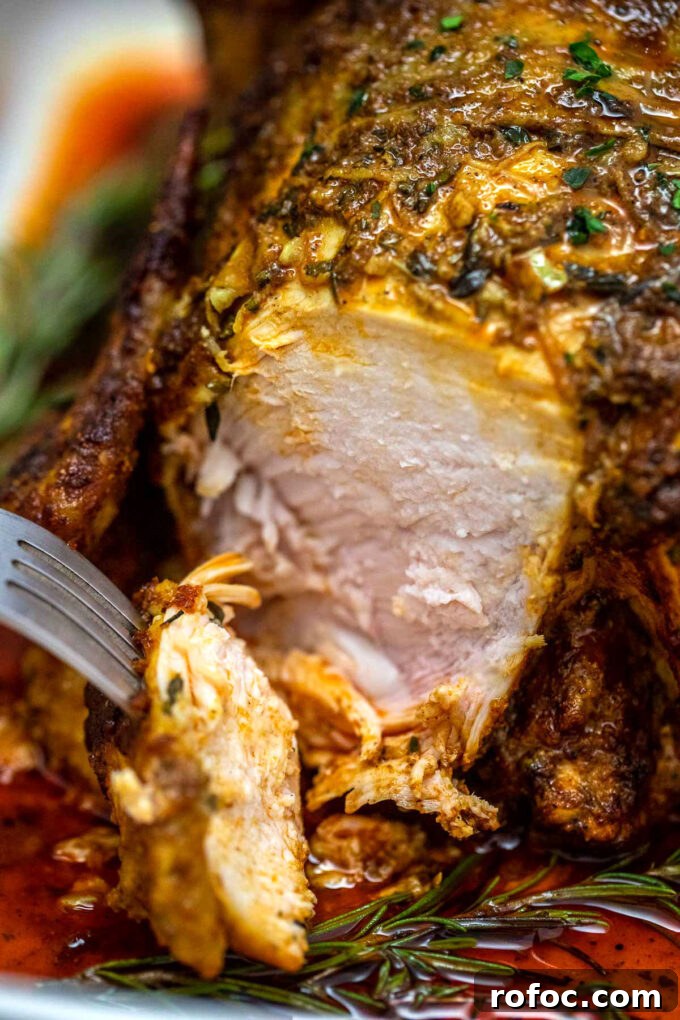
- Moist inside, crisp outside: The butter and oil help the skin brown beautifully while keeping the meat succulent. Rubbing butter and seasonings under the skin ensures flavor throughout.
- Better than store rotisserie: Store-bought birds are convenient but often dry. With a few straightforward steps you can roast a superior bird at home.
- Scales for any crowd: Make one chicken for a family, or several to feed a large group; leftovers reheat well or become ingredients for other dishes.
- Versatile leftovers: Use the remaining meat in sandwiches, salads, soups, casseroles, or freeze portions for later use.
What you will need
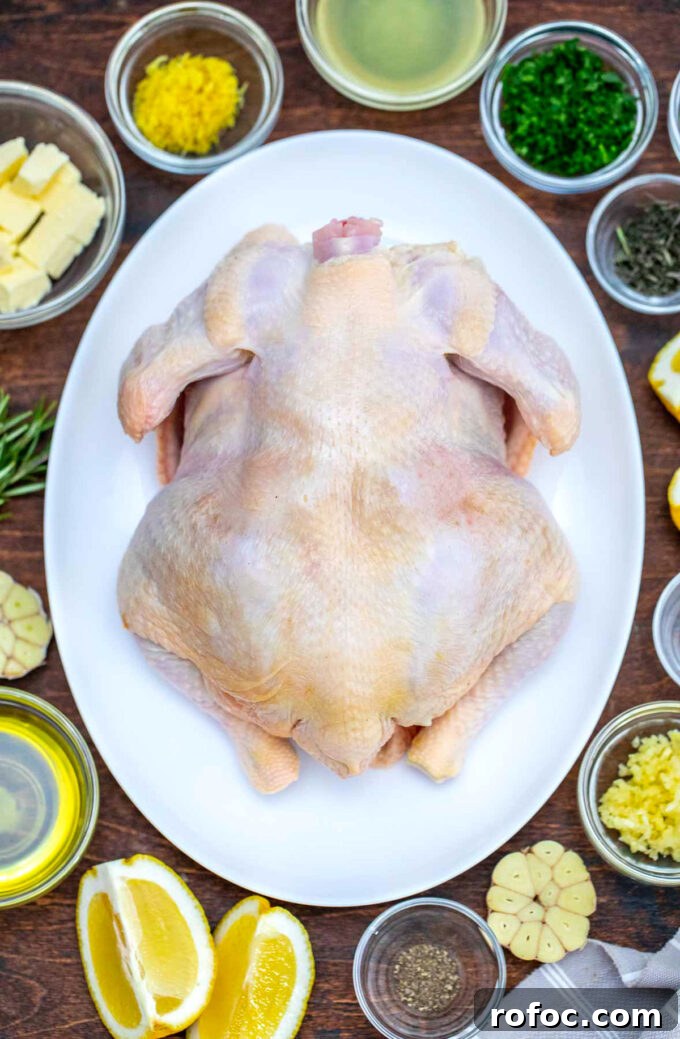
- Whole chicken — ideally 4 to 5 pounds, room temperature with neck and giblets removed.
- Unsalted butter — melted for the exterior and softened for the herb butter under the skin.
- Extra-virgin olive oil.
- Lemon — zested and juiced, plus one quartered lemon for the cavity.
- Fresh herbs — chopped rosemary, chopped thyme and chopped parsley; extra sprigs of rosemary and thyme to stuff inside the bird.
- Seasonings — smoked paprika for color and a hint of sweetness, minced garlic for the rub and a halved head of garlic for the cavity, plus salt and pepper.
How to prepare
Preheat and prep: Preheat your oven to 425°F. Lightly coat a shallow roasting pan with olive oil. Rinse the chicken under cold water, remove any excess fat or leftover feathers, and pat thoroughly dry with paper towels.
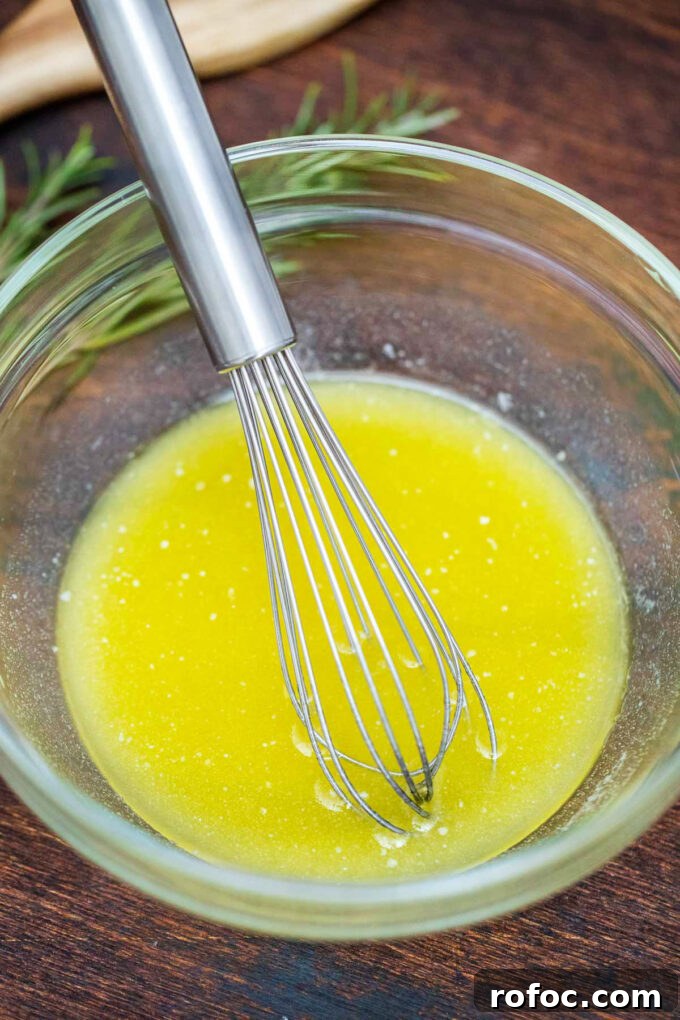
Make the butter mixture: In a small bowl combine melted butter, olive oil and lemon juice. Pour a portion over the chicken, and use your hands to rub it into the cavity and beneath the skin where possible. Season generously with salt, pepper and parsley.
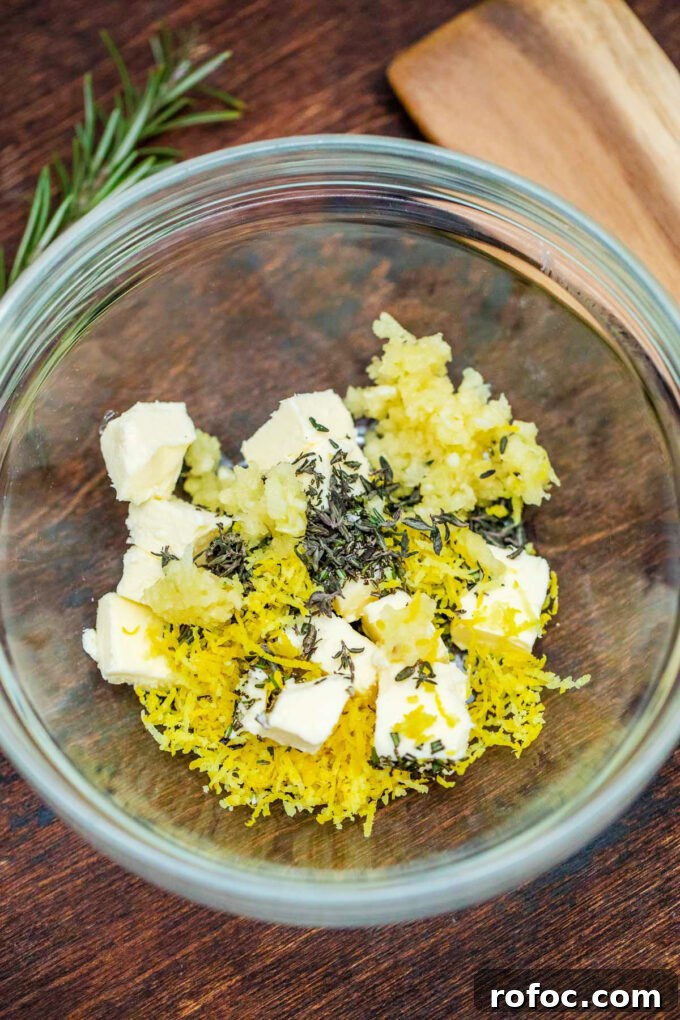
Herb butter: Combine softened butter with chopped rosemary, thyme, lemon zest, minced garlic and smoked paprika (if using). Rub this aromatic butter over the outside of the bird and beneath the skin to infuse the meat.
Stuff and truss: Place the halved head of garlic, tied rosemary sprigs, thyme sprigs and quartered lemon into the cavity, then tie the legs together with kitchen twine.
Roast: Place the chicken breast-side up in the prepared pan. Roast for roughly one hour to one hour and 25 minutes, basting once about halfway through. Check doneness by piercing the thigh and observing clear juices or by measuring with a thermometer; remove when the internal temperature reaches about 150°F, as it will rise while resting.
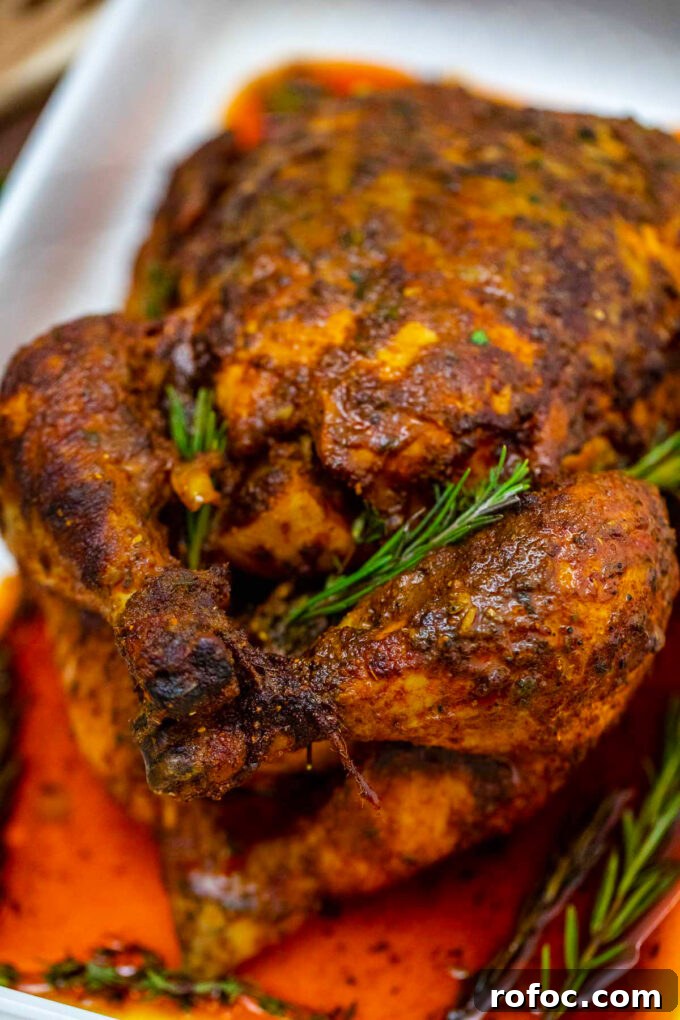
Crisp the skin: After roasting, baste with pan juices and broil on high for two to three minutes to deepen the color and add final crispness — watch closely to avoid burning.
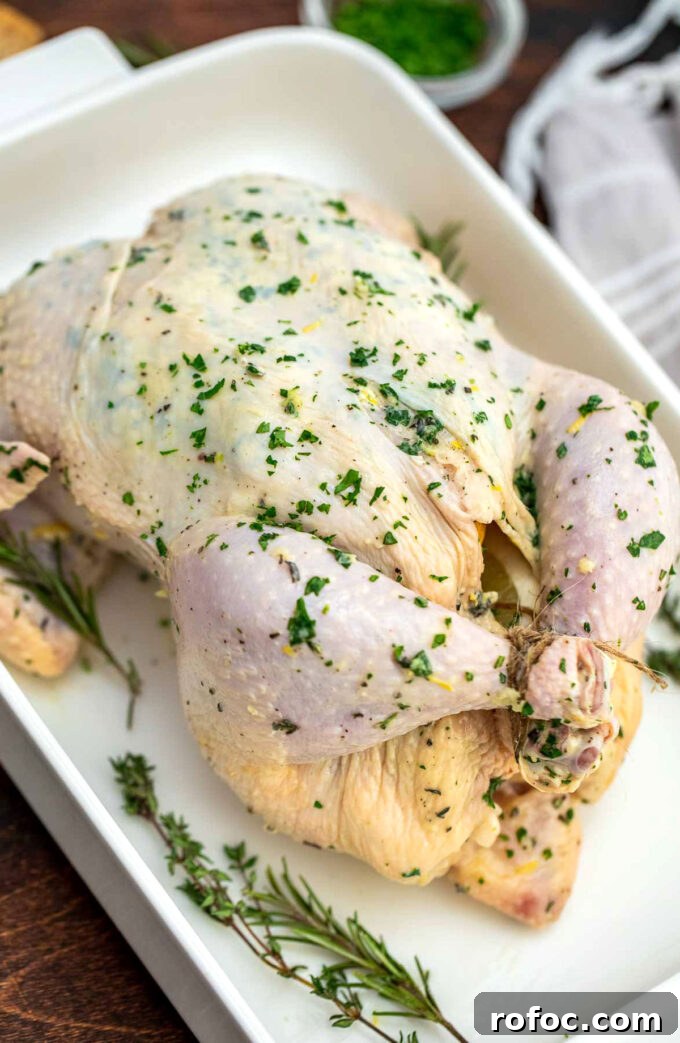
Rest and serve: Let the chicken rest for 10–15 minutes before carving so the juices redistribute. Serve with pan juices spooned over the meat and fresh lemon wedges on the side.
Expert tip
To get a crispy and moist chicken
Choose a high-quality bird that has been air-chilled if possible; these birds retain less surface water and brown more readily. Thoroughly pat the skin dry inside and out, including crevices, under the wings and between the legs, to prevent steaming. Rub fat and seasonings under the skin and cook in a shallow pan so moisture does not collect. Broiling for a short 2–3 minutes at the end will crisp the surface, but avoid overcooking — remove the bird when it reaches about 150°F and allow carryover heat to bring it to a safe final temperature while it rests.
More tips to consider
- Choose free-range or organic chicken when available for the best texture and flavor.
- Rubbing butter and herbs under the skin distributes flavor without burning the exterior.
- If the skin darkens too quickly, tent loosely with foil while roasting.
- Truss the legs after seasoning to preserve moisture in the cavity.
- Allow the bird to rest 10–15 minutes before carving to keep the meat juicy and tender.
- Check doneness by clear juices or an internal thermometer inserted into the inner thigh.
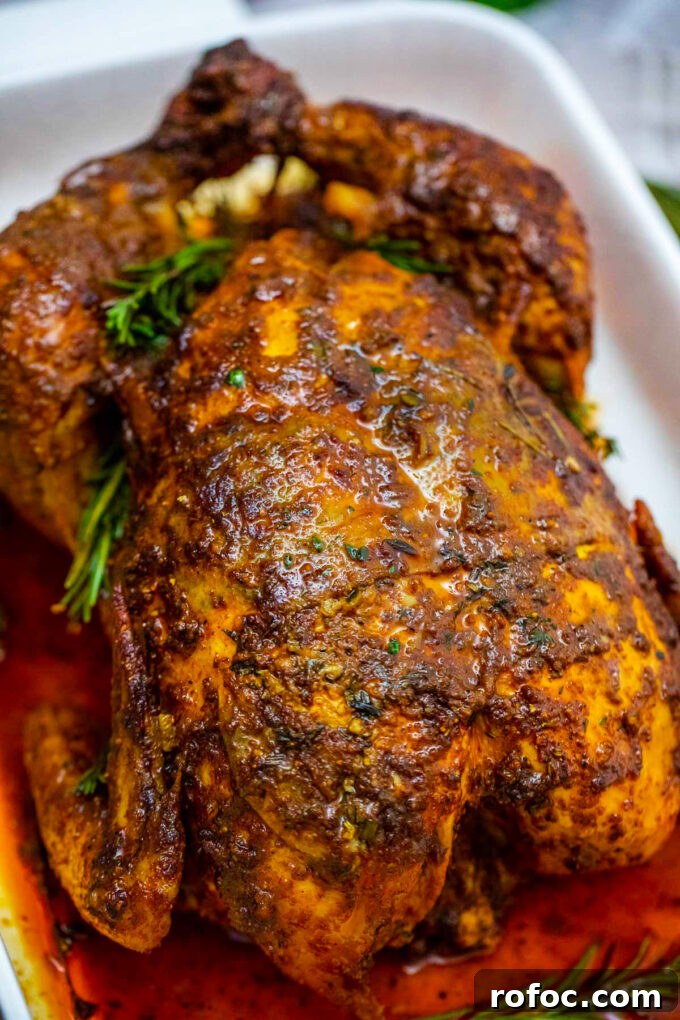
Recipe variations and add-ins:
- Omit citrus: If you prefer, skip lemon or substitute lime or orange for a different citrus profile.
- Spicy: Add chopped jalapeños to the cavity or sprinkle Cajun seasoning into the rub for heat.
- Ranch twist: Stir a tablespoon of ranch seasoning into the herb butter for a different savory note.
- Mediterranean: Smear the bird with Greek yogurt and add kalamata olives, grape tomatoes and dill to the cavity.
- Beer or wine: Add a splash of beer or white wine to the cavity or brush a little onto the skin for extra depth.
- Sweet finish: A touch of honey and brown sugar in the rub will create a sweet, caramelized crust that kids often love.
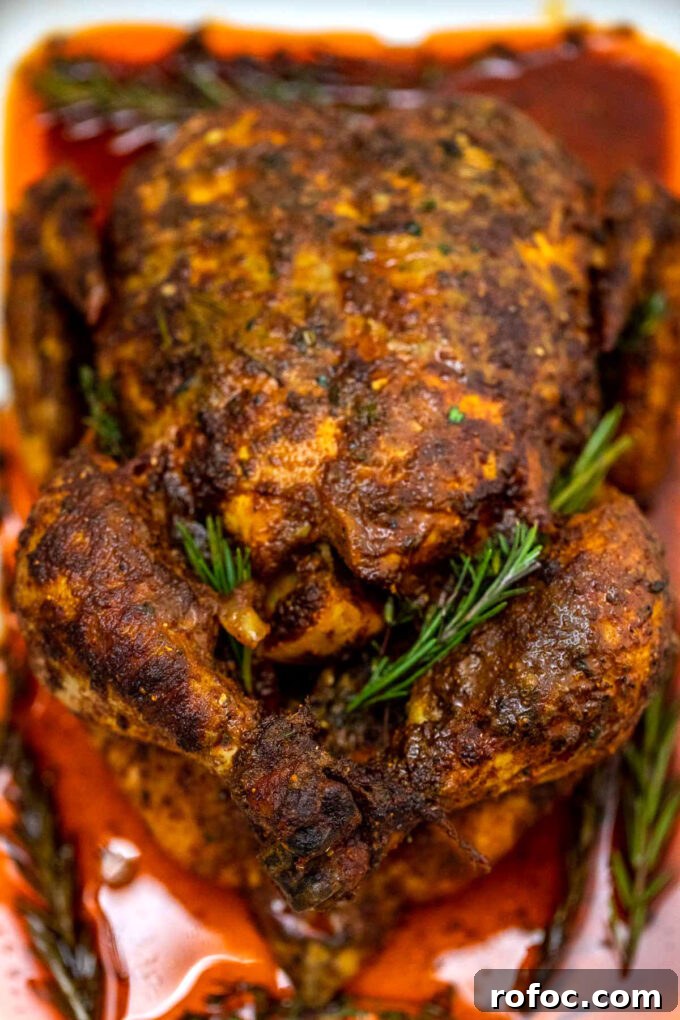
Serving suggestions:
Let the chicken rest before carving so the juices settle. Classic pairings include creamy mashed potatoes, roasted rosemary potatoes, a crisp green salad, and soft dinner rolls. Shredded leftovers work well in tacos with guacamole and salsa, or folded into creamy macaroni and cheese for a kid-friendly meal. A white wine with citrus notes complements the flavors nicely if you choose to serve wine.
How to store:
- Refrigerate: Store leftover chicken in an airtight container or wrapped tightly in foil or plastic wrap for up to four days.
- Freeze: Portion the meat and place in freezer bags or containers for up to three months.
- Defrost: Thaw overnight in the refrigerator for best texture and flavor.
- Reheat: Reheat gently in the oven to retain moistness, or use short bursts in the microwave if needed.
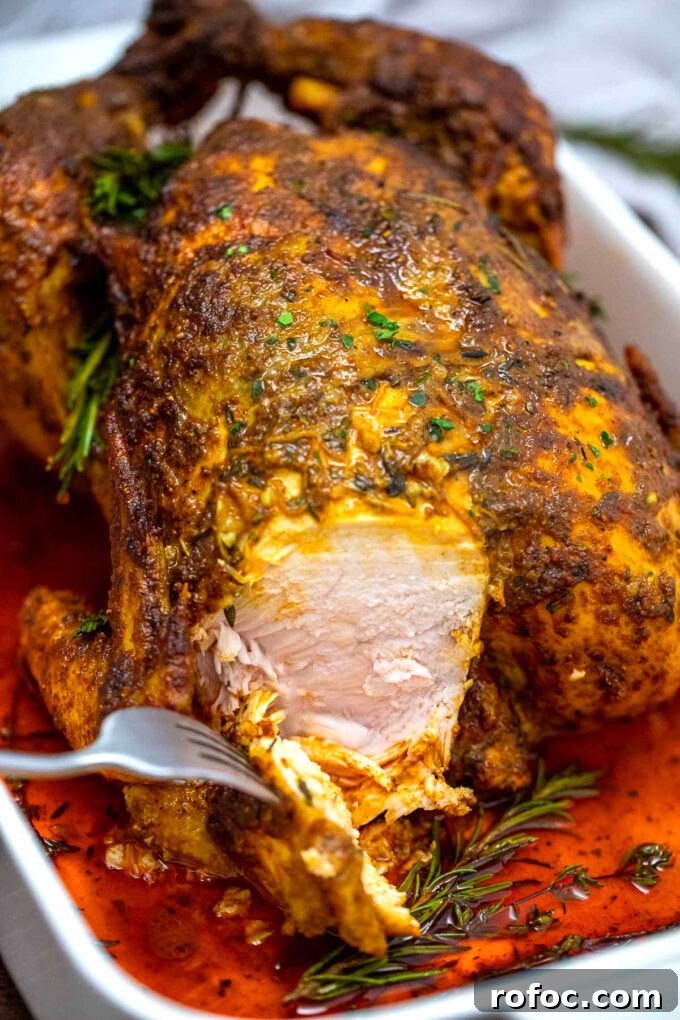
Frequently asked questions
Dry the skin thoroughly before roasting and use fat (butter and oil) on the surface. Roast at a moderately high temperature, baste once during cooking, and finish under the broiler for a brief 2–3 minutes to crisp. Use an instant-read thermometer and remove the bird around 150°F so it finishes cooking while resting.
Overcooking is the most common cause. Use a thermometer to avoid guesswork and remove the chicken slightly below the final target temperature to allow carryover cooking. Resting the bird before carving also helps juices redistribute.
Do not cover the chicken tightly while it rests; that traps steam and softens the skin. Let it rest uncovered for 10–15 minutes on a carving board so the skin stays crisp while the meat reabsorbs juices.
More chicken dinners:

Cheesy Crack Chicken Casserole

Instant Pot Orange Chicken – 30 Minutes
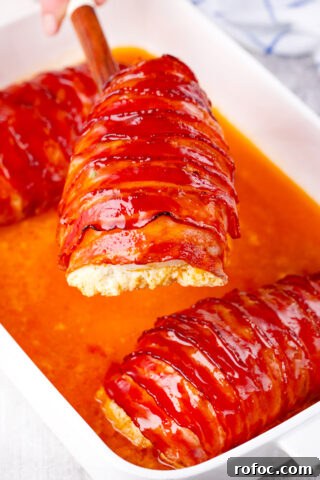
Bacon Wrapped Cream Cheese Stuffed Chicken

Instant Pot Tuscan Chicken Pasta
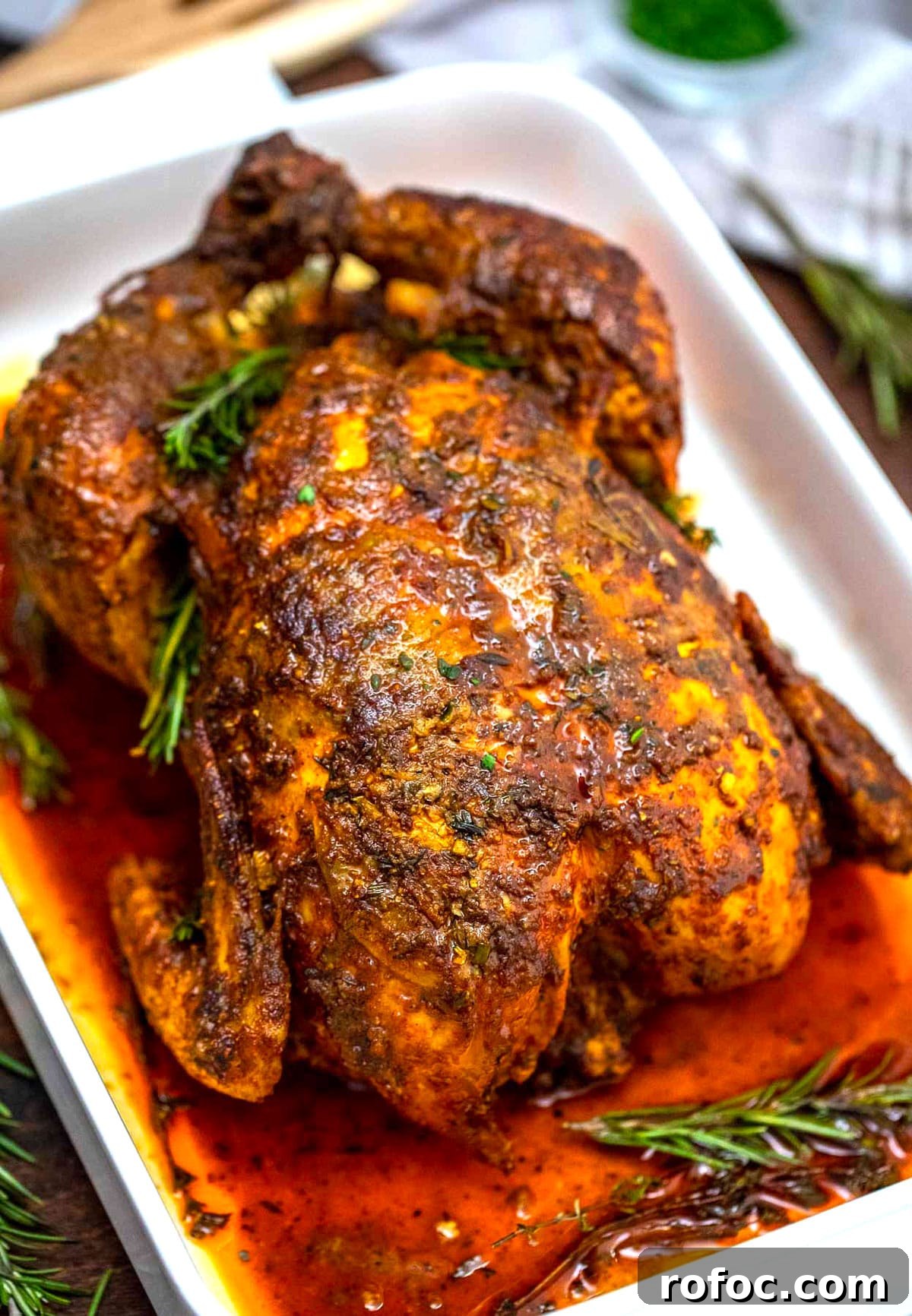
Garlic Herb Butter Roasted Chicken
Ingredients
- 4–5 pound whole chicken — room temperature with giblets and neck removed
- 1/4 cup unsalted butter, melted
- 4 tablespoons olive oil
- 1 lemon, zested and juiced
- Salt and freshly ground pepper, to taste
- 4 tablespoons butter, room temperature
- 2 tablespoons fresh parsley, chopped
- 1 tablespoon fresh rosemary, chopped
- 1 teaspoon fresh thyme, chopped
- 1 tablespoon smoked paprika (optional)
- 6 cloves garlic, minced
- 1 head garlic, halved horizontally
- 6 sprigs fresh rosemary, tied together
- 3 sprigs fresh thyme
- 1 lemon, quartered
Instructions
- Preheat oven to 425°F. Lightly coat a roasting pan with olive oil.
- Clean the chicken, rinse under cold water and pat dry. Remove any excess fat or leftover feathers.
- Combine olive oil, melted butter and lemon juice. Place the chicken in the pan and rub the mixture under the skin and inside the cavity.
- Season liberally with salt and pepper and sprinkle with chopped parsley.
- In a bowl, mix room-temperature butter with chopped rosemary, thyme, lemon zest, minced garlic and smoked paprika if using. Rub under and over the skin.
- Stuff the cavity with the halved garlic head, rosemary and thyme sprigs and quartered lemon. Tie the legs together with kitchen twine.
Roast:
- Place the chicken breast-side up and roast for about 1 hour to 1 hour 25 minutes, basting halfway through. Roast until juices run clear when pierced or until the internal temperature is near 150°F before resting.
- Baste again, then broil 2–3 minutes to brown and crisp the skin; watch carefully to prevent burning.
- Remove from oven and rest 10–15 minutes before carving. Spoon pan juices over the carved meat and serve with lemon wedges.
Nutrition
| Carbohydrates: 3 g
| Protein: 21 g
| Fat: 36 g