How to Make Homemade English Muffins: A Simple Skillet Recipe
There’s something irresistible about homemade English muffins—crisp, golden edges, a chewy interior full of nooks and crannies that catch butter, jam, or peanut butter and honey. If you love the flavor and texture of bakery-style muffins but want the satisfaction of making them yourself, this straightforward skillet method delivers excellent results without complicated equipment.
Ingredients and yeast choice
This version follows a reliable recipe adapted for home kitchens. Instead of packaged active dry yeast, I substituted 20 grams of fresh cake yeast, which works well if you have it on hand. The rest of the ingredients remain standard: flour, warm liquid, a bit of sugar and salt, melted butter or oil, and baking powder added later to help create a light texture. The dough ends up somewhere between regular bread dough and pancake batter—loose but not runny, soft enough to yield muffins with a tender crumb.
Preparing the dough and first rise
Combine the yeast with warm liquid and a touch of sugar to activate it, then mix in the flour, salt, and fat. The dough should be sticky and pliable. I let my dough rest and rise for about 1½ hours at room temperature; during this time it gains volume and builds flavor. After the first rise, gently fold in dissolved baking powder. This step adds lift and helps form the characteristic pocketed interior of English muffins.
Shaping without rings—rustic and easy
Many recipes call for metal rings to shape each muffin, but you don’t need extra gadgets to get great results. I skipped the rings to avoid more washing and embraced the slightly irregular shapes—the little imperfections are a reminder they were made at home. Dusting with cornmeal keeps the muffins from sticking to the skillet and gives the underside a pleasant texture.
Cooking on the stovetop: timing and temperature
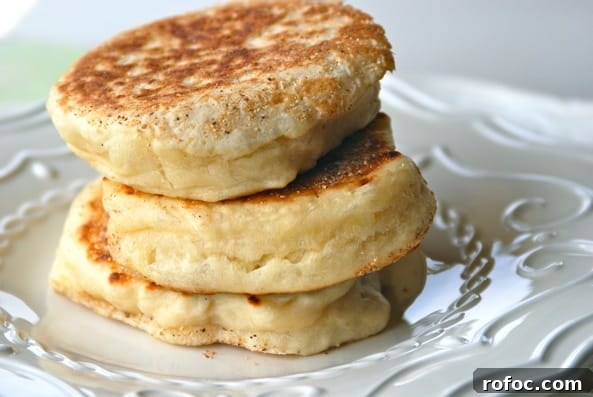
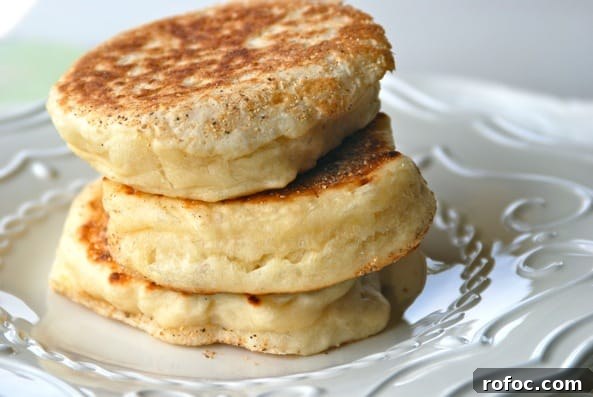
Heat a heavy skillet or griddle over medium heat and sprinkle cornmeal across the surface. Medium heat is key: it browns the exterior while giving the inside time to cook through without burning the cornmeal. Cook each muffin about five minutes per side, watching carefully and adjusting the heat if the exterior darkens too quickly. The muffins should be golden brown on both sides and feel slightly springy when pressed.
Resting and splitting for the perfect texture
After cooking, allow the muffins to rest for a few minutes. Splitting them with a fork rather than a knife preserves the interior nooks and crannies—fork-splitting teases the crumb open and creates the tiny air pockets that catch butter and spreads. This small step makes a big difference in texture and eating experience.
Serving suggestions and flavor pairings
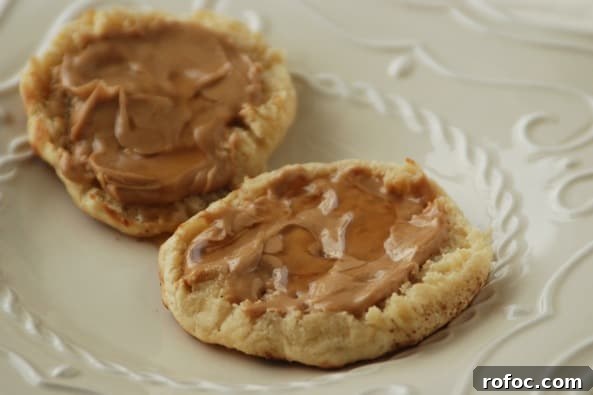
These muffins are versatile. I enjoyed one with bacon and a poached egg for a savory breakfast sandwich and another with the classic sweet pairing of peanut butter and honey. They also work beautifully with butter and jam, cream cheese and smoked salmon, or simply toasted and topped with fresh fruit preserves. Because the muffins hold up well, they’re great for make-ahead breakfasts; reheat briefly on the skillet or in a toaster to refresh the crust.
Tips for consistent results
- Keep the dough slightly sticky—overly stiff dough will yield dense muffins.
- Maintain medium heat on the skillet so the interiors cook without the cornmeal burning.
- Allow the first rise to fully develop flavor and structure before adding baking powder.
- Split with a fork after resting to preserve the characteristic texture.
Making homemade English muffins is rewarding and surprisingly simple. With minimal equipment—just a bowl, spoon, and skillet—you can make muffins that are tender inside, crisp outside, and perfect for any topping. Bon appétit!