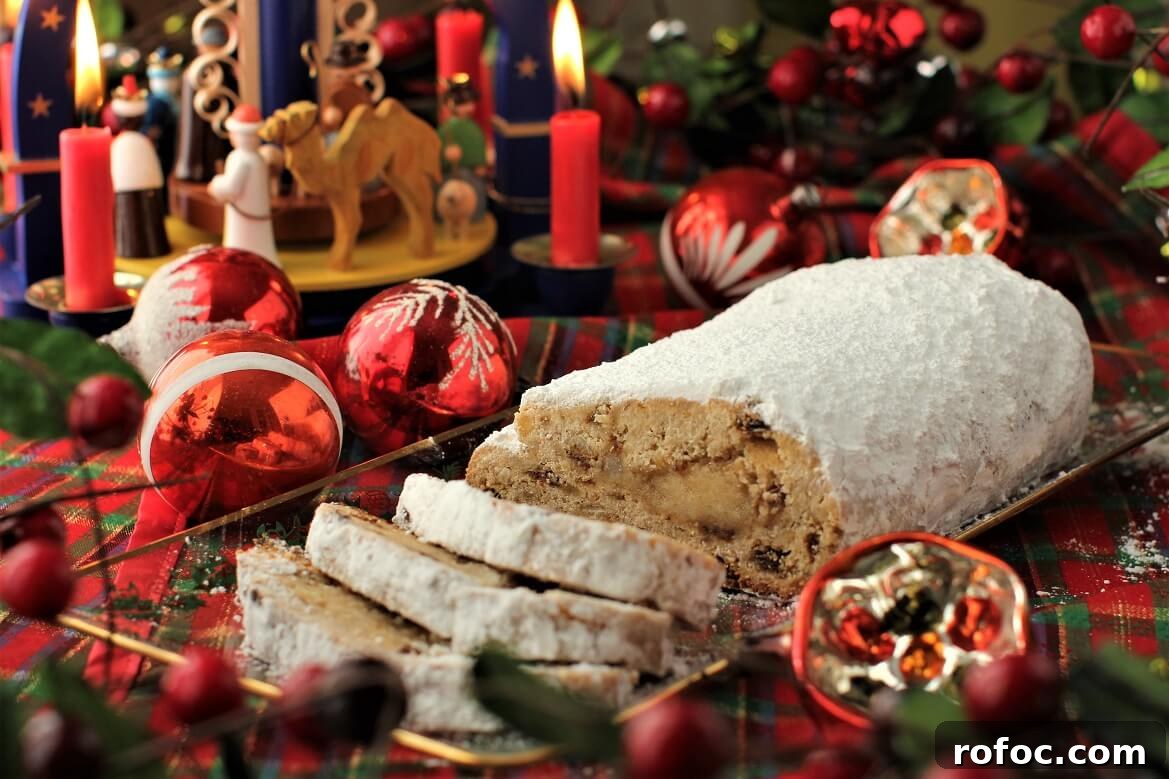
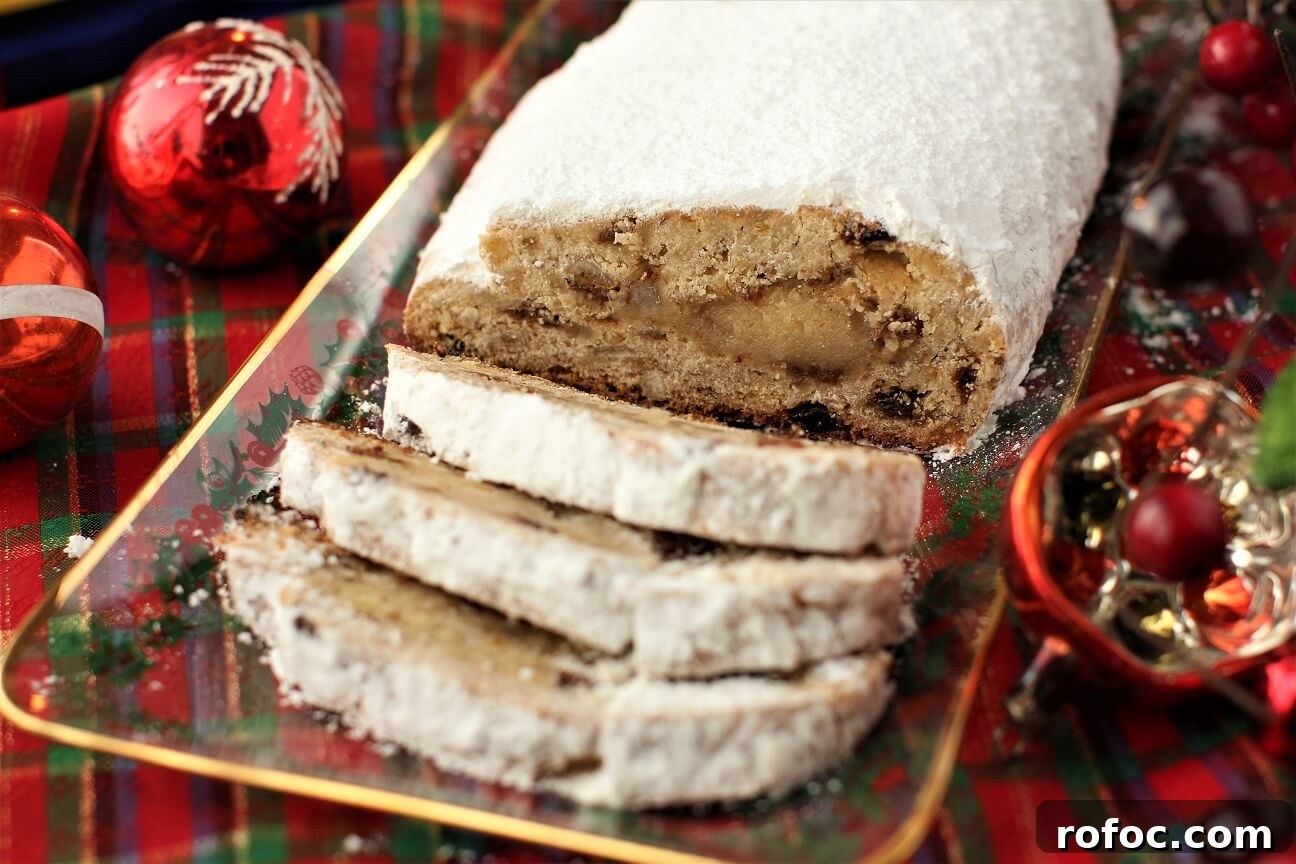
A traditional German Stollen — raisin-studded, marzipan-filled and dusted with powdered sugar — always signals Christmas to me. A slice with a cup of milky tea or coffee makes a festive light breakfast or a delicious afternoon treat. This version is an easier Quarkstollen, so there’s no fussing with yeast, multiple rises or waiting weeks before enjoying it. See the gluten-free version here, too.
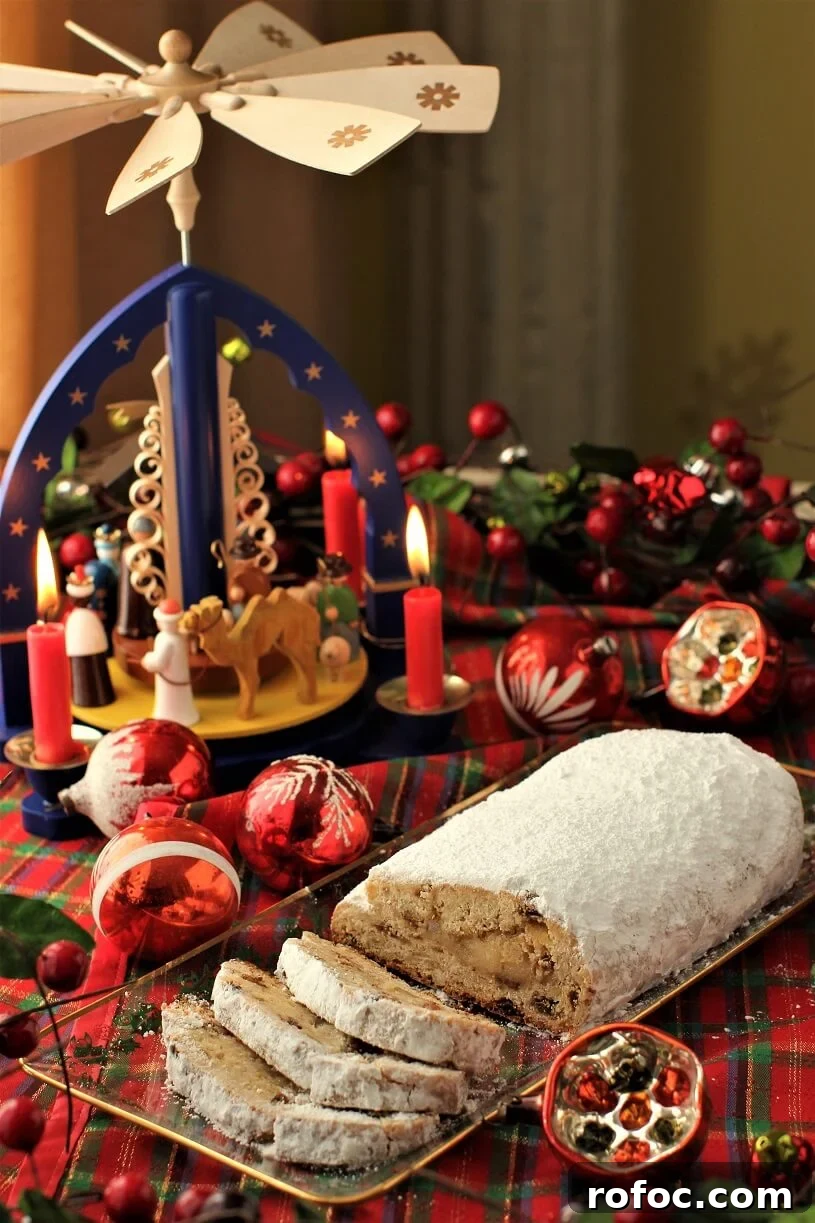
Pa-rum-pum-pum-pummmmm. Christmas is almost here!
Where has the time gone? It was just autumn, and now the house is decked for the holidays. Even a small celebration can fill the home with joy, and this year I’m grateful to have found the Christmas spirit again. A simple, sincere season can be just perfect.
‘The first Christmas was pretty simple. It’s okay if yours is too.’
This year I’ve focused on adapting traditional Quarkstollen recipes to produce a loaf that tastes like the Stollen I enjoyed as a child. We often bought Stollen from German delicatessens or received loaves from family. As a child I disliked raisins and thought the bread dry, though I always loved the marzipan center. Now I appreciate a fruity, crumbly slice with coffee or tea. A truly memorable Stollen I once received from Dresden left a lasting impression and inspired me to recreate that flavor at home.
On a visit to Germany I found a Quarkstollen recipe in a Christmas baking magazine that appealed to me. Traditional Stollen is a yeasted bread with raisins, candied peel, almonds, spices and sometimes marzipan, and it’s typically aged for two weeks. A Quarkstollen uses quark (a fresh cheese) or strained yogurt instead of yeast, which simplifies the process and lets you slice the loaf once it has cooled (though a day to rest improves the flavor).
One hallmark of Stollen is the thick coating of icing sugar. Hot loaves are brushed with melted butter immediately after baking, then heavily dusted with sugar when cool. Historically this butter-and-sugar layer helped seal and preserve the bread; properly prepared Stollen could be enjoyed weeks later, even into spring.
My Stollen Adventures
I’ve made this recipe several times, tweaking as I went. The first attempt using dry cottage cheese to mimic quark didn’t work out; later batches improved and one became the reliable recipe I now use. The ideal loaf balances rum, raisins, candied peel and almonds with a gentle hint of warm spices and a generous marzipan center. The cake keeps well and often becomes moister and more complex as it rests.
If you have leftover almond paste or marzipan, freeze it for later use in recipes like almond-cranberry scones.
Making Quarkstollen requires a few steps, but it’s rewarding — and a lovely holiday baking activity. I’ll include instructions with photos to guide the process, along with a concise recipe at the end.
Step-by-step Instructions for Making Your Stollen
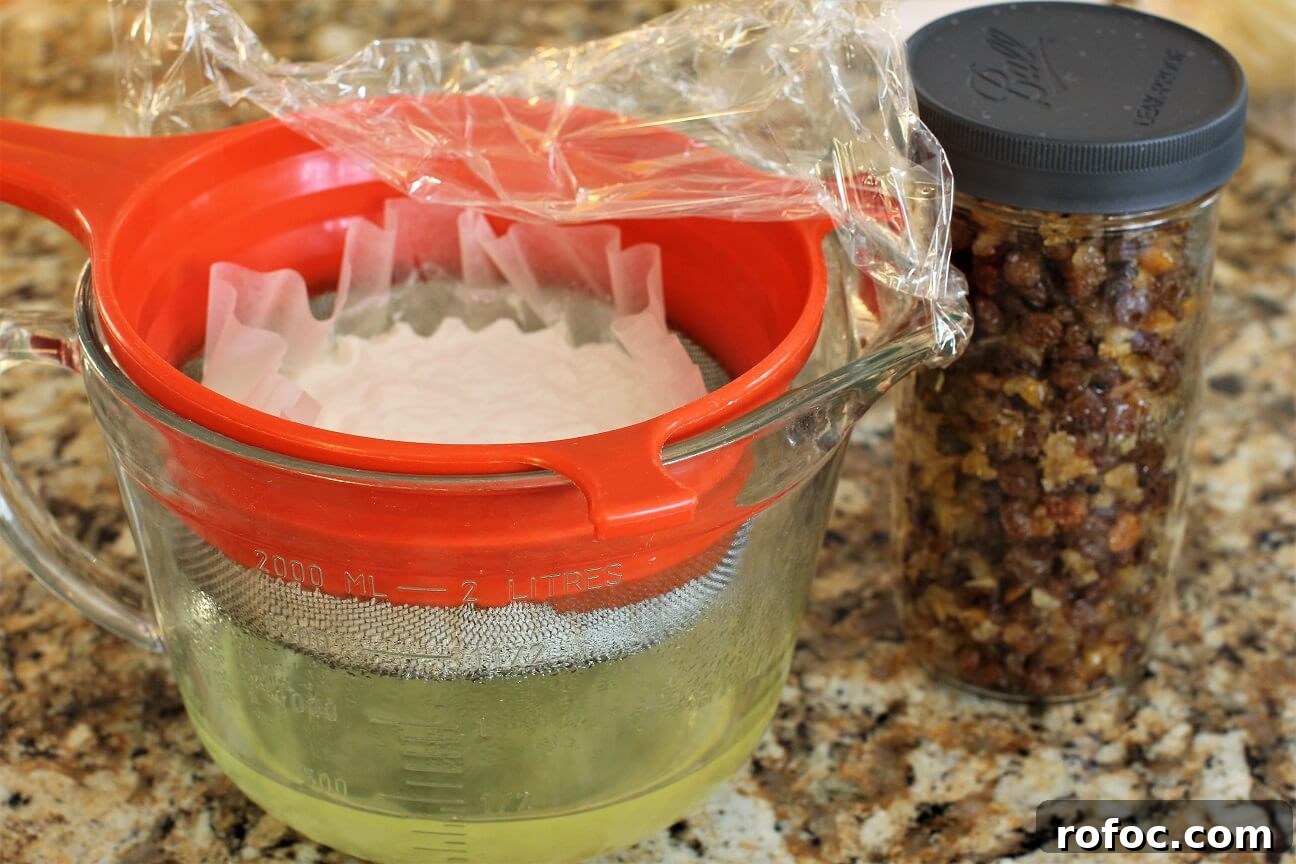
Start the day before baking by chopping candied citrus peel, mixing it with raisins and rum, and letting them soak for 12–24 hours. Stir or shake the jar a few times while they marinate.
If you can’t find German quark, strain regular yogurt to approximate it. Line a sieve with a coffee filter, layers of cheesecloth, paper towel or a clean towel, set it over a bowl, add the yogurt and cover. Refrigerate for 12–24 hours until the whey has drained and the yogurt has thickened to a quark-like consistency.
Make the dough with flour (regular or gluten-free blend as noted in the recipe), butter, eggs, sugar, spices, ground almonds, the strained yogurt or quark, and the rum-soaked fruit. Divide the dough into two balls, roll each into a roughly 7 x 10 inch rectangle, and prepare the marzipan filling by kneading diced almond paste with two tablespoons of softened butter. Roll the filling into two 9-inch ropes and lay one rope along the center of each rectangle.
Fold the dough over the marzipan so the top edge rests about 1/2 inch short of meeting the bottom. Pinch any large cracks closed and press the top edge gently to seal. Transfer each loaf on its parchment onto a baking sheet and fit a parchment collar around it to keep its shape while baking — a simple triple-layered folded parchment strip stapled into an oval works well.
Bake until golden, then brush the hot loaves with melted butter and sprinkle each with granulated sugar. Cool in the pans briefly, then transfer to a rack. When completely cool, sift a thick layer of icing sugar over the tops and bottoms of each loaf. Wrap the loaves in parchment or wax paper and store them in an airtight container. Properly wrapped, Stollen keeps at room temperature for weeks; refrigeration is recommended if you plan to store it for months. The flavor improves with time.
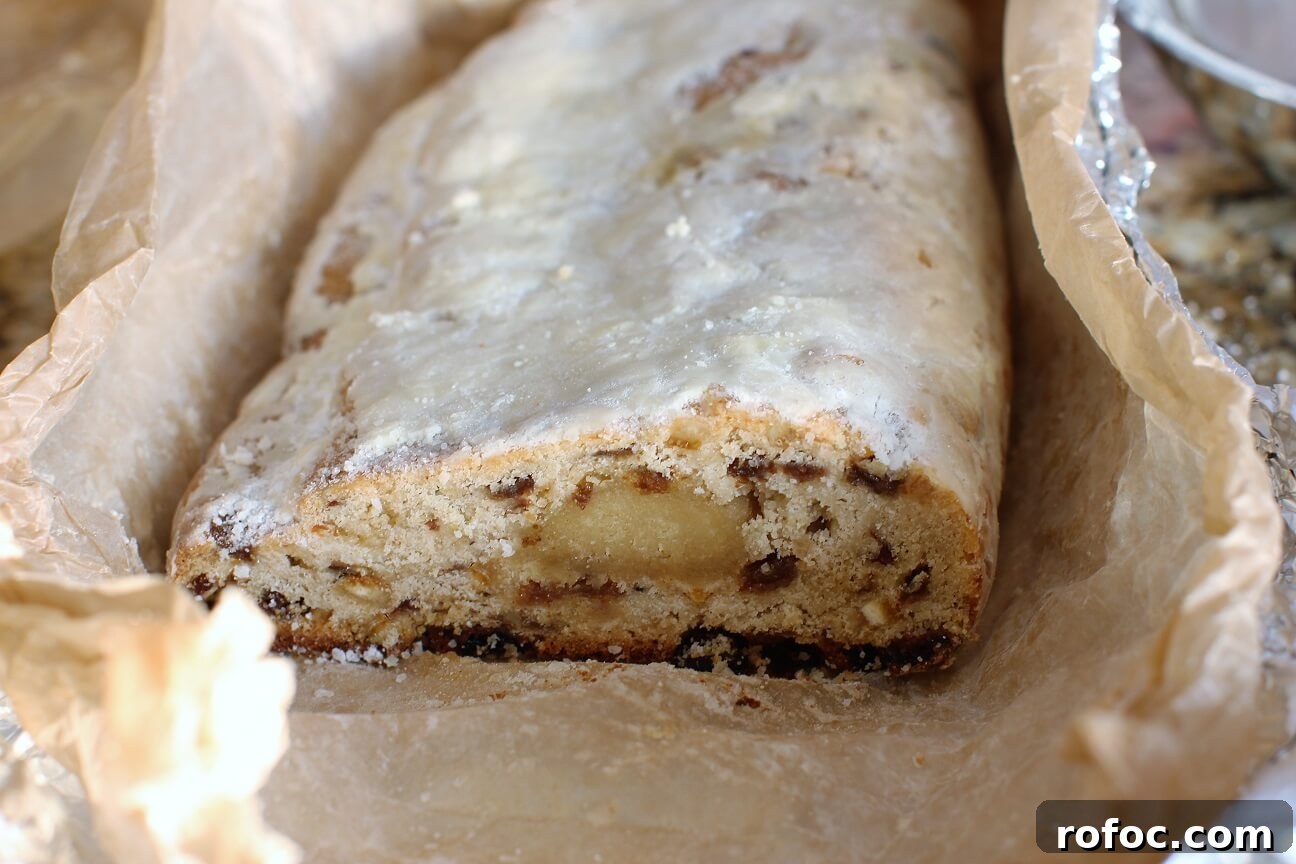
Make a pot of coffee and slice a piece to enjoy while you plan holiday gatherings.
* * * * *
Kitchen Frau Notes: The batter itself is not overly sweet; the sweetness comes from raisins, candied peel, marzipan and the icing sugar coating. The parchment collars help the loaves maintain an appealing oval shape and prevent spreading; they’re worth the effort. Use a kitchen scale for consistent results. If making the gluten-free version, use sweet rice (mochiko/glutinous) flour — not regular rice flour — to give the dough more elasticity and prevent cracking.
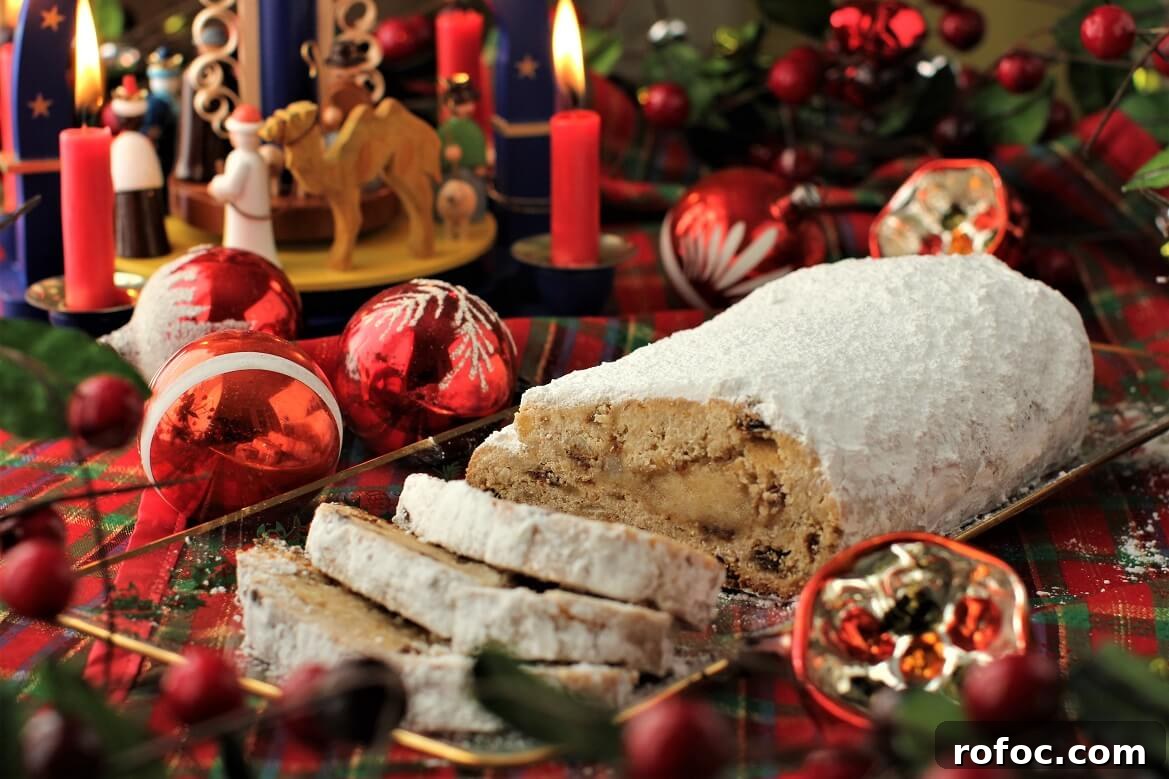
German Quark Stollen, Traditional Christmas Cake
Inspired by LandIdee Weihnachtsküche and family recipes
Yield: 2 loaves — Time: 1 day soaking time + about 2 hours active time
INGREDIENTS
- 2 cups (300 g) sultana raisins
- 1 cup (150 g) mixed candied peel, loosely measured
- 1/4 cup (60 ml) rum
- 1 cup (250 g) German quark or 1 cup strained yogurt
- 2/3 cup (150 g) unsalted butter, room temperature (plus extra for filling and finishing)
- 1/2 cup (100 g) sugar
- 2 large eggs
- 1 teaspoon pure vanilla extract
- 1/2 teaspoon pure almond extract
- 1/2 teaspoon fine sea salt (reduce to 1/4 teaspoon if using salted butter)
- 1/8 teaspoon each: cinnamon, cloves, ginger, nutmeg, cardamom
- 1 cup (100 g) almond flour
- 4 cups (500 g) all-purpose flour or for gluten-free: 400 g gluten-free flour mix + 100 g sweet rice flour + 2 tbsp whole psyllium husks
- 3 teaspoons (1 tbsp) baking powder
For the marzipan filling:
- 225 g (8 oz) almond paste (about 1½ cups diced)
- 2 tablespoons softened butter
For finishing:
- 6 tablespoons (90 ml) melted butter
- 2 tablespoons granulated sugar
- 3/4 to 1 cup (90–120 g) icing sugar
DIRECTIONS
The day before baking:
- Combine raisins and finely chopped candied peel in a bowl or jar. Add rum, stir to moisten and cover. Stir or tilt the jar every few hours and let soak 12–24 hours.
- If using strained yogurt: line a sieve with a coffee filter, cheesecloth or towel, place yogurt in the sieve set over a bowl, cover and refrigerate 12–24 hours. Measure 1 cup (250 g) of the thickened yogurt for the recipe.
At baking time:
- Preheat oven to 350°F (180°C). Prepare two parchment collars by folding 6-inch (15 cm) strips of parchment into thirds lengthwise, joining two strips to make a 27-inch (69 cm) band, overlapping and fastening the ends to form an oval. Repeat for the second band.
- Cream 2/3 cup (150 g) butter with 1/2 cup (100 g) sugar until fluffy. Add eggs one at a time, beating until creamy.
- Beat in quark or strained yogurt, vanilla, almond extract, salt, spices and almond flour.
- Add flour (or gluten-free blend with sweet rice flour and psyllium) and baking powder and mix on low to combine.
- Fold in rum-soaked raisins and candied peel, including any remaining rum.
- Turn dough onto a work surface, divide into two and shape into balls. Roll each into a 7 x 10 inch rectangle on parchment.
- Prepare marzipan by dicing almond paste and kneading with 2 tbsp softened butter into a smooth mass. Divide and roll into two 9-inch ropes. Place one rope along each dough rectangle, fold the top layer over, seal cracks and trim excess parchment.
- Transfer each loaf on its parchment to a baking sheet, fit a parchment collar around it and press the collar’s base to rest on the pan.
- Bake 50–60 minutes until golden and a toothpick comes out clean.
- Immediately brush each hot loaf with half of the melted butter (about 3 tbsp per loaf) and sprinkle each with 1 tbsp granulated sugar. Cool 15 minutes in the pans, then transfer to a rack to cool completely.
- When cool, place the rack over the used parchment and dust the bottoms with a thick layer of icing sugar. Flip upright and dust the tops and sides to fully coat.
- Wrap each loaf in parchment or wax paper and place in an airtight container or foil. Rest at least one day before slicing. Properly stored, the Stollen will keep for several weeks and improves with time.
Makes 2 Stollen.
Guten Appetit!
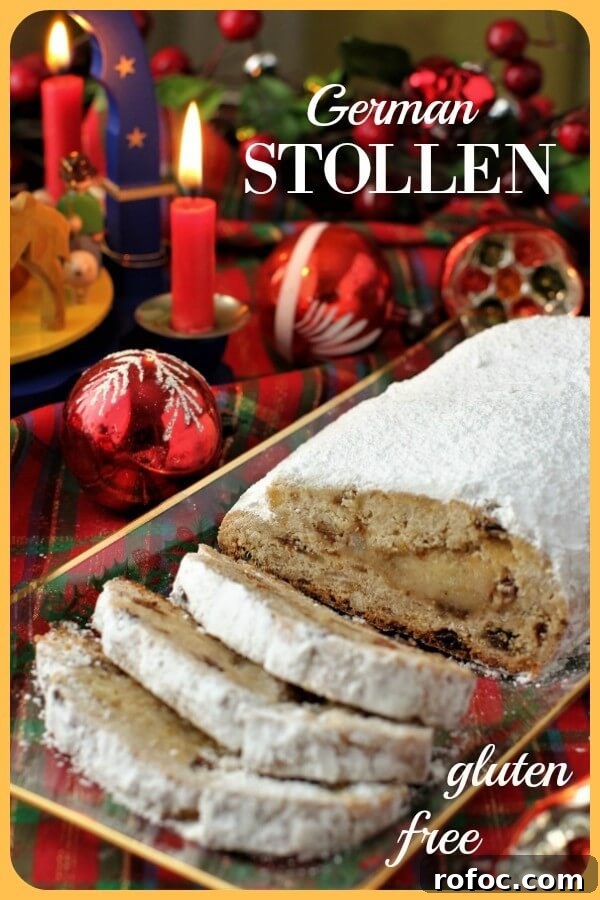
You might also enjoy other German Christmas baking like Elisenlebkuchen, Basler Leckerli, Zimtsterne or Lebkuchen loaf.