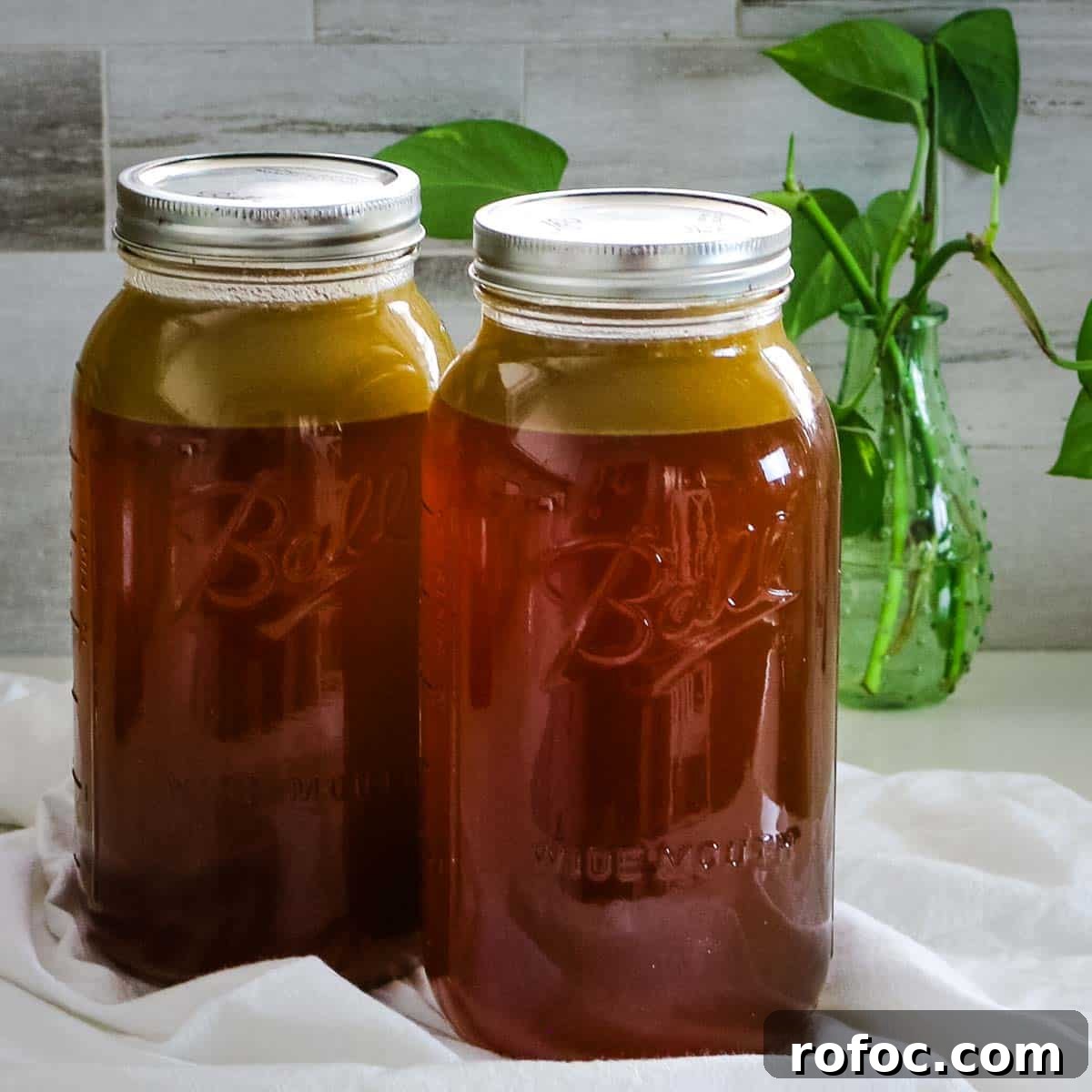
This beef bone broth is deeply flavorful and nutrient-dense. It begins by roasting a mix of beef bones, then gently simmering them in a slow cooker for a nourishing, versatile stock.
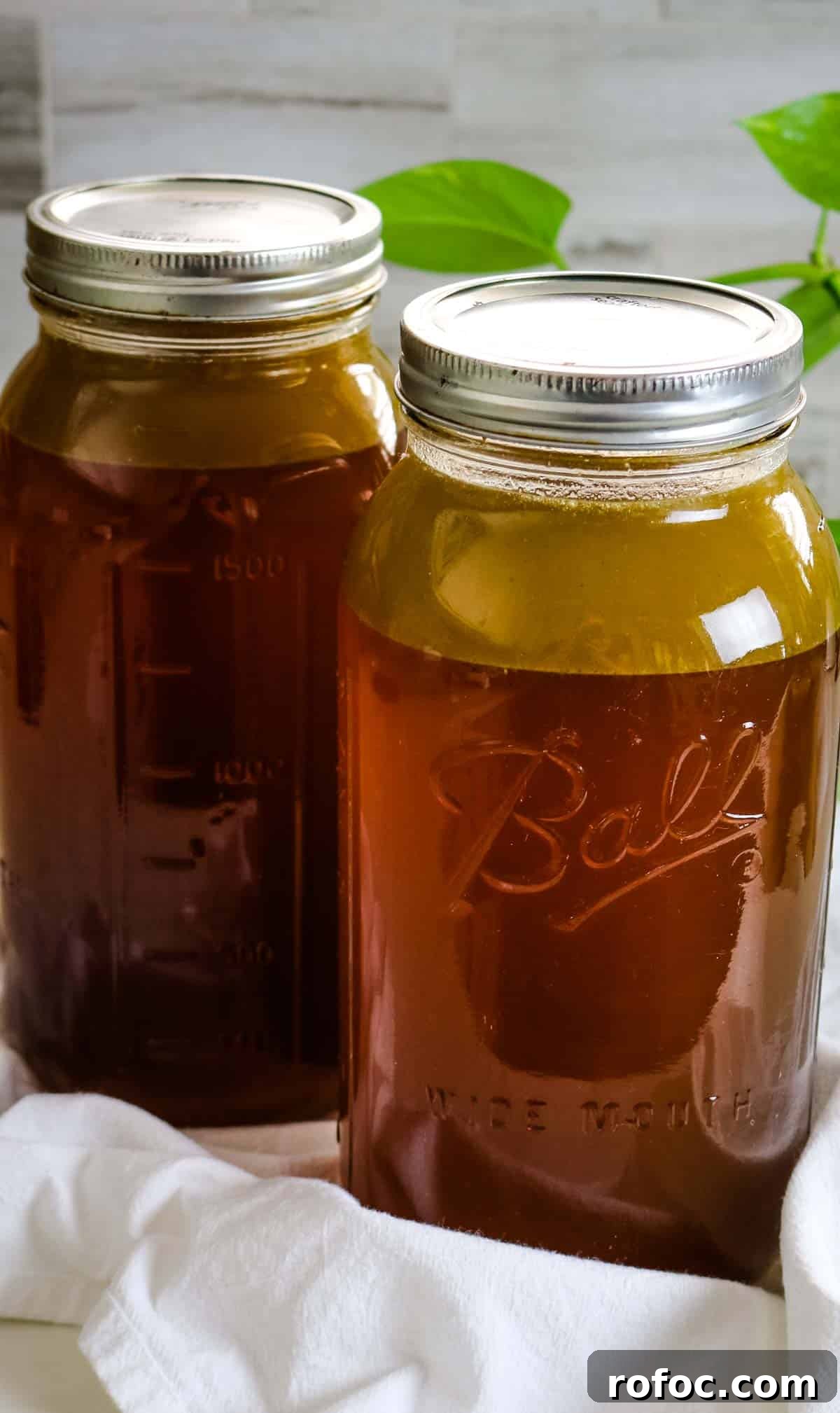
Homemade beef bone broth is a cornerstone of a nourishing kitchen. Many traditional cultures made broths and stocks from animal bones and vegetable scraps, capturing deep flavor and concentrated nutrition.
Modern diets often rely on artificial flavorings instead of slow-simmered, nutrient-rich broths. Making broth at home is both comforting and rewarding — and the slow cooker turns a long, hands-on process into an easy, largely unattended one that provides food to nourish the whole family.
🥣 What is Beef Bone Broth
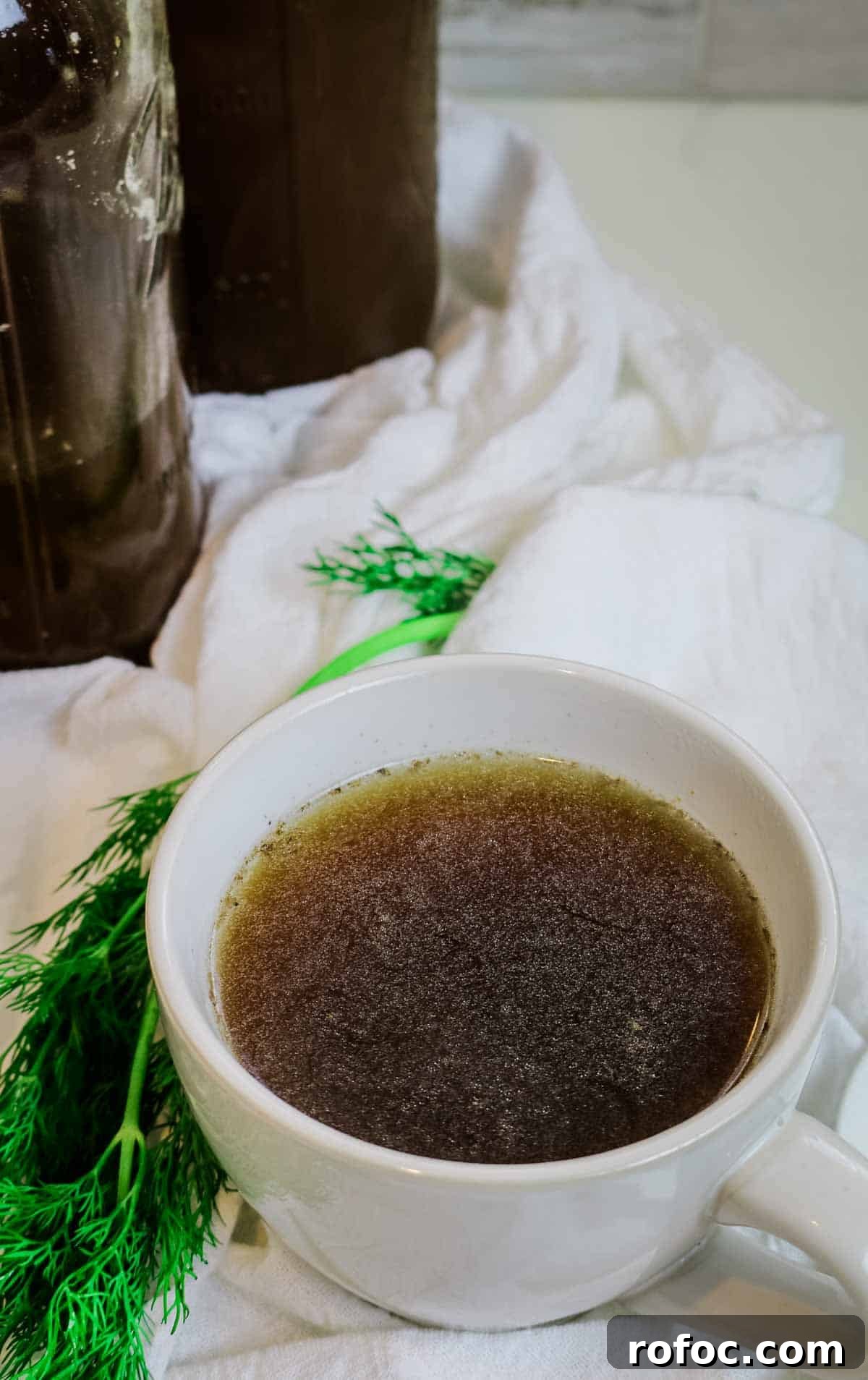
Beef bone broth is a savory cooking liquid made by gently simmering beef bones with vegetables, water, a splash of red wine (or other acid), and aromatics for many hours. The long, low simmer pulls minerals, collagen, and flavor from the bones into the liquid.
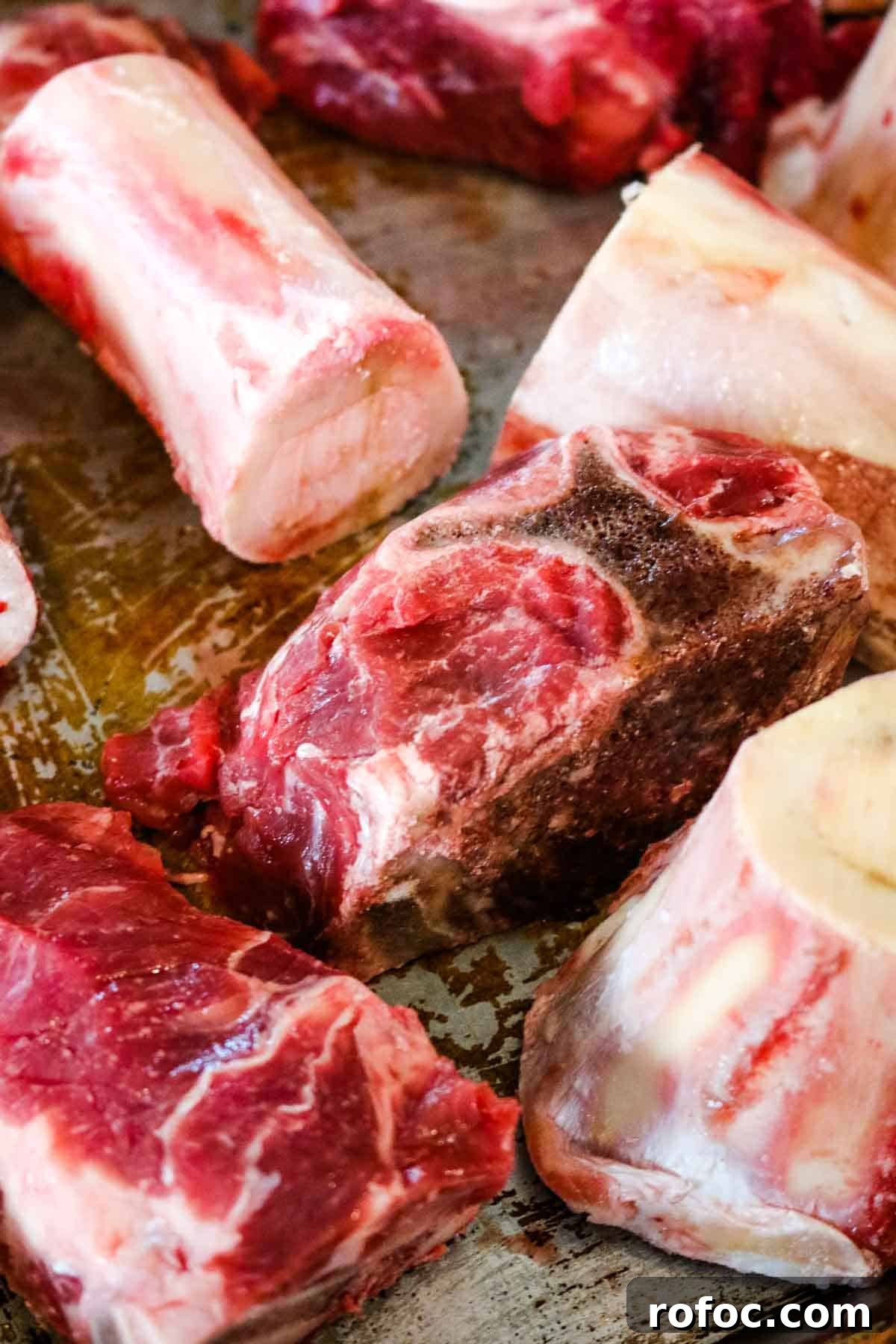
Traditional broths used every part of the animal so nothing went to waste. For the best beef broth, include a variety of bones: knuckle bones for collagen, marrow bones for richness, and meaty bones such as neck, rib, or oxtail for color and depth.
Roasting the bones before simmering is essential for beef broth — it builds a deep, roasted flavor that you can’t get from raw bones alone.
❤ Health Benefits
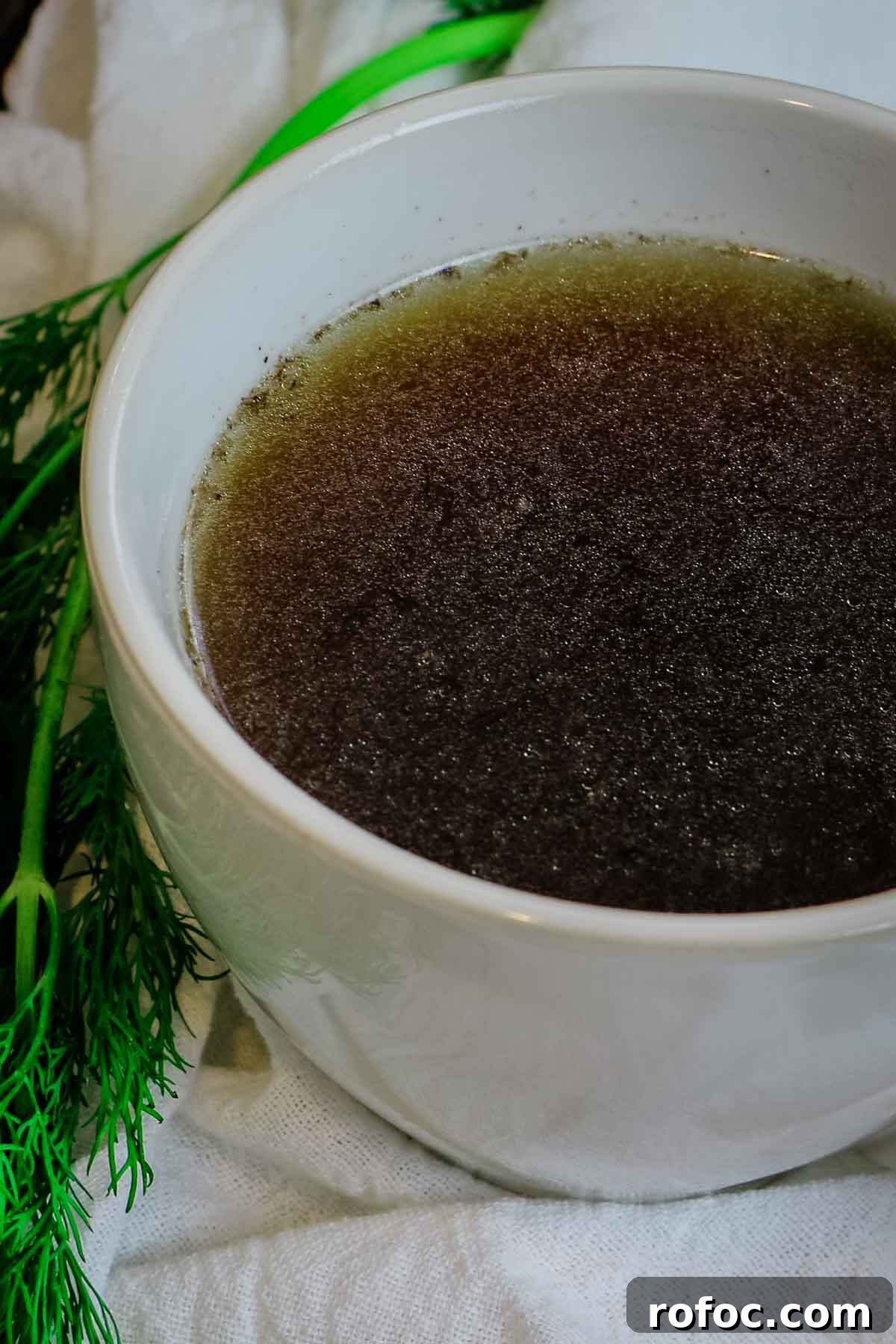
Bone broth has regained popularity for good reason: when prepared traditionally it is nutrient-dense and easy to digest. The broth contains minerals leached from bones, collagen from cartilage, vitamins from marrow, and electrolytes from vegetables.
An acidic ingredient like red wine or apple cider vinegar helps extract minerals from the bones, increasing the broth’s nutritional value. Regularly sipping or using bone broth in cooking is an easy way to support gut health and overall wellness.
Collagen is a major benefit: it supports skin, joints, and connective tissues and provides a spectrum of amino acids. Many people find including bone broth helpful when following healing diets or supporting gut repair protocols.
Beyond health benefits, bone broth is a flavorful base for soups, sauces, and gravies, and makes an excellent warm beverage on its own.
💭 Pro tip: Use bone broth in place of water in savory recipes to boost flavor and nutrition.
🐄 Beef bone broth vs. Chicken bone broth
Both beef and chicken broths are nourishing liquids made from bones, aromatics, and an acidic extractor. The main differences are flavor and cooking time.
Beef broth typically requires roasting the bones and a much longer, lower simmer — often 12–24 hours — to extract maximum flavor and minerals. The result is a robust, rich stock that pairs well with heartier soups and stews.
Chicken broth is milder and can be produced more quickly, especially using a pressure cooker. It’s great for lighter soups, sauces, or cooking grains when you want a subtler base.
Both broths can be enjoyed straight from a mug, used in gravies, or as the cooking liquid for other dishes.
🥘 Why use a slow cooker?
A slow cooker offers convenience and reliable low heat for long periods — ideal for extracting nutrients without boiling. Beef bones are denser than chicken bones and need extended gentle simmering to release minerals and collagen. Slow cookers maintain a low, steady temperature that helps produce a clear, flavorful broth without excessive evaporation or cloudy scum from a rolling boil.
🍖 Ingredients
This recipe is flexible — use what you have on hand. Key components:
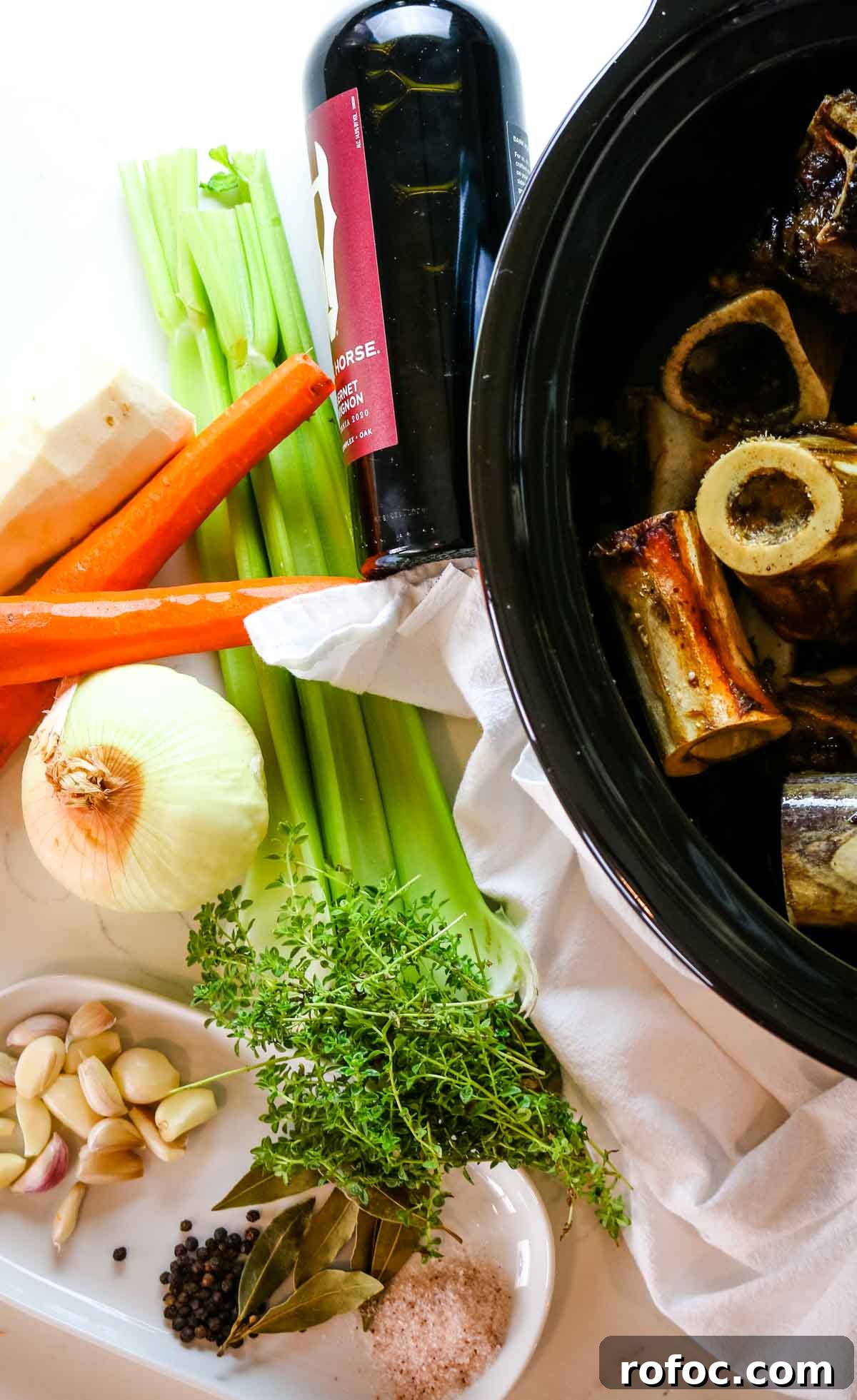
- Beef bones: knuckle bones, marrow bones, neck bones, oxtail, rib bones — a mix gives the best flavor and collagen.
- Vegetables: yellow onion, carrots, celery ribs, parsnip (or vegetable scraps).
- Aromatics and seasonings: bay leaves, garlic, peppercorns, sea salt, fresh thyme (or herbs you have on hand).
- Acid: dry red wine or apple cider vinegar to help extract minerals from the bones.
- Water: enough to cover the bones and vegetables without diluting the broth excessively.
Tip: Grass-fed bones yield a more nutrient-rich broth. Keep a good ratio of bones to water so the broth gels when chilled (approximately 4 lb bones to 2 quarts water is a useful guideline, but adjust as needed).
💭 Make it nutrient-dense: Use grass-fed beef bones when possible for higher quality nutrition.
👩🏽🍳 Step-by-Step Instructions
Printable recipe details are provided in the recipe card below.
This slow cooker recipe uses beef bones, onion, carrots, celery, parsnip, bay leaves, peppercorns, garlic, thyme, sea salt, and red wine or apple cider vinegar.
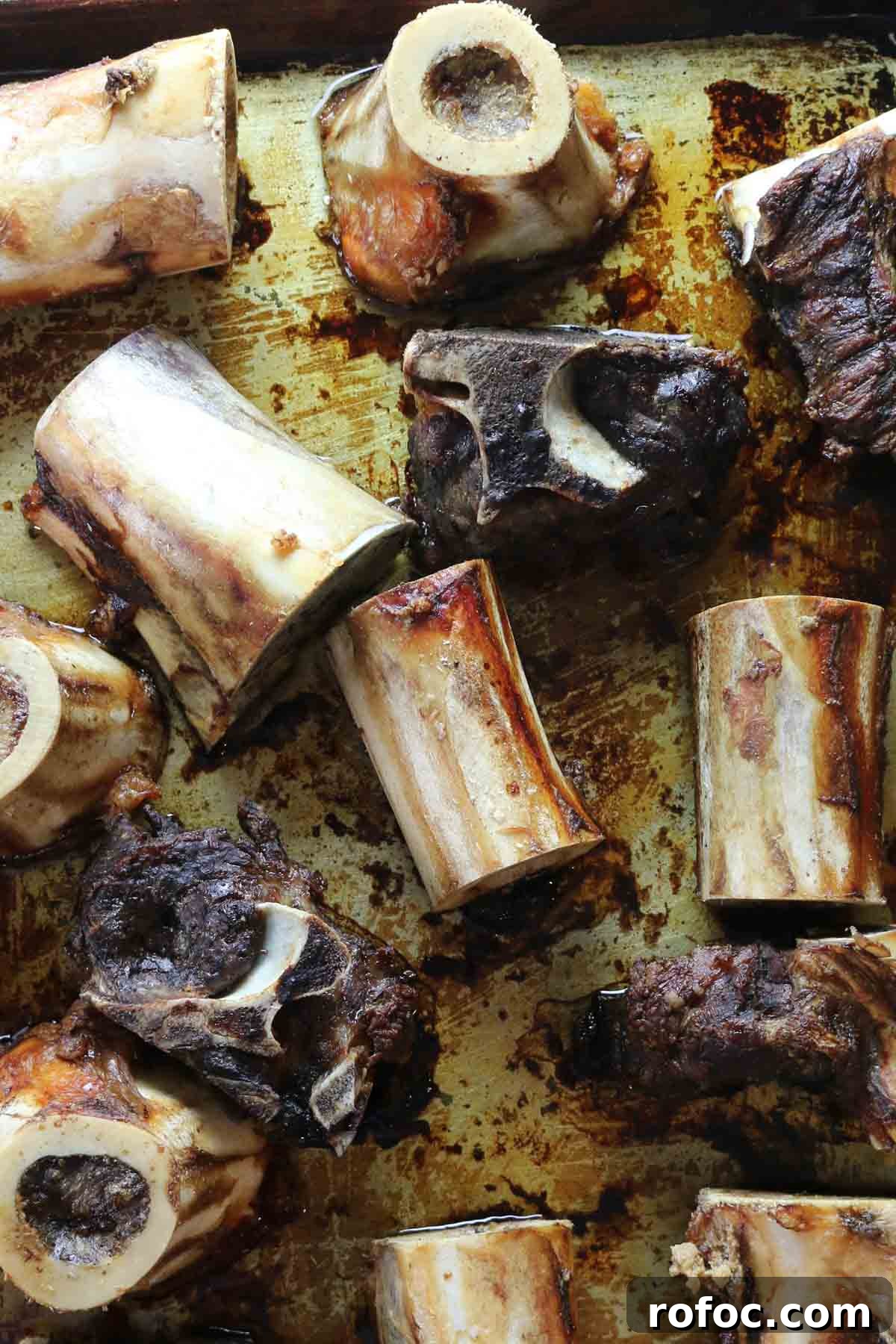
Step 1 — Roast the bones: Preheat the oven to 400°F (204°C). Spread bones on a rimmed baking sheet and roast 45 minutes, until well browned. Roasting deepens flavor.
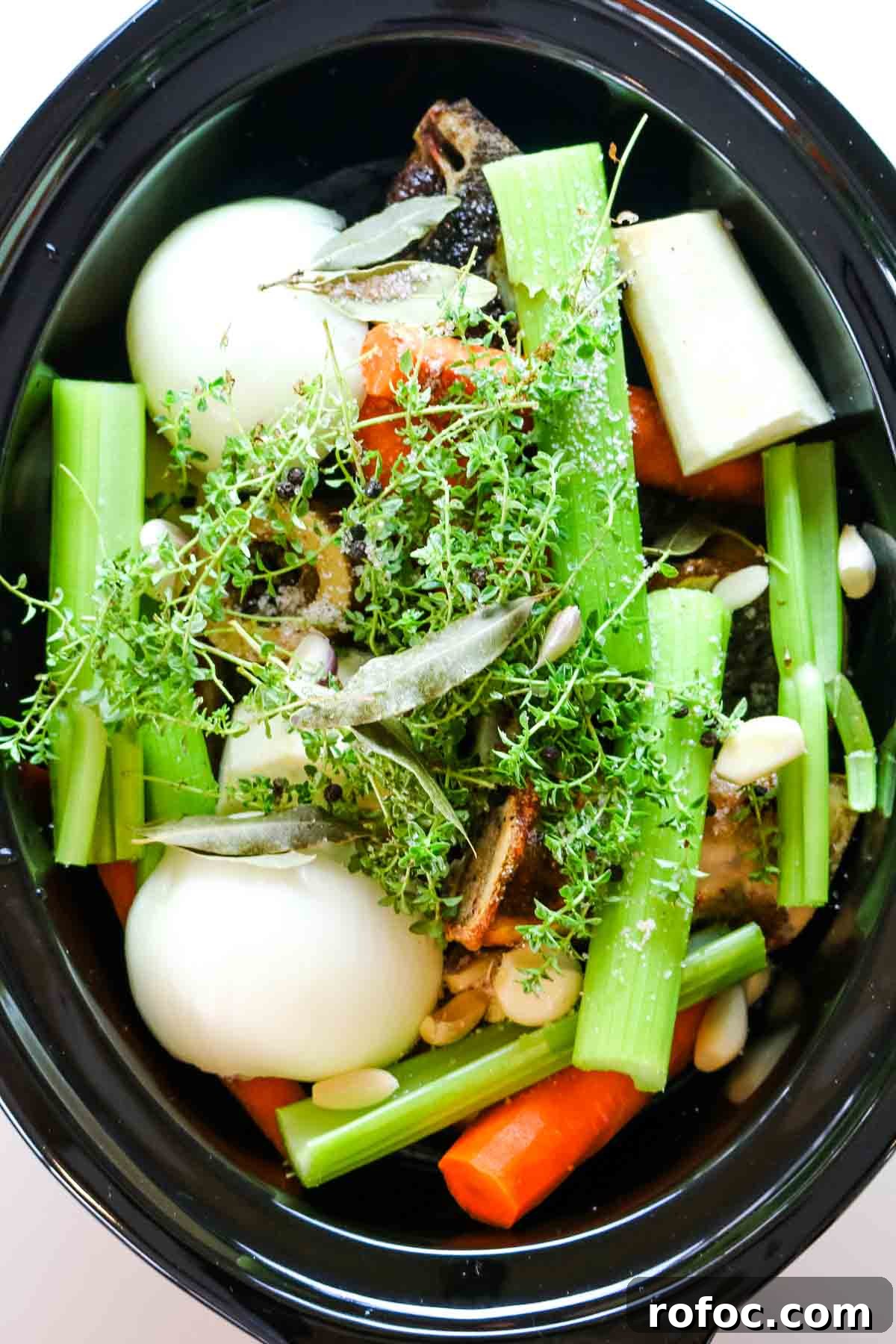
Step 2 — Transfer to slow cooker: Move the browned bones and any pan drippings to the slow cooker. Add the vegetables, aromatics, and seasonings.
💭 Pro tip: Use veggie scraps (onion peels, carrot ends, celery leaves) to bulk up flavor — toss them straight into the broth.
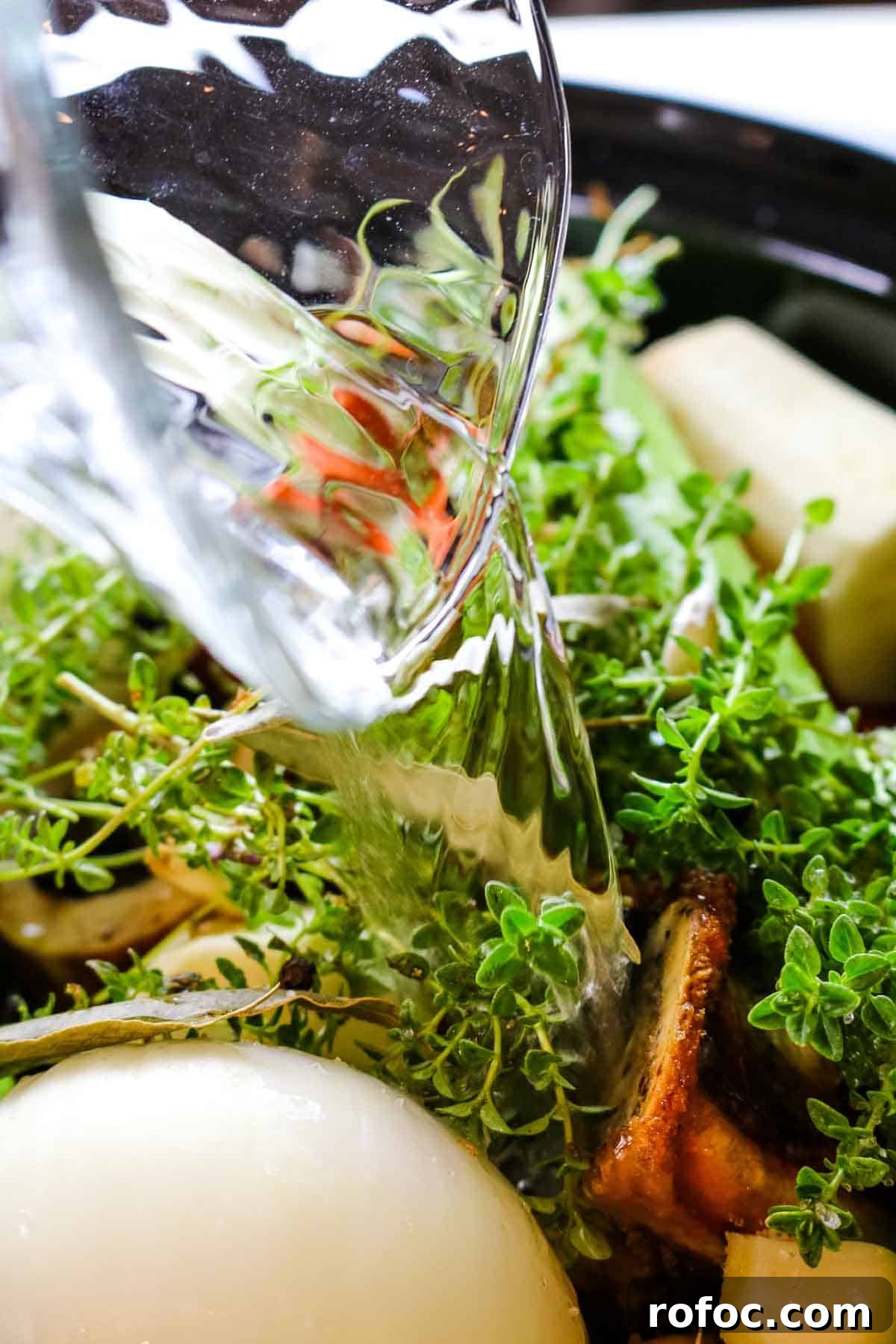
Step 3 — Add liquids: Pour in a little red wine or apple cider vinegar, then add enough water to cover the bones and vegetables.
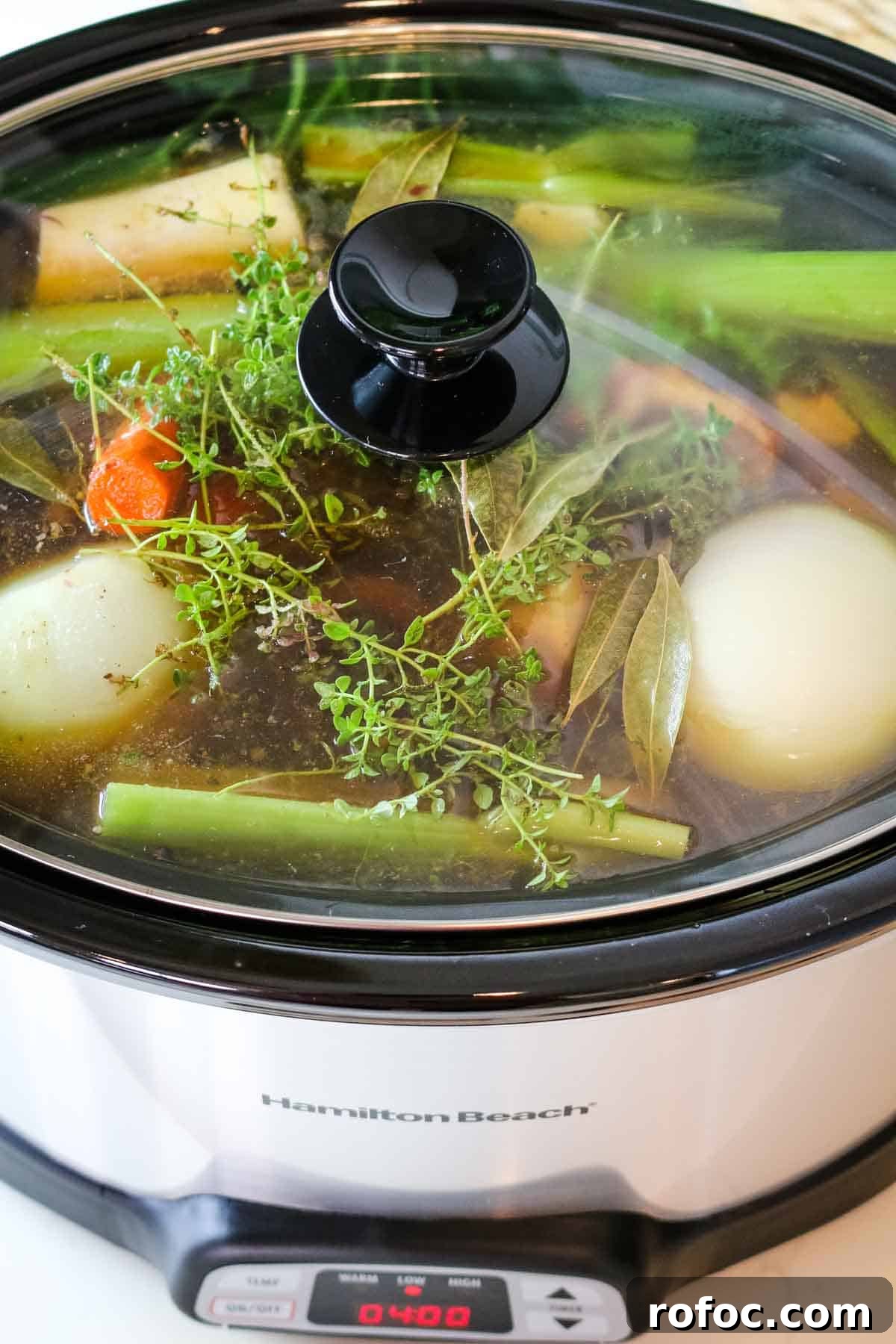
Step 4 — Cook low and slow: Set the slow cooker to low and simmer up to 18–24 hours. Longer cooking pulls out more collagen and minerals.
💭 Pro tip: Aim for a proper bones-to-water ratio so the broth gels when chilled. Rough guide: 4 pounds bones to 2 quarts water.
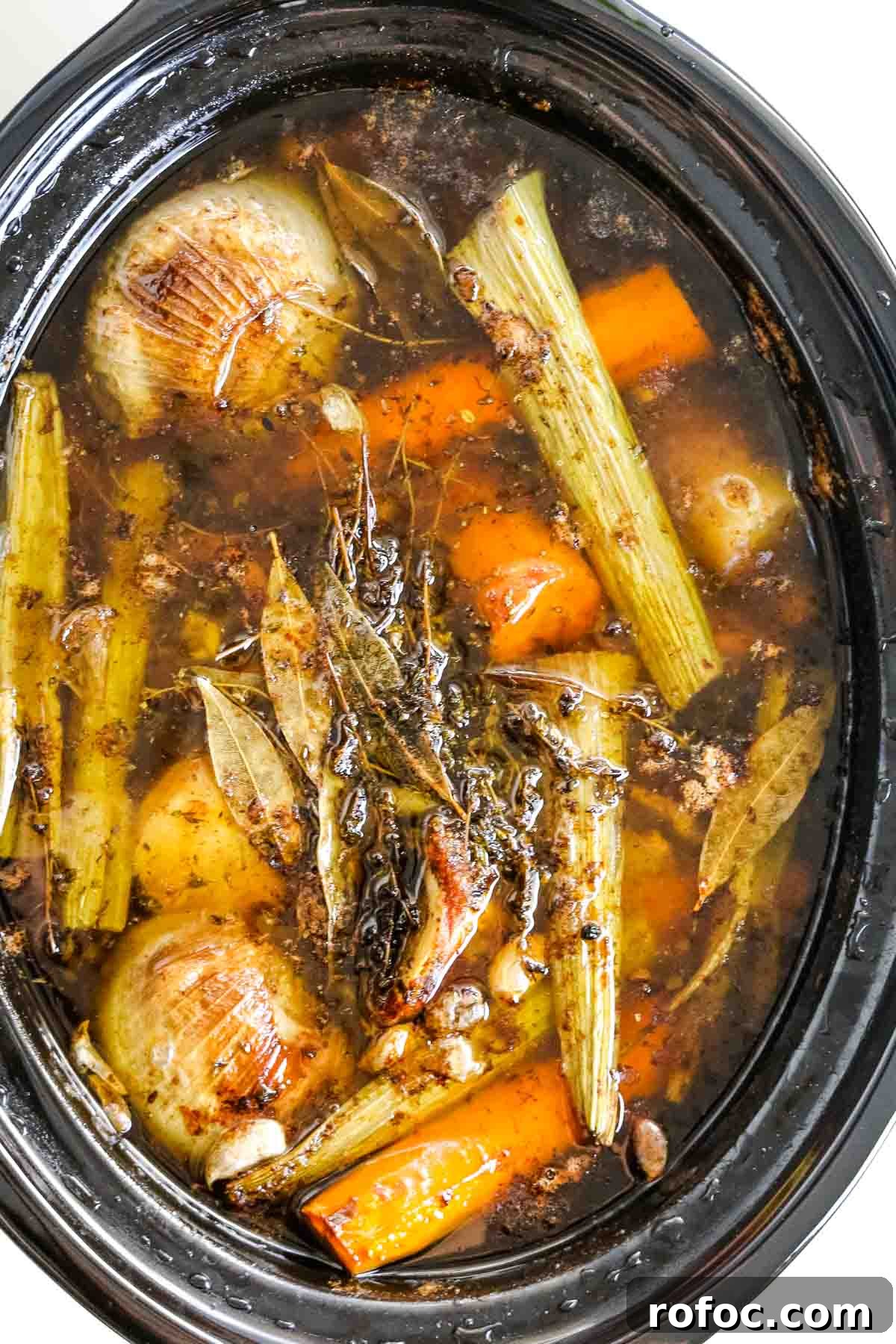
Step 5 — Lower temperature (optional): After several hours, switch from low to warm if your slow cooker has that setting to keep a bare simmer. If not, use the lowest setting and consider leaving the lid slightly ajar.
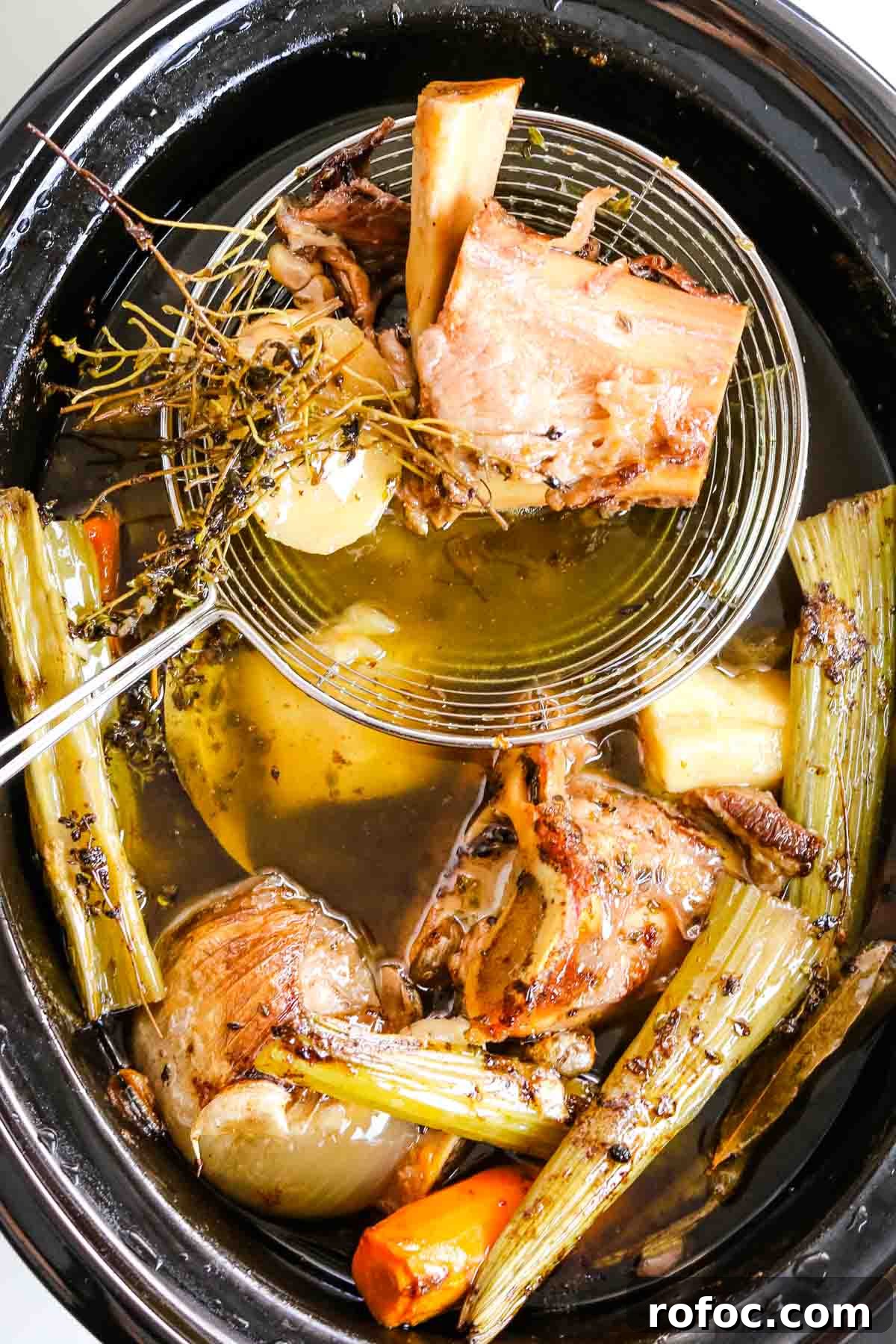
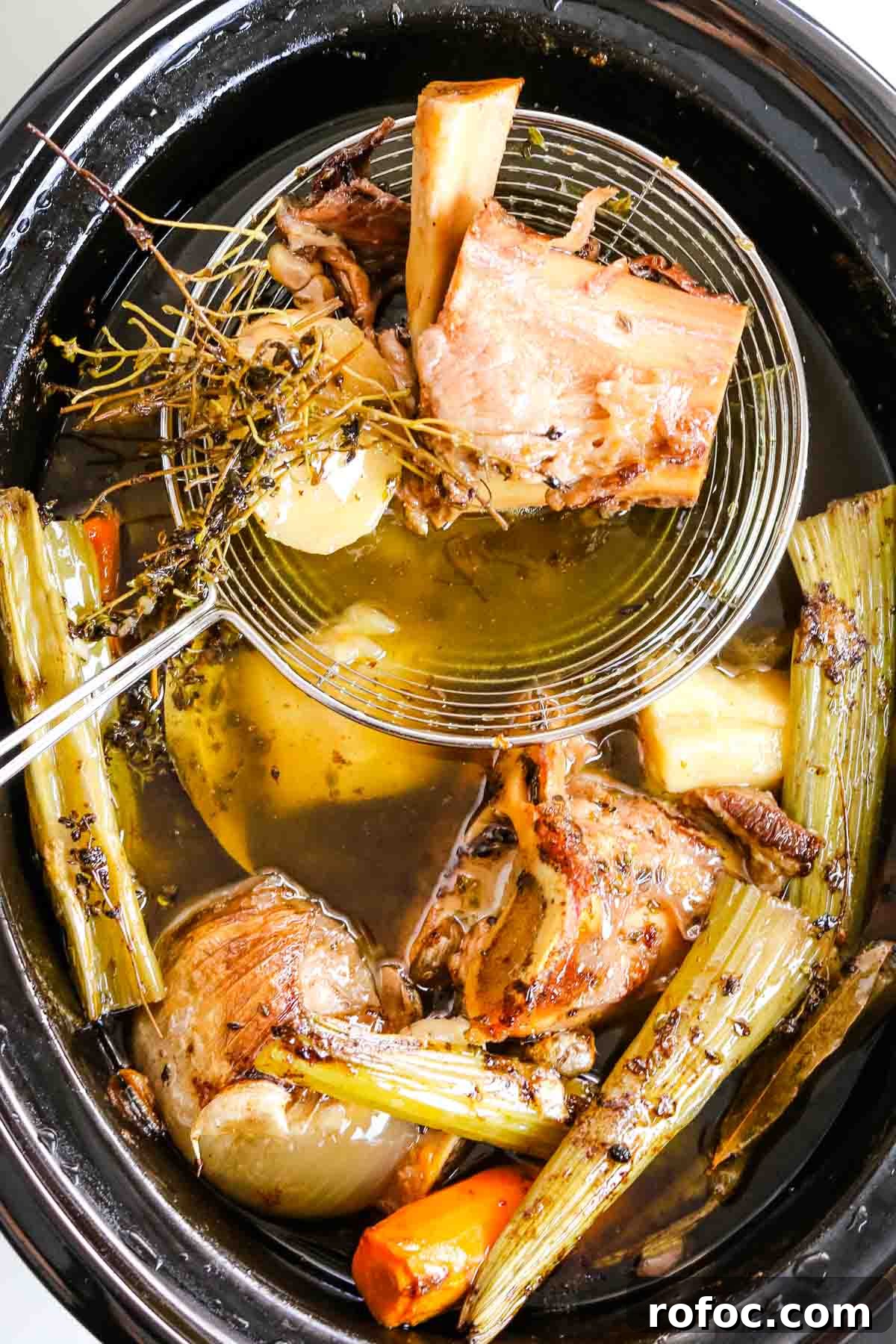
Step 6 — Remove solids: When cooking is finished and the pot is cool enough to handle, scoop out bones, vegetables, and solids. Place them in a colander over a rimmed dish to collect any remaining liquid.
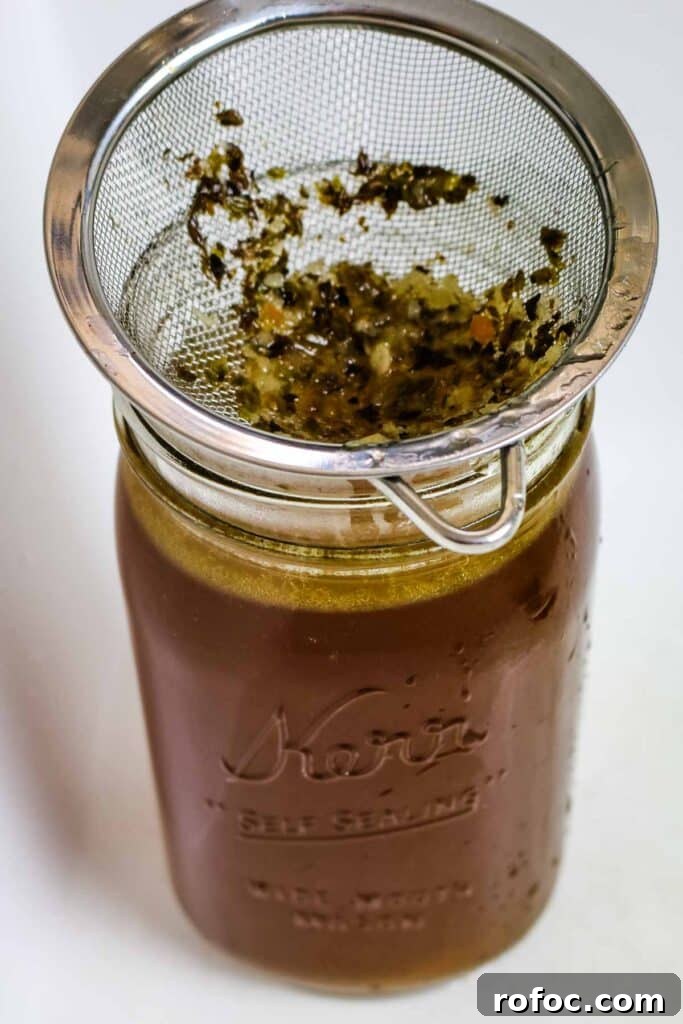
Step 7 — Strain and jar: Strain the broth through a fine mesh sieve into wide-mouth mason jars or a heatproof container. Press the solids in the colander to extract any remaining broth.
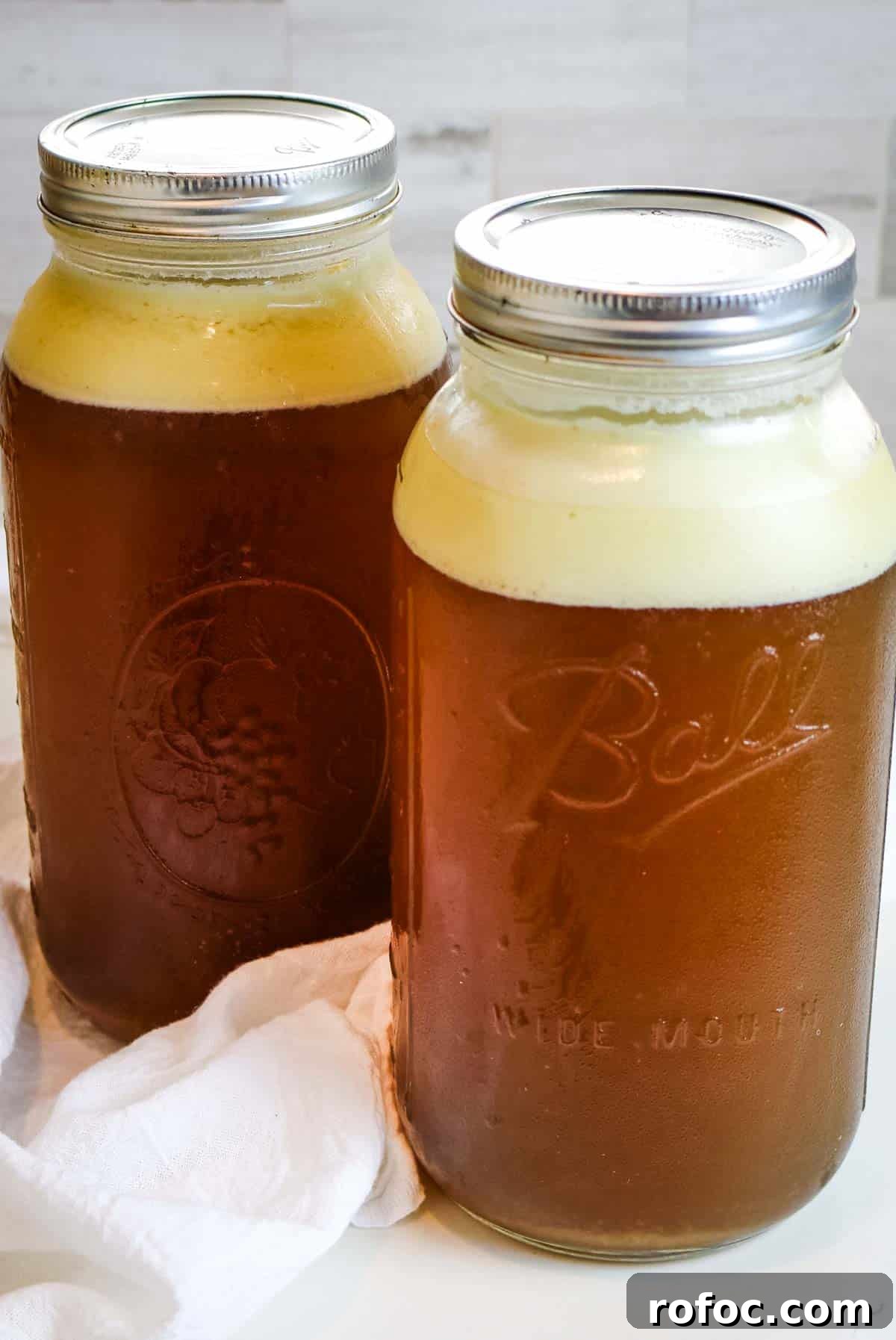
Step 8 — Chill: Let the jars cool to room temperature, then refrigerate until fully chilled. Once cold, skim off the fat (tallow) if desired and reserve it for cooking.
🍲 Serving Suggestions
Use bone broth as the base for soups and stews, in gravies or sauces, or to cook grains for extra flavor. Sipping a warm mug of homemade broth is a simple, nourishing way to enjoy it.
❄ Storage and Freezing
Refrigerator: Store broth in wide-mouth jars for easy access. A layer of fat on top acts as a protective seal and can help refrigerated broth keep longer (up to about a month).
Freezer: Leave at least 1″ headspace in jars to allow for expansion, and use only wide-mouth jars to reduce the risk of breakage. Broth freezes well for up to 6 months. Alternatively, freeze in measured silicone cubes and transfer to freezer bags for convenience.
💬 FAQs
An 8-quart slow cooker works well for a large batch. Use the largest pot you have available and make sure the inner pot is in good condition (no flaking or deep scratches).
Use a mix: knuckle bones, marrow bones, neck bones, meaty rib bones, and oxtails are ideal. Bones with connective tissue yield higher-collagen broth. Local farmers or meat counters often sell soup bones.
Most of the minerals and collagen are extracted during the first long simmer, so a second batch will be weak and unlikely to gel. For best results, use fresh bones for each full-strength batch.
The solidified fat (tallow) that rises to the top is a useful, stable cooking fat. You can render and store it separately for frying or roasting.
Printable Recipe
Slow Cooker Beef Bone Broth
This beef bone broth is flavorful and nutrient-dense. It starts with roasted bones and a long, gentle simmer in the slow cooker.
Ingredients
- 5 pounds beef bones (marrow, knuckle, neck, rib, oxtail)
- 1 yellow onion, halved or quartered
- 3 celery ribs
- 3 carrots
- 1 parsnip
- 6 sprigs fresh thyme
- 4 bay leaves
- 8 garlic cloves
- 1 tbsp peppercorns
- 1½ tbsp sea salt
- ½ cup dry red wine (or ¼ cup apple cider vinegar)
- Filtered water, enough to cover ingredients
Instructions
- Preheat the oven to 400°F. Spread beef bones on a rimmed baking sheet and roast for 45 minutes until browned. Transfer bones and pan drippings to the slow cooker.
- Add vegetables, aromatics, and seasonings on top of the bones.
- Add red wine or apple cider vinegar, then pour in enough water to cover everything.
- Set the slow cooker to low for several hours. After about 4 hours, reduce to warm or the lowest setting and simmer gently for up to 18–24 hours total.
- When finished, cool enough to handle. Remove solids with a strainer and transfer them to a colander set over a rimmed dish to catch any remaining liquid.
- Strain the broth through a fine mesh sieve into jars or a heatproof container.
- Cool to room temperature, refrigerate until chilled, and skim off fat if desired. Store or freeze as needed.
Notes
- This recipe yields roughly 3–4 quarts (12–16 cups) in an 8-quart slow cooker. Serving size ~2 cups.
- Use any variety of bones and vegetable scraps for convenience and flavor.
- Cook for at least 12 hours for good flavor and nutrition; up to 24 hours extracts the most minerals and collagen.
Nutrition (estimate per serving)
Calories: 71 | Carbohydrates: 13 g | Protein: 1 g | Fat: 0.3 g | Sodium: 1771 mg
© Prepare and Nourish — Content and photographs are copyright protected. Sharing is encouraged; please do not republish entire recipes without permission.