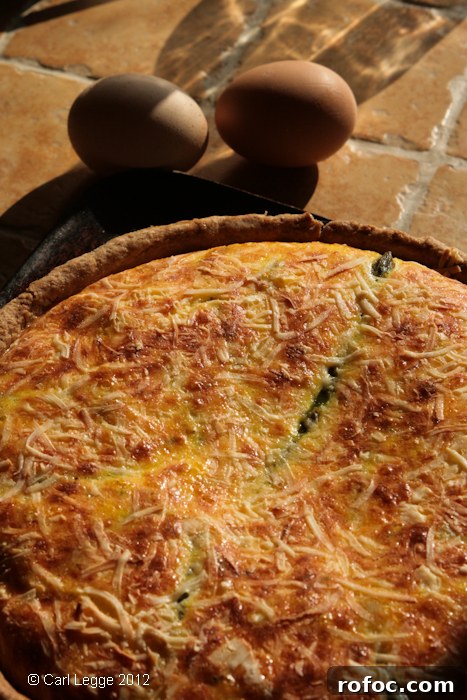
Asparagus has been treasured for its delicate flavour for thousands of years — enjoyed by the Ancient Egyptians and recorded in Apicius’s Roman cookery manuals in late antiquity. Right now is prime asparagus season, but it’s brief. French tarragon, with its sweet anise notes, is also at its best at the same time. When both are in season they make a natural pairing. On our smallholding we grow both, so combining them with fresh eggs from our hens made for an almost cost-free, exceptional meal.
For this tart I used a wonderfully sweet, 24‑month‑aged piave cheese. Piave is a cow’s‑milk cheese from a small region in Italy; its mature version brings a deep, nutty sweetness that complements asparagus and tarragon beautifully. The finished tart was smooth and rich, with subtle aromas from the shoots, herb and cheese. We served it two ways: first with new potatoes dressed in wild garlic mayonnaise and steamed brassica shoots, and the next day with lemony couscous and a tarragon‑marinated tomato salad.
If you’d like to make this tart yourself and learn a few tips on growing asparagus at home, read on.
Asparagus, tarragon and piave tart recipe
I started from a basic asparagus tart recipe and adapted it to what I had. I make a shortcrust pastry using equal parts spelt and plain white flour for a firmer, nuttier base. When blind‑baking the case I brush the baked shell with beaten egg and return it to the oven briefly to seal and brown the surface — this helps keep the base crisp once the filling is added.
I omitted the shallot from the version I used, substituted French tarragon for parsley, and replaced gruyère with piave. Other suitable alternatives include parmesan, pecorino, mature cheddar, or vegetarian/vegan cheeses if preferred.
For the asparagus I had about a dozen spears ranging from 1 cm thick to matchstick thin. To cook them evenly I blanched the thicker pieces first for about four minutes, then added the finer tips for an additional two minutes. Drain and cool slightly before arranging them in the tart.
The filling is simple and elegant — eggs enriched with cream or crème fraîche, seasoned, folded with chopped tarragon and grated piave, then poured into the sealed tart shell with the asparagus arranged on top. Bake until the custard is just set and the surface is lightly golden. This tart works well as a centerpiece for a dinner party or cut into individual tartlets as a refined starter, garnished with a few extra tarragon leaves.
Tips to grow asparagus
Asparagus rewards patience and long‑term planning, especially when grown from seed. Ours were sown and potted on as seedlings and planted out as crowns in March 2011; we began harvesting the shoots in 2012. When growing from seed expect a few years before a proper harvest.
We grew the variety ‘Martha Washington’. Before planting, we washed off the potting compost so we could space crowns evenly. The crowns were set in a trench on a ridge of well‑rotted compost. The compost provides nutrition, while the ridge improves drainage and helps prevent crown rot.
Keep beds weed‑free — asparagus does poorly when crowded by competing plants. A combination of careful weeding and mulching helps maintain healthy crowns.
In the first harvest season it’s important not to overharvest. We harvested lightly and stopped at the end of the month to allow the plants to replenish energy and build stronger roots for future seasons. After the ferns turn yellow in late summer or early autumn, cut them back to a few inches above ground and apply a generous mulch of well‑rotted compost. With time and care your asparagus bed should become increasingly productive each year.