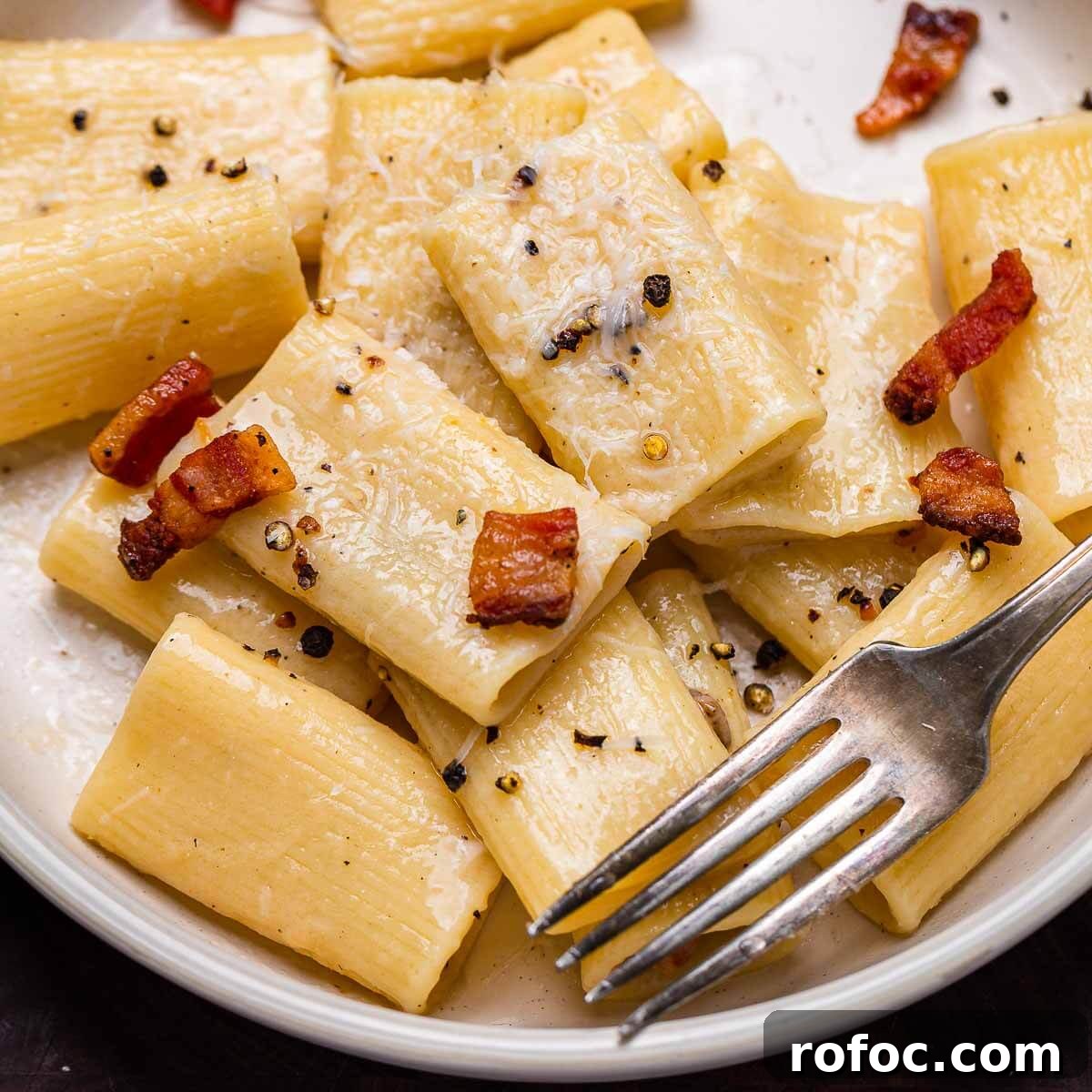
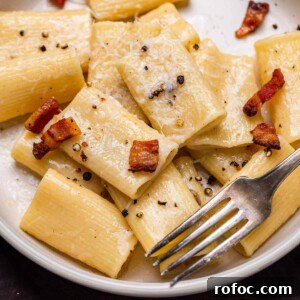
Rigatoni alla Gricia is a classic Roman pasta made with very few ingredients: crispy guanciale, coarsely ground black pepper, salty Pecorino Romano, and starchy pasta water. These elements combine to create a simple, intensely flavorful sauce that coats al dente rigatoni.
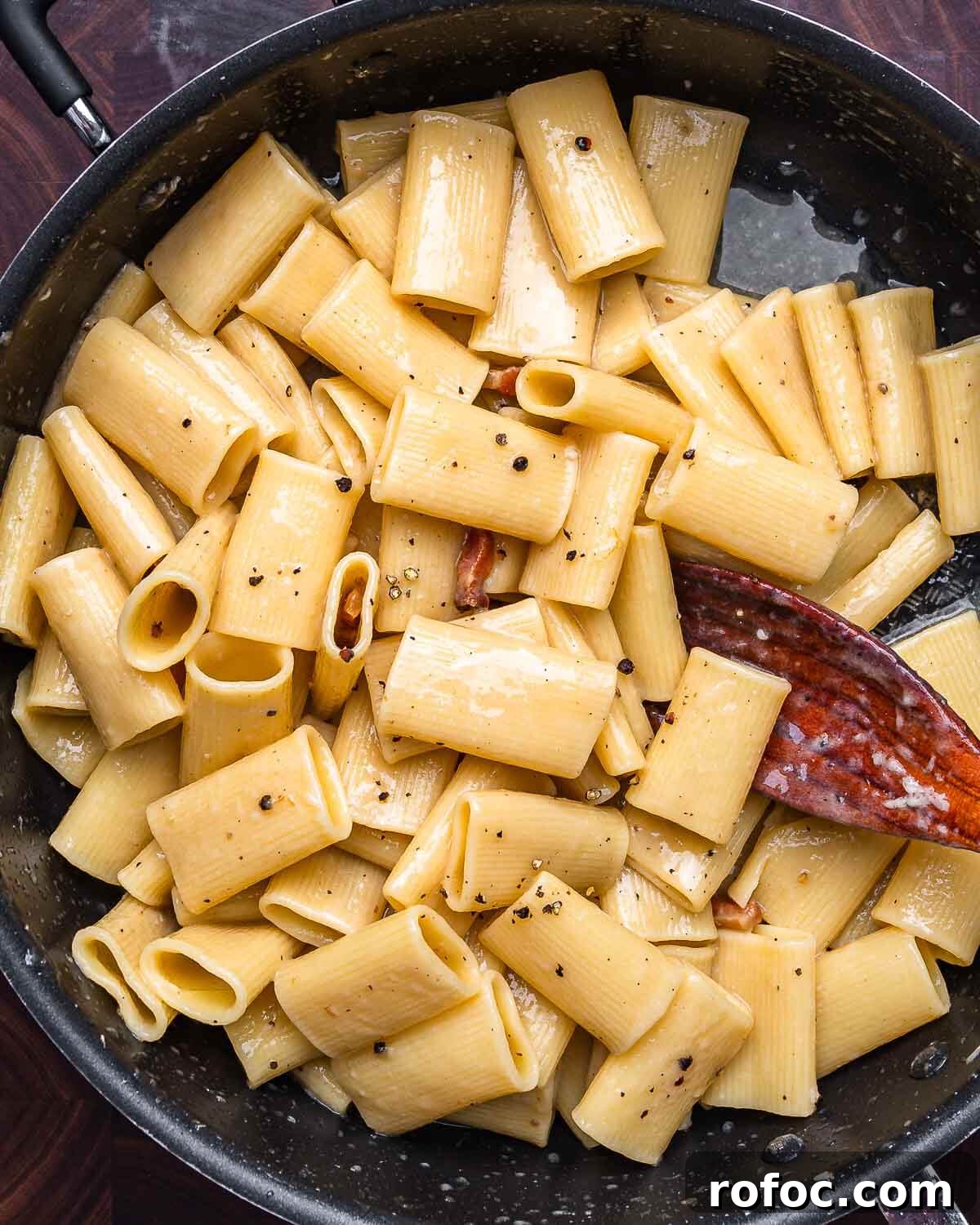
The first time I made rigatoni alla gricia I was struck by how easy it was and how bold the flavors tasted. With only four core ingredients—five if you count the pasta water—it’s a reminder that simplicity often yields the most memorable dishes.
Each component plays a distinct role. The Pecorino brings sharp saltiness, the guanciale contributes rendered fat and crunchy texture, black pepper adds a bright bite, and the starchy pasta water ties everything into a silky, emulsified sauce.
Like other Roman pastas such as Carbonara, Cacio e Pepe, and Amatriciana, rigatoni alla gricia is best served immediately after cooking. Have your guests ready when the pasta is finished so you can enjoy it at its peak.
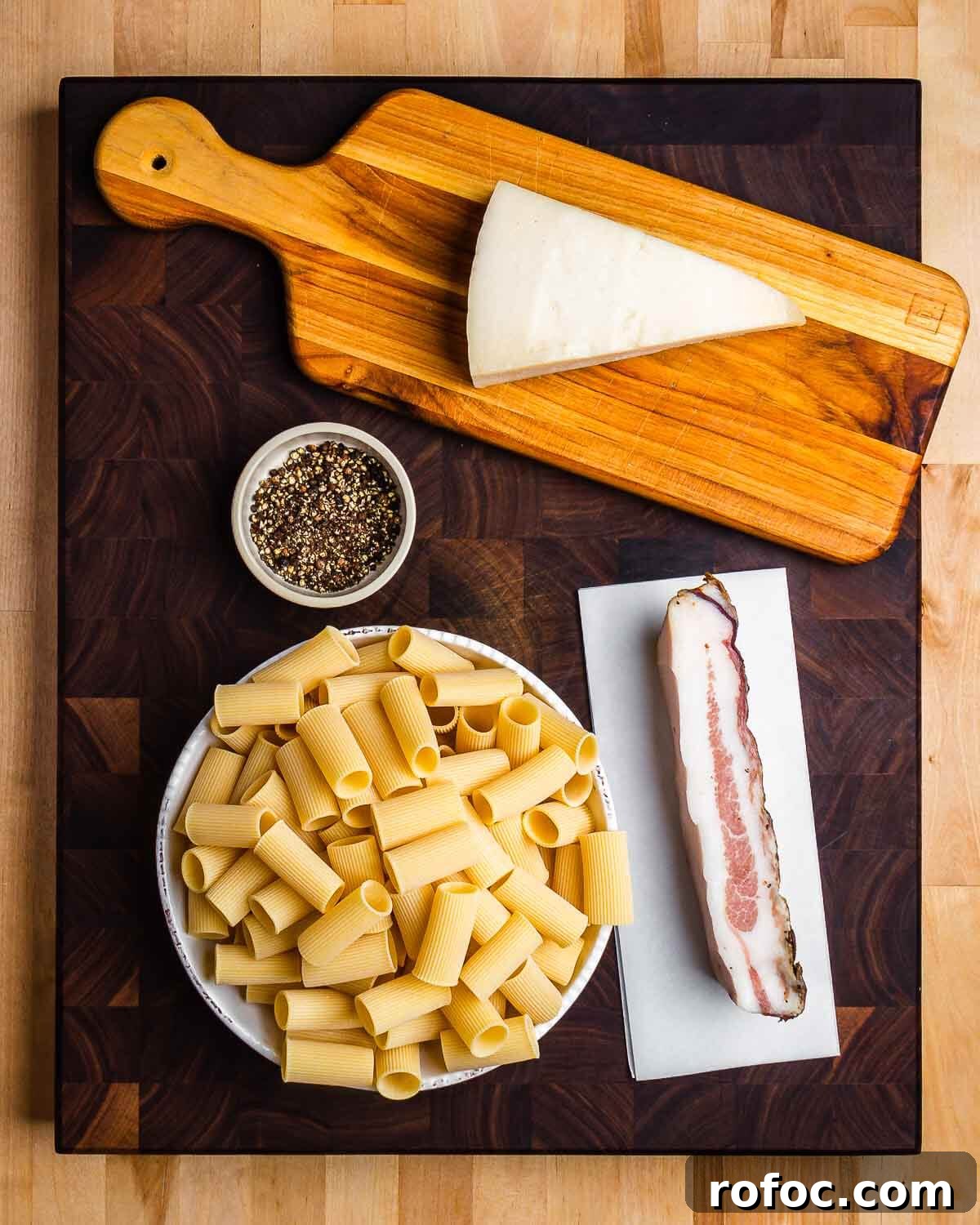
How to make it
Each number corresponds to the numbered written steps below.
- Fill a large pot with 8 cups of water and 1 1/2 teaspoons kosher salt and bring to a boil. While the water heats, trim the hard outer edge from 8 ounces of guanciale and cut it into lardons (about 1/4 inch by 1/4 inch). Note: using less water concentrates starch in the cooking liquid, which helps form the sauce.
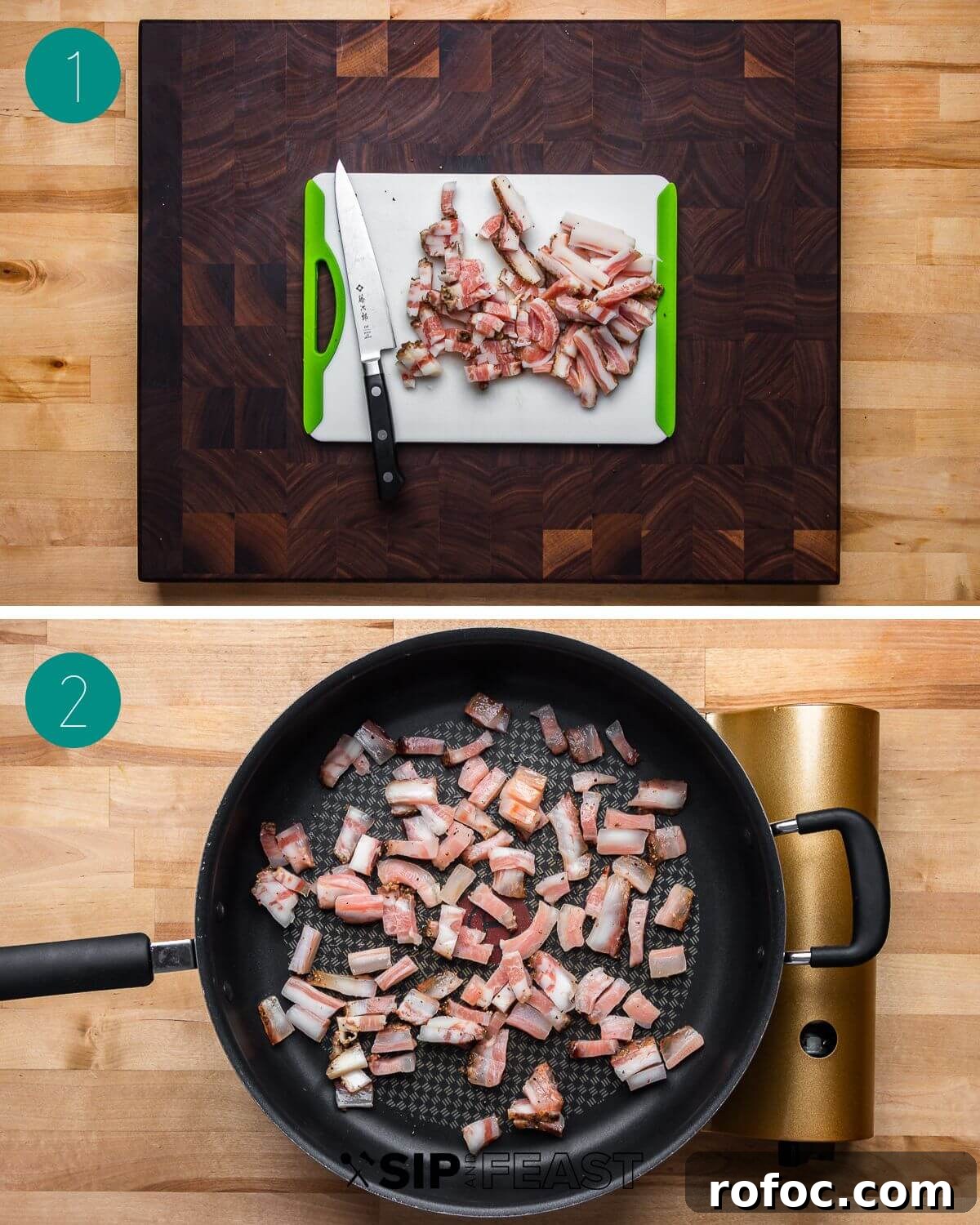
- Heat a large pan over medium and sauté the guanciale until most of its fat renders, about 10–12 minutes.
- When the guanciale is crisp and golden, remove roughly half with a slotted spoon and drain on a paper towel-lined plate; reserve the rest in the pan.
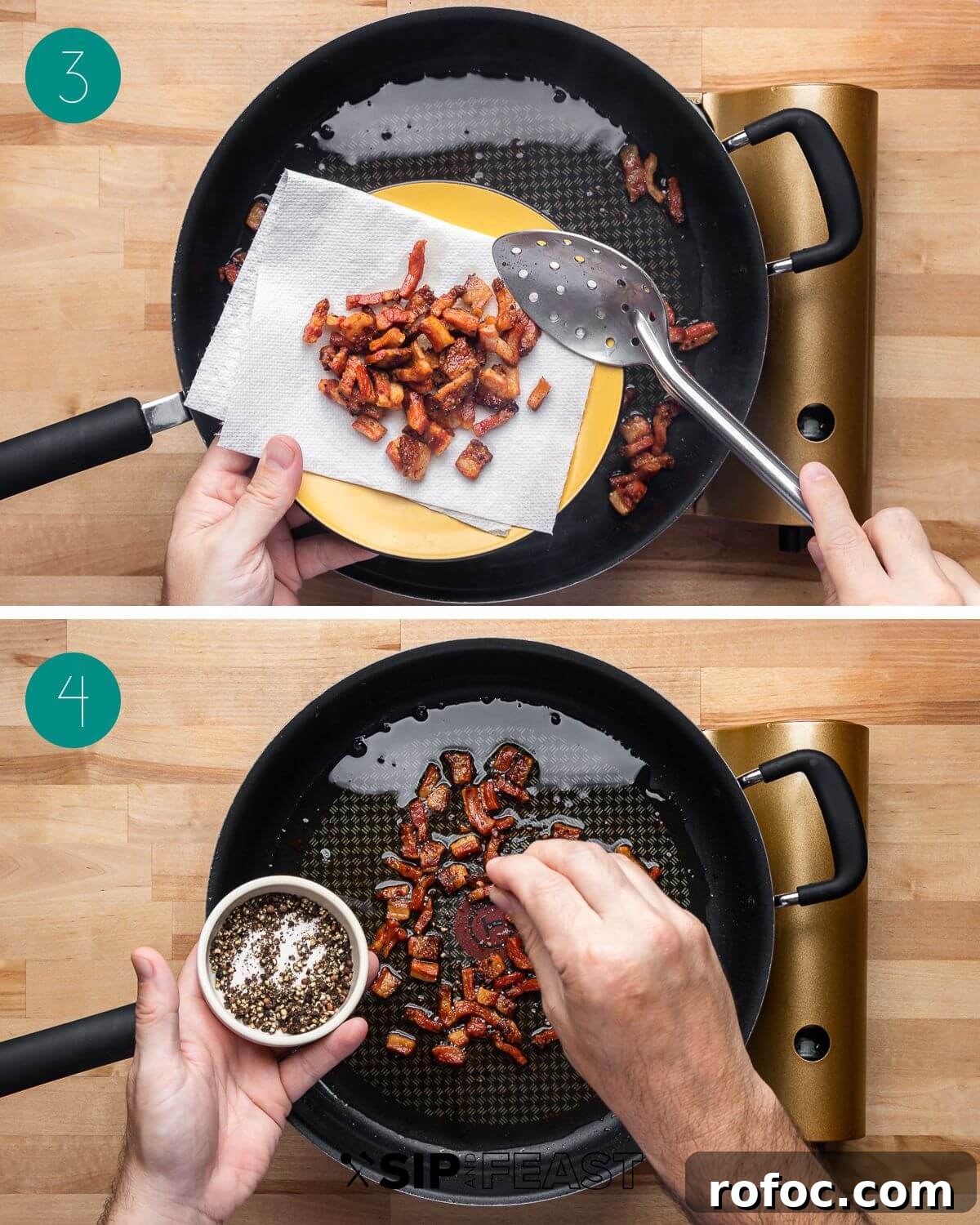
- Start cooking 1 pound of rigatoni in the boiling water until it is about 3 minutes shy of al dente. Because less water is used, stir more frequently than usual to prevent sticking. Add about 1/2 teaspoon very coarse black pepper to the guanciale fat in the pan.
- Add 1 cup of the reserved pasta water to the pan, then transfer the partially cooked rigatoni to the pan and continue cooking until al dente, adding more pasta water as needed because the pasta will keep absorbing liquid.
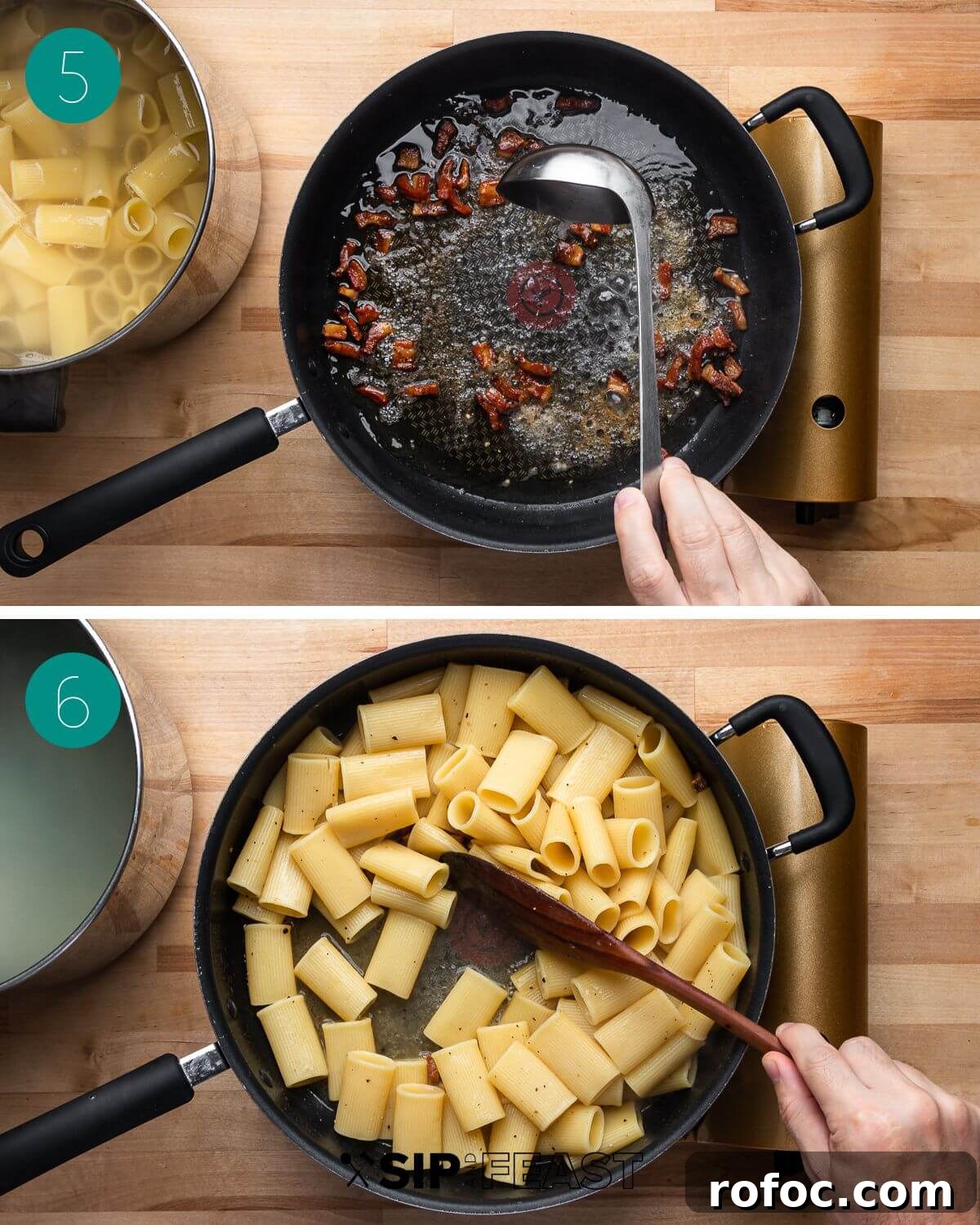
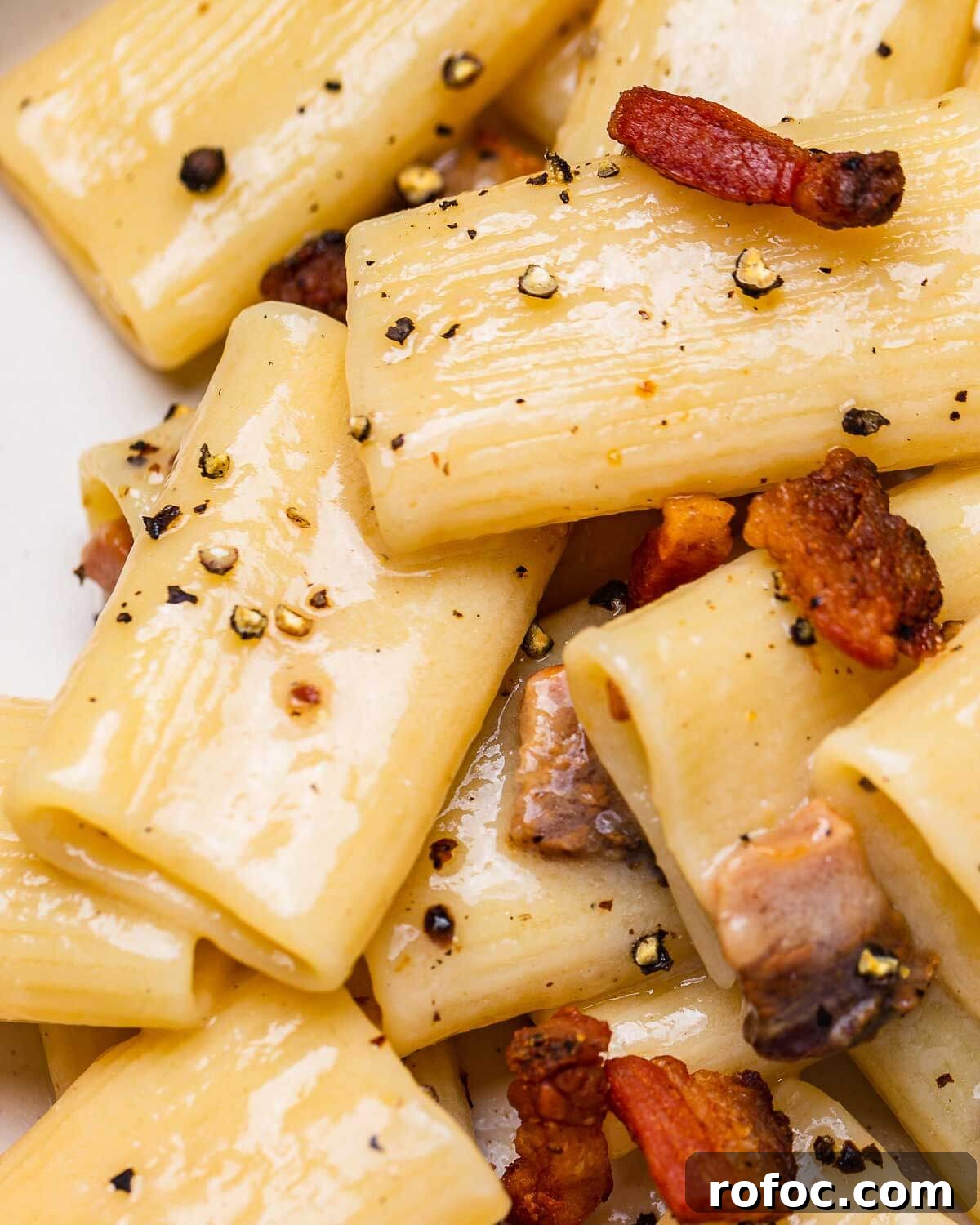
- Once the rigatoni reaches al dente, remove the pan from the heat and add 3/4 cup grated Pecorino Romano. Toss or mix vigorously to emulsify the cheese with the rendered fat and pasta water, creating a glossy sauce. Add a splash more pasta water, a little at a time, if the sauce needs loosening.
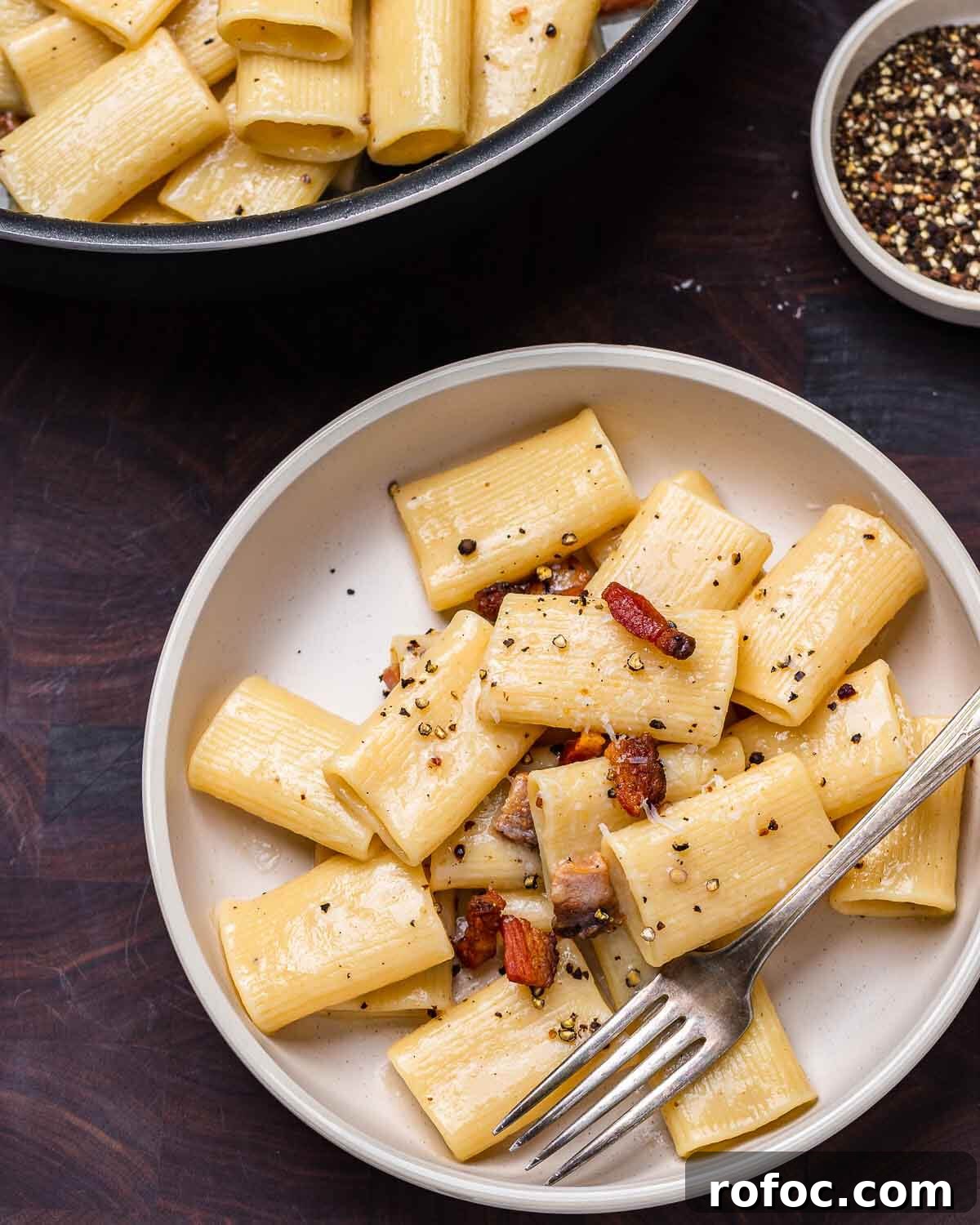
- Taste and adjust seasoning. Additional salt is rarely necessary because the guanciale and Pecorino are both salty. Serve immediately with an extra coarse grind of black pepper, more grated Pecorino, and the reserved crispy guanciale on top. Enjoy!
Top tips
- The pasta water. Very starchy pasta water is essential to a silky sauce. Use only 8 cups (or slightly less) of water and 1 1/2 teaspoons kosher salt so the cooking liquid concentrates starch. Stir the pasta frequently while it cooks to prevent sticking.
- The guanciale. Authentic gricia uses guanciale—cured pork jowl with a distinctive salty, slightly tangy flavor. If guanciale isn’t available, pancetta (pork belly) is a fine substitute.
- How to serve. Serve this dish immediately for the best texture and flavor. Reserve half the cooked guanciale to sprinkle on top of each portion and offer extra Pecorino and coarse black pepper at the table.
More easy pasta recipes
- Fettuccine Alfredo
- Pasta alla Norcina
- Linguine al Limone
If you enjoyed this Rigatoni alla Gricia, consider leaving a 5-star rating.
Rigatoni Alla Gricia
Ingredients
- 8 ounces guanciale cut into lardons
- salt and pepper to taste
- 1 pound rigatoni
- 3/4 cup Pecorino Romano grated
- 3 cups reserved pasta water will not need it all but good to have extra
Instructions
-
Bring a large pot with 8 cups of water to a boil and add 1 1/2 teaspoons kosher salt.
-
Trim the outer hard edge of the guanciale and slice into lardons (about 1/4 inch by 1/4 inch).
-
Heat a large pan over medium and sauté the guanciale until most of the fat renders, about 10–12 minutes. Remove half the crispy pieces and set aside.
-
Cook the rigatoni until it is about 3 minutes from al dente; it will still be quite firm.
-
Add coarsely ground black pepper to the guanciale fat, then add the pasta and 1 cup of reserved pasta water to the pan. Continue to cook until the pasta reaches al dente, adding more pasta water as needed.
-
Remove from heat and add the Pecorino Romano. Mix or toss vigorously to emulsify the cheese with the rendered fat and pasta water. Add small amounts of additional pasta water if necessary to reach a silky consistency.
-
Taste and adjust pepper (and salt if needed). Serve immediately with extra Pecorino and the reserved crispy guanciale.
Notes
- Using less water and salt concentrates starch in the cooking water, which helps the sauce emulsify. Stir the pasta frequently to prevent sticking.
- Guanciale is recommended for authenticity, but pancetta works well as a substitute.
- Leftovers keep up to 3 days and can be reheated, but gricia is best eaten immediately after cooking.
Nutrition
| Carbohydrates: 85.3 g
| Protein: 41 g
| Fat: 29.8 g
Nutrition information is an approximation.
Like this? Leave a comment below!